


 Sep 21, 2015, 03:49 PM
Last edit by: IB Advertising
See related guides and technical advice from our community experts:
Browse all: General Overview
- Jeep Grand Cherokee WJ 1999 to 2004 Crash Test and Safety Ratings
Important Information to help you understand your Jeep Grand Cherokee.
Browse all: General Overview

XJ Ask the Question Thread

Newbie
Joined: Apr 2010
Posts: 12
Likes: 0
From: Warner Robins, GA
Year: 1999
Model: Cherokee
Engine: 4.0
 Driver's Door Actuator
Anyone have advice/step-by-step guide for replacing the driver's door actuator? I did a search and found one for an after-market actuator, but was wondering if there was a guide for a factory actuator or a after-market on the driver's side. Also, anyone else having these issues or have had to replace one, I would greatly appreciate feedback, what to expect, tips, etc. Thanks a lot!
CF Veteran
Joined: Apr 2011
Posts: 1,146
Likes: 0
From: Clayton, NC
Year: 1988
Model: Cherokee
Engine: 4.6L I6 Stroker with port matched +99 intake and 62mm TB
Anyone have advice/step-by-step guide for replacing the driver's door actuator? I did a search and found one for an after-market actuator, but was wondering if there was a guide for a factory actuator or a after-market on the driver's side. Also, anyone else having these issues or have had to replace one, I would greatly appreciate feedback, what to expect, tips, etc. Thanks a lot!
Senior Member
Joined: May 2011
Posts: 950
Likes: 0
From: Newman, Lake WA
Year: 1989
Model: Cherokee
Engine: 4.0 I6 cold air
Originally Posted by Jeep95
Ok so which sensor or switch turns on the 4wd light on a 95? I haven't looked into it at work yet but I thought I'd just ask on here bc i know the switch or whatever is going out bc sometimes the light will work other times it won't. And it's annoying. So any info would be great thanks!
Member
Joined: Jul 2011
Posts: 185
Likes: 0
From: Hutchinson Ks
Year: 1997
Model: Cherokee
Engine: 4.0
Originally Posted by Bassfishertim2015
Should be a little plug on the top of your front axle that tells the light to turn on in the jeep I believe. Don't quote me on this one though lol
CF Veteran
Joined: Dec 2010
Posts: 1,240
Likes: 0
From: Rocket Country MI
Year: 1999
Model: Cherokee
Engine: 4.0
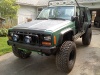
Hey does anybody else have non factory notches on the ears of the front knuckles where the brakes ride? I fear that replacing my pads and rotors will be for naught if they hang up in those notches again. Also is there a way to fix the problem without replacing my knuckles?
Senior Member
Joined: Oct 2010
Posts: 948
Likes: 1
Year: 1995
Model: Cherokee
Engine: straight 6
Originally Posted by bsmith97xj
Thats only if front axle is the disconnect style if not, its on transfer case.
Member
Joined: Jul 2011
Posts: 185
Likes: 0
From: Hutchinson Ks
Year: 1997
Model: Cherokee
Engine: 4.0
FOUR-WHEEL DRIVE INDICATOR LAMP
The diagnosis found here addresses an inoperative four-wheel drive indicator lamp condition. If the problem being diagnosed is related to lamp accuracy, be certain to confirm that the problem is with the lamp or switch and not with a damaged or inoperative transfer case or transfer case linkage. Refer to Transmission for more information. If no transfer case problem is found, the following procedure will help locate a short or open in the indicator lamp circuit. For circuit diagrams and descriptions, Refer to Instrument Cluster in Wiring Diagrams.
WARNING: ON VEHICLES EQUIPPED WITH AIRBAGS, Refer to PASSIVE RESTRAINT SYSTEMS BEFORE ATTEMPTING ANY STEERING WHEEL, STEERING COLUMN, OR INSTRUMENT PANEL COMPONENT DIAGNOSIS OR SERVICE. FAILURE TO TAKE THE PROPER PRECAUTIONS COULD RESULT IN ACCIDENTAL AIRBAG DEPLOYMENT AND POSSIBLE PERSONAL INJURY.
PART TIME
- Check the fuse in the junction block. If OK, go to Step 2. If not OK, repair the shorted circuit or component as required and replace the faulty fuse.
- Turn the ignition switch to the On position. Check for battery voltage at the fuse in the junction block. If OK, go to Step 3. If not OK, repair the open circuit to the ignition switch as required.
- Turn the ignition switch to the Off position. Disconnect and isolate the battery negative cable. Unplug the transfer case switch wire harness connector. Check for continuity between the ground circuit cavity of the transfer case switch wire harness connector and a good ground. There should be continuity. If OK, go to Step 4. If not OK, repair the open circuit to ground as required.
- Connect the battery negative cable. Turn the ignition switch to the On position. Install a jumper wire between the part time four wheel drive indicator lamp driver circuit cavity of the transfer case switch wire harness connector and a good ground. The four-wheel drive indicator lamp should light. If OK, replace the faulty transfer case switch. If not OK, go to Step 5.
- Turn the ignition switch to the Off position. Disconnect and isolate the battery negative cable. Remove the instrument cluster as described in this group. With the transfer case switch wire harness connector still unplugged, check for continuity between the part time four wheel drive indicator lamp driver circuit cavity of the right instrument cluster wire harness connector (connector B) and a good ground. There should be no continuity. If OK, go to Step 6. If not OK, repair the short circuit as required.
- Check for continuity between the part time four wheel drive indicator lamp driver circuit cavities of the right instrument cluster wire harness connector (connector B) and the transfer case switch wire harness connector. There should be continuity. If OK, replace the faulty bulb. If not OK, repair the open circuit as required.
- Check the fuse in the junction block. If OK, go to Step 2. If not OK, repair the shorted circuit or component as required and replace the faulty fuse.
- Turn the ignition switch to the On position. Check for battery voltage at the fuse in the junction block. If OK, go to Step 3. If not OK, repair the open circuit to the ignition switch as required.
- Turn the ignition switch to the Off position. Disconnect and isolate the battery negative cable. Unplug the transfer case switch wire harness connector. Check for continuity between the ground circuit cavity of the transfer case switch wire harness connector and a good ground. There should be continuity. If OK, go to Step 4. If not OK, repair the open circuit to ground as required.
- Connect the battery negative cable. Turn the ignition switch to the On position. Install a jumper wire between the full time four wheel drive indicator lamp driver circuit cavity of the transfer case switch wire harness connector and a good ground. The four-wheel drive indicator lamp should light. If OK, replace the faulty transfer case switch. If not OK, go to Step 5.
- Turn the ignition switch to the Off position. Disconnect and isolate the battery negative cable. Remove the instrument cluster as described in this group. With the transfer case switch wire harness connector still unplugged, check for continuity between the full time four wheel drive indicator lamp driver circuit cavity of the right instrument cluster wire harness connector (connector B) and a good ground. There should be no continuity. If OK, go to Step 6. If not OK, repair the short circuit as required.
- Check for continuity between the full time four wheel drive indicator lamp driver circuit cavities of the right instrument cluster wire harness connector (connector B) and the transfer case switch wire harness connector. There should be continuity. If OK, replace the faulty bulb. If not OK, repair the open circuit as required.


Senior Member
Joined: Oct 2010
Posts: 948
Likes: 1
Year: 1995
Model: Cherokee
Engine: straight 6
Originally Posted by bsmith97xj
Straight out of OEM 97 Service manual!
FOUR-WHEEL DRIVE INDICATOR LAMP
The diagnosis found here addresses an inoperative four-wheel drive indicator lamp condition. If the problem being diagnosed is related to lamp accuracy, be certain to confirm that the problem is with the lamp or switch and not with a damaged or inoperative transfer case or transfer case linkage. Refer to Transmission for more information. If no transfer case problem is found, the following procedure will help locate a short or open in the indicator lamp circuit. For circuit diagrams and descriptions, Refer to Instrument Cluster in Wiring Diagrams.
WARNING: ON VEHICLES EQUIPPED WITH AIRBAGS, Refer to PASSIVE RESTRAINT SYSTEMS BEFORE ATTEMPTING ANY STEERING WHEEL, STEERING COLUMN, OR INSTRUMENT PANEL COMPONENT DIAGNOSIS OR SERVICE. FAILURE TO TAKE THE PROPER PRECAUTIONS COULD RESULT IN ACCIDENTAL AIRBAG DEPLOYMENT AND POSSIBLE PERSONAL INJURY.
PART TIME
[*]Check the fuse in the junction block. If OK, go to Step 2. If not OK, repair the shorted circuit or component as required and replace the faulty fuse.[*]Turn the ignition switch to the On position. Check for battery voltage at the fuse in the junction block. If OK, go to Step 3. If not OK, repair the open circuit to the ignition switch as required.[*]Turn the ignition switch to the Off position. Disconnect and isolate the battery negative cable. Unplug the transfer case switch wire harness connector. Check for continuity between the ground circuit cavity of the transfer case switch wire harness connector and a good ground. There should be continuity. If OK, go to Step 4. If not OK, repair the open circuit to ground as required.[*]Connect the battery negative cable. Turn the ignition switch to the On position. Install a jumper wire between the part time four wheel drive indicator lamp driver circuit cavity of the transfer case switch wire harness connector and a good ground. The four-wheel drive indicator lamp should light. If OK, replace the faulty transfer case switch. If not OK, go to Step 5.[*]Turn the ignition switch to the Off position. Disconnect and isolate the battery negative cable. Remove the instrument cluster as described in this group. With the transfer case switch wire harness connector still unplugged, check for continuity between the part time four wheel drive indicator lamp driver circuit cavity of the right instrument cluster wire harness connector (connector B) and a good ground. There should be no continuity. If OK, go to Step 6. If not OK, repair the short circuit as required.[*]Check for continuity between the part time four wheel drive indicator lamp driver circuit cavities of the right instrument cluster wire harness connector (connector B) and the transfer case switch wire harness connector. There should be continuity. If OK, replace the faulty bulb. If not OK, repair the open circuit as required.
FULL TIME
[*]Check the fuse in the junction block. If OK, go to Step 2. If not OK, repair the shorted circuit or component as required and replace the faulty fuse.[*]Turn the ignition switch to the On position. Check for battery voltage at the fuse in the junction block. If OK, go to Step 3. If not OK, repair the open circuit to the ignition switch as required.[*]Turn the ignition switch to the Off position. Disconnect and isolate the battery negative cable. Unplug the transfer case switch wire harness connector. Check for continuity between the ground circuit cavity of the transfer case switch wire harness connector and a good ground. There should be continuity. If OK, go to Step 4. If not OK, repair the open circuit to ground as required.[*]Connect the battery negative cable. Turn the ignition switch to the On position. Install a jumper wire between the full time four wheel drive indicator lamp driver circuit cavity of the transfer case switch wire harness connector and a good ground. The four-wheel drive indicator lamp should light. If OK, replace the faulty transfer case switch. If not OK, go to Step 5.[*]Turn the ignition switch to the Off position. Disconnect and isolate the battery negative cable. Remove the instrument cluster as described in this group. With the transfer case switch wire harness connector still unplugged, check for continuity between the full time four wheel drive indicator lamp driver circuit cavity of the right instrument cluster wire harness connector (connector B) and a good ground. There should be no continuity. If OK, go to Step 6. If not OK, repair the short circuit as required.[*]Check for continuity between the full time four wheel drive indicator lamp driver circuit cavities of the right instrument cluster wire harness connector (connector B) and the transfer case switch wire harness connector. There should be continuity. If OK, replace the faulty bulb. If not OK, repair the open circuit as required.
Seasoned Member
Joined: Jul 2011
Posts: 413
Likes: 0
From: Murray, UT
Year: 1999
Model: Cherokee
Engine: 4.0 I6
Do fuel pumps typically catastrophically fail, or is it more of a gradual degradation? If gradual, what's it often appear like?
Vehicle is an '89 with AW4, and I6
Here's my problem: for the past few months, at highway speeds only, no matter what the fuel level, the needle pegs to full and the motor periodically bogs. RPM's stay the same, just a loss of power, give it a little gas and she downshifts and back to normal. I ASSUME the fuel gauge gets it's information from the fuel pump. But I don't understand the bogging down, so something in me is thinking it might be related to the FPR, or perhaps a semi clogged fuel filter, but the filter looks pretty new. That being said, I do have a new one for when the time comes. My fuel tank does need to be replaced, as it is leaking, but I'm not sure if that could be related because the leak developed before the "bogging down" problem. I don't think it is air related, but my air intake box needs replacing as well, so possibly a vacuum leak problem?
And in light of all this, today I changed the oil, and afterwards took it for a little spin around the block. Upon my first right turn it nearly died. Spooked me, but I kept going. Left turn after left turn was fine, then the second right turn it almost died again. Then the third right turn it died, but fired right back up. Then every right turn after that it would die unless the transmission was put in Neutral(NSS?) Small right turns(merging) were fine, just complete right turns. Then, pulling into my driveway, I made another right turn. And it DIDN'T die. I'm just dumbfounded by this, and have too many ideas, and no ideas at the same time.
Edit: 1/2 tank of gas, happened with both a cold motor and a warm motor(around 200 degrees) and oil pressure around 60.
Edit #2: Went from 10W-30 to 5W-30 due to oncoming winter.
Vehicle is an '89 with AW4, and I6
Here's my problem: for the past few months, at highway speeds only, no matter what the fuel level, the needle pegs to full and the motor periodically bogs. RPM's stay the same, just a loss of power, give it a little gas and she downshifts and back to normal. I ASSUME the fuel gauge gets it's information from the fuel pump. But I don't understand the bogging down, so something in me is thinking it might be related to the FPR, or perhaps a semi clogged fuel filter, but the filter looks pretty new. That being said, I do have a new one for when the time comes. My fuel tank does need to be replaced, as it is leaking, but I'm not sure if that could be related because the leak developed before the "bogging down" problem. I don't think it is air related, but my air intake box needs replacing as well, so possibly a vacuum leak problem?
And in light of all this, today I changed the oil, and afterwards took it for a little spin around the block. Upon my first right turn it nearly died. Spooked me, but I kept going. Left turn after left turn was fine, then the second right turn it almost died again. Then the third right turn it died, but fired right back up. Then every right turn after that it would die unless the transmission was put in Neutral(NSS?) Small right turns(merging) were fine, just complete right turns. Then, pulling into my driveway, I made another right turn. And it DIDN'T die. I'm just dumbfounded by this, and have too many ideas, and no ideas at the same time.
Edit: 1/2 tank of gas, happened with both a cold motor and a warm motor(around 200 degrees) and oil pressure around 60.
Edit #2: Went from 10W-30 to 5W-30 due to oncoming winter.
Last edited by 89XJDan; Dec 13, 2011 at 10:07 PM.



☠ CF Sheriff ☠

Joined: Nov 2009
Posts: 15,197
Likes: 18
From: Aberdeen, MD
Year: 1995
Model: Cherokee
Engine: 4.0L HO I-6, 703 Injectors, Brown Dog Super Engine Mounts
Do fuel pumps typically catastrophically fail, or is it more of a gradual degradation? If gradual, what's it often appear like?
Vehicle is an '89 with AW4, and I6
Here's my problem: for the past few months, at highway speeds only, no matter what the fuel level, the needle pegs to full and the motor periodically bogs. RPM's stay the same, just a loss of power, give it a little gas and she downshifts and back to normal. I ASSUME the fuel gauge gets it's information from the fuel pump. But I don't understand the bogging down, so something in me is thinking it might be related to the FPR, or perhaps a semi clogged fuel filter, but the filter looks pretty new. That being said, I do have a new one for when the time comes. My fuel tank does need to be replaced, as it is leaking, but I'm not sure if that could be related because the leak developed before the "bogging down" problem. I don't think it is air related, but my air intake box needs replacing as well, so possibly a vacuum leak problem?
And in light of all this, today I changed the oil, and afterwards took it for a little spin around the block. Upon my first right turn it nearly died. Spooked me, but I kept going. Left turn after left turn was fine, then the second right turn it almost died again. Then the third right turn it died, but fired right back up. Then every right turn after that it would die unless the transmission was put in Neutral(NSS?) Small right turns(merging) were fine, just complete right turns. Then, pulling into my driveway, I made another right turn. And it DIDN'T die. I'm just dumbfounded by this, and have too many ideas, and no ideas at the same time.
Edit: 1/2 tank of gas, happened with both a cold motor and a warm motor(around 200 degrees) and oil pressure around 60.
Edit #2: Went from 10W-30 to 5W-30 due to oncoming winter.
Vehicle is an '89 with AW4, and I6
Here's my problem: for the past few months, at highway speeds only, no matter what the fuel level, the needle pegs to full and the motor periodically bogs. RPM's stay the same, just a loss of power, give it a little gas and she downshifts and back to normal. I ASSUME the fuel gauge gets it's information from the fuel pump. But I don't understand the bogging down, so something in me is thinking it might be related to the FPR, or perhaps a semi clogged fuel filter, but the filter looks pretty new. That being said, I do have a new one for when the time comes. My fuel tank does need to be replaced, as it is leaking, but I'm not sure if that could be related because the leak developed before the "bogging down" problem. I don't think it is air related, but my air intake box needs replacing as well, so possibly a vacuum leak problem?
And in light of all this, today I changed the oil, and afterwards took it for a little spin around the block. Upon my first right turn it nearly died. Spooked me, but I kept going. Left turn after left turn was fine, then the second right turn it almost died again. Then the third right turn it died, but fired right back up. Then every right turn after that it would die unless the transmission was put in Neutral(NSS?) Small right turns(merging) were fine, just complete right turns. Then, pulling into my driveway, I made another right turn. And it DIDN'T die. I'm just dumbfounded by this, and have too many ideas, and no ideas at the same time.
Edit: 1/2 tank of gas, happened with both a cold motor and a warm motor(around 200 degrees) and oil pressure around 60.
Edit #2: Went from 10W-30 to 5W-30 due to oncoming winter.