


Rotella: The world's first ever combined hair oil, foot ointment, and salad dressing


CF Veteran
Joined: Oct 2013
Posts: 1,589
Likes: 2
From: Denver
Year: 99
Model: Cherokee
Engine: 4.0

Hey salad, what kind of OCI are you running on that mammoth oil filter? Is that the point or just trying to do additional filtering / cooling with the extra oil capacity? Does that allow to have a ton of oil in the filter to avoid dry starts? That thing is freakin huge!

Thread Starter
Herp Derp Jerp

Joined: Nov 2011
Posts: 18,251
Likes: 17
From: Parham, ON
Year: 1999
Model: Cherokee
Engine: 4.0L OBD-II
I'd like to express my thanks for this thread (and a couple others) I had been researching here about an issue I have been having with low oil pressure after warm-up. I'm talking about 20-30psi running and about zero at idle. I was running Valvoline Maxlife 5w-30 and a standard Purolator filter. I had tried replacing the sending unit, cleaning the journal to it, but it had no effect. After reading this, I went to Napa, bought 6 quarts of Delo 400 15w-40 and a Napa Platinum 51515 filter. I started it up and low and behold, 40psi at idle and between 50-60 while driving. Drove around until water temp got to almost 210 and it had settled in at 25-30psi at idle and between 40-50 running. I'll get a better idea when I get my interstate commute tomorrow, but I have to say I'm thrilled! I was beginning to think my cam bearings were toast. I'm not saying they may not still be worn, but this should slow the wear significantly. Thanks!
What's the Delo 400 LE worth by the way?
Well if I was still in school I'd be having you do my next book report for me. LOL. It got me thinking...I have a slight valve stem leak in my daily driver which is a 1990 Mazda 626 with a 2.2 4-cylinder. I'm quite certain this is also a flat tappet cam engine, and think it would benefit from the T6 5w40. But the leak is in cylinder #2 that causes my spark plug to foul out every thousand miles or so. Factory cat is still on and in decent shape. Think it would be a problem? Would my cat be more likely to give out with this condition and T6, and should I even care considering the car doesn't care about exhaust past the single O2 sensor?
If 40-weights are acceptable for your engine give it a spin. Burning that much oil in the first place is going to cause you more problems than a few hundred PPM of phosphorous. Change the cat when it clogs or gets stinky. Cruiser has a super handy writeup for checking exhaust restriction that I imagine would give similar results on any naturally aspirated gasoline engine.
Lol, I was just trying to save you some typing, but feel free to do a filter thread! I am curious to see where the Mobile 1's rank in the filter department.
Also, is that an extra half quart for the larger filter?
What's the advantage of the larger filter? Any disadvantages?
Also, is that an extra half quart for the larger filter?
What's the advantage of the larger filter? Any disadvantages?
It has nothing to do with dry starts - anything with a quality anti-drainback valve will stop them. (most filters that aren't Champion Labs' E-Core design... eg FRAM and STP).
The benefits are:
- This filter is built like a tank. Most of the applications are on diesel tractors that don't even have suspension. Seems like a logical choice for a Jeep. The majority of filters on the market (including the 51515) are for street vehicles and not as ruggedly constructed.
- There's a little diagram on how to change the filter. Perfect for YJ owners.
- More filtering media means more dirt capacity.
- More filtering media ALSO means there's more surface area for the oil to flow through. This means the filter is less resistant.
- More filtering media also also means that as you build up dirt you can maintain higher flow/less resistance for longer than a filter that clogs faster.
- More oil for better cooling.
- More oil for longer OCIs.
The real reason I'm using it is for the flow. Spun it on right before winter. It's pretty sweet! This is the only filter I've ran where I've actually witnessed a pressure change when the bypass valve opened. You don't get that with cheap filters. Instead you get rattlerattlerattlerattlerattlerattlerattlerattlera ttlerattlerattlerattlerattlerattlerattle
I have absolutely no idea what my OCI is... don't remember when I changed my oil and forgot to write it down because I was leaving for a trip lol. Some time in September.
Drawbacks are size and price, NAPA wants like $14 after tax for the big one. I don't think this is an issue with the 51452 which I believe is the same price as the 51515.


CF Veteran
Joined: Oct 2013
Posts: 1,589
Likes: 2
From: Denver
Year: 99
Model: Cherokee
Engine: 4.0
Oh I read the links yo! I was just wondering your personal reasoning. Because as we all know...
But there seems to be people who think the extra media is just as bad as no media blah blah blah, and I was grow'd up in that new school US education that taught me no critical thinking so I was wondering what your personal reasoning was. Think the lighter weight small oil filter will save me some mpg cause it reduces my weight? LOL

Monty.
But there seems to be people who think the extra media is just as bad as no media blah blah blah, and I was grow'd up in that new school US education that taught me no critical thinking so I was wondering what your personal reasoning was. Think the lighter weight small oil filter will save me some mpg cause it reduces my weight? LOL
Monty.

Seasoned Member
Joined: Oct 2010
Posts: 467
Likes: 0
From: Crystal Lake, IL
Year: 2001
Model: Cherokee
Engine: 4.0L I6
Awesome read! 20 minutes spent extremely well and I feel much more comfortable with my knowledge on the subject now, thanks to you!
I just started running the T6 in my 2001 about three weeks ago and it is awesome, the cold has been defiant and won't leave the bluegrass this winter and the 5w T6 makes cold starts much easier and smoother than whatever 10w30 crap I put in it last time. Oil pressure at temp is also slightly higher and much more stable.
I know you said to leave the conventional vs synthetic debate at the door, however I was wondering...
I plan on running the T6 every winter when it does drop below the 40°s but I intend to run the 15w40 conventional Rotella T during my other two oil changes in the warmer months. What's your take on the constant switch back and forth from synthetic to conventional? I've never had synthetic in my 4.0L until now, and I am more than satisfied with the results, but the damn thing already leaks from about every possible place it can and I am worried that going back and forth will make it worse. It may just be all the myths behind it that worry me, and I intend on tearing it apart some and replacing at least the valve cover, oil filter adapter, and oil pan gaskets at the same time as my next oil change in the spring.
I've done a good amount of research on the subject and it seems that the FAQ on every oil manufacturer's website says that you are free to switch between conventional and synthetic at every change with no adverse effects. I just prefer to hear it from someone as knowledgable as you for myself to settle my doubts once and for all.
Once again, cheers on this thread. It is one of the most informational threads I have seen in a long time.
I just started running the T6 in my 2001 about three weeks ago and it is awesome, the cold has been defiant and won't leave the bluegrass this winter and the 5w T6 makes cold starts much easier and smoother than whatever 10w30 crap I put in it last time. Oil pressure at temp is also slightly higher and much more stable.
I know you said to leave the conventional vs synthetic debate at the door, however I was wondering...
I plan on running the T6 every winter when it does drop below the 40°s but I intend to run the 15w40 conventional Rotella T during my other two oil changes in the warmer months. What's your take on the constant switch back and forth from synthetic to conventional? I've never had synthetic in my 4.0L until now, and I am more than satisfied with the results, but the damn thing already leaks from about every possible place it can and I am worried that going back and forth will make it worse. It may just be all the myths behind it that worry me, and I intend on tearing it apart some and replacing at least the valve cover, oil filter adapter, and oil pan gaskets at the same time as my next oil change in the spring.
I've done a good amount of research on the subject and it seems that the FAQ on every oil manufacturer's website says that you are free to switch between conventional and synthetic at every change with no adverse effects. I just prefer to hear it from someone as knowledgable as you for myself to settle my doubts once and for all.
Once again, cheers on this thread. It is one of the most informational threads I have seen in a long time.


Thread Starter
Herp Derp Jerp
Joined: Nov 2011
Posts: 18,251
Likes: 17
From: Parham, ON
Year: 1999
Model: Cherokee
Engine: 4.0L OBD-II
Oh I read the links yo! I was just wondering your personal reasoning. Because as we all know...
But there seems to be people who think the extra media is just as bad as no media blah blah blah, and I was grow'd up in that new school US education that taught me no critical thinking so I was wondering what your personal reasoning was. Think the lighter weight small oil filter will save me some mpg cause it reduces my weight? LOL
Monty.
But there seems to be people who think the extra media is just as bad as no media blah blah blah, and I was grow'd up in that new school US education that taught me no critical thinking so I was wondering what your personal reasoning was. Think the lighter weight small oil filter will save me some mpg cause it reduces my weight? LOL
Monty.
Awesome read! 20 minutes spent extremely well and I feel much more comfortable with my knowledge on the subject now, thanks to you!
I just started running the T6 in my 2001 about three weeks ago and it is awesome, the cold has been defiant and won't leave the bluegrass this winter and the 5w T6 makes cold starts much easier and smoother than whatever 10w30 crap I put in it last time. Oil pressure at temp is also slightly higher and much more stable.
I know you said to leave the conventional vs synthetic debate at the door, however I was wondering...
I plan on running the T6 every winter when it does drop below the 40°s but I intend to run the 15w40 conventional Rotella T during my other two oil changes in the warmer months. What's your take on the constant switch back and forth from synthetic to conventional? I've never had synthetic in my 4.0L until now, and I am more than satisfied with the results, but the damn thing already leaks from about every possible place it can and I am worried that going back and forth will make it worse. It may just be all the myths behind it that worry me, and I intend on tearing it apart some and replacing at least the valve cover, oil filter adapter, and oil pan gaskets at the same time as my next oil change in the spring.
I've done a good amount of research on the subject and it seems that the FAQ on every oil manufacturer's website says that you are free to switch between conventional and synthetic at every change with no adverse effects. I just prefer to hear it from someone as knowledgable as you for myself to settle my doubts once and for all.
Once again, cheers on this thread. It is one of the most informational threads I have seen in a long time.
I just started running the T6 in my 2001 about three weeks ago and it is awesome, the cold has been defiant and won't leave the bluegrass this winter and the 5w T6 makes cold starts much easier and smoother than whatever 10w30 crap I put in it last time. Oil pressure at temp is also slightly higher and much more stable.
I know you said to leave the conventional vs synthetic debate at the door, however I was wondering...
I plan on running the T6 every winter when it does drop below the 40°s but I intend to run the 15w40 conventional Rotella T during my other two oil changes in the warmer months. What's your take on the constant switch back and forth from synthetic to conventional? I've never had synthetic in my 4.0L until now, and I am more than satisfied with the results, but the damn thing already leaks from about every possible place it can and I am worried that going back and forth will make it worse. It may just be all the myths behind it that worry me, and I intend on tearing it apart some and replacing at least the valve cover, oil filter adapter, and oil pan gaskets at the same time as my next oil change in the spring.
I've done a good amount of research on the subject and it seems that the FAQ on every oil manufacturer's website says that you are free to switch between conventional and synthetic at every change with no adverse effects. I just prefer to hear it from someone as knowledgable as you for myself to settle my doubts once and for all.
Once again, cheers on this thread. It is one of the most informational threads I have seen in a long time.
I know what you mean. Switching back and forth between syn and dino is fine. Remember synthetic blends are already just that. I'm going to give it a spin with Delo in the spring because I'm cheap and curious if the extra boron will quiet this rattle.
As for leaks, synthetics usually have better seal conditioners than conventionals. T6 passes the same tests under API SM for seal compatibility. However what you've really done is switched from low-detergent to high-detergent oil... Any HDEO is gonna make your leak worse if sludge is the only thing holding it back.
Senior Member


Joined: May 2012
Posts: 602
Likes: 13
From: Salt Lake City, UT
Year: 1998
Model: Cherokee (XJ)
Engine: 4.0
Too bad. That's the next thread! LOL
I'm currently running a WIX 51459. It's larger than the 51452, which is a rugged version of the very popular 51515.
Sitting beside a Baldwin B2-HPG and WIX 51515:

Installed on my '99: (It may not fit on XJs with vertical oil filter adapters, in which case I would recommend the 51452)

If you plan on running extended oil changes with T6 a more efficient filter is a good idea as they will keep the oil cleaner. I made my decision based on this thread:
http://www.ihpartsamerica.com/forums...html#post64570
The "better" filters (synthetic media with much finer filtration) are mentioned in there.
I'm currently running a WIX 51459. It's larger than the 51452, which is a rugged version of the very popular 51515.
Sitting beside a Baldwin B2-HPG and WIX 51515:
Installed on my '99: (It may not fit on XJs with vertical oil filter adapters, in which case I would recommend the 51452)
If you plan on running extended oil changes with T6 a more efficient filter is a good idea as they will keep the oil cleaner. I made my decision based on this thread:
http://www.ihpartsamerica.com/forums...html#post64570
The "better" filters (synthetic media with much finer filtration) are mentioned in there.
Seasoned Member
Joined: Oct 2010
Posts: 467
Likes: 0
From: Crystal Lake, IL
Year: 2001
Model: Cherokee
Engine: 4.0L I6
I know what you mean. Switching back and forth between syn and dino is fine. Remember synthetic blends are already just that. I'm going to give it a spin with Delo in the spring because I'm cheap and curious if the extra boron will quiet this rattle. As for leaks, synthetics usually have better seal conditioners than conventionals. T6 passes the same tests under API SM for seal compatibility. However what you've really done is switched from low-detergent to high-detergent oil... Any HDEO is gonna make your leak worse if sludge is the only thing holding it back.

Junior Member
Joined: Feb 2014
Posts: 66
Likes: 0
From: South Texas
Year: 2001
Model: Cherokee
Engine: 4.0


Senior Member
Joined: Jan 2012
Posts: 648
Likes: 1
From: Port Richey, FL
Model: Cherokee
Engine: 4.0
I got to drive my 35 mile (each way) commute today and while running I was still getting between 38-50psi. At idle, it settled in at 12-15psi. It never made any noises when I had the previous oil/filter and doesn't now. Maybe I just got my first bad Purolator filter. If I can get the same psi results from the NAPA Gold filter, I'll pocket the extra cash over running the Platinum next oil change.

CF Veteran
Joined: Aug 2010
Posts: 8,357
Likes: 103
From: Canton, MI
Year: 1999
Model: Cherokee
Engine: 4.0

::CF Moderator::
Joined: Aug 2011
Posts: 43,971
Likes: 1,579
From: Prescott, Az
Year: 1990
Model: Cherokee (XJ)
Engine: 4.0
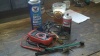
I paid $17.99/gal and $4.79/qt. The 41515 was $11.79
I got to drive my 35 mile (each way) commute today and while running I was still getting between 38-50psi. At idle, it settled in at 12-15psi. It never made any noises when I had the previous oil/filter and doesn't now. Maybe I just got my first bad Purolator filter. If I can get the same psi results from the NAPA Gold filter, I'll pocket the extra cash over running the Platinum next oil change.
I got to drive my 35 mile (each way) commute today and while running I was still getting between 38-50psi. At idle, it settled in at 12-15psi. It never made any noises when I had the previous oil/filter and doesn't now. Maybe I just got my first bad Purolator filter. If I can get the same psi results from the NAPA Gold filter, I'll pocket the extra cash over running the Platinum next oil change.
::CF Moderator::
Joined: Aug 2011
Posts: 43,971
Likes: 1,579
From: Prescott, Az
Year: 1990
Model: Cherokee (XJ)
Engine: 4.0