


Extreme High Idle


Thread Starter
Newbie
Joined: Jan 2012
Posts: 19
Likes: 0
From: Jacksonville, AL
Year: 1989
Model: Cherokee
Engine: 4.0L inline 6
 Extreme High Idle
i have sprayed the throttle body to clean it but i still get high idles. between 2000-3000 rpms and stays there for a while. i have not cleaned any sensors. any suggestions?

CF Veteran
Joined: Aug 2011
Posts: 1,031
Likes: 4
From: Blue Springs, MO
Year: 1993
Model: Grand Cherokee
Engine: 4.0L Laredo
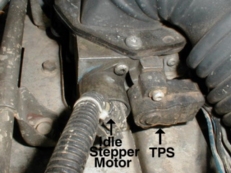
Also, the TPS could make it idle too high if it was bad. It can be tested on the vehicle. Search for TPS testing.


CF Veteran


Joined: Nov 2010
Posts: 5,841
Likes: 117
From: In the middle of Minnesota!
Year: 1999
Model: Cherokee
Engine: 4.0
A pretty big vacuum leak is always a suspect for a high idle.
Get a spray bottle of water. Mist spray around anything under the hood that uses vacuum. If the idle changes when you spray around a hose or a component, you've found the culprit....
Get a spray bottle of water. Mist spray around anything under the hood that uses vacuum. If the idle changes when you spray around a hose or a component, you've found the culprit....
Thread Starter
Newbie
Joined: Jan 2012
Posts: 19
Likes: 0
From: Jacksonville, AL
Year: 1989
Model: Cherokee
Engine: 4.0L inline 6
Does your model have an IAC valve on it? If so, i'd clean that up. There are write-ups on here about it. They get carboned up. Be carefull with it. Don't twist or pull on the pintle.
Also, the TPS could make it idle too high if it was bad. It can be tested on the vehicle. Search for TPS testing.
Also, the TPS could make it idle too high if it was bad. It can be tested on the vehicle. Search for TPS testing.
::CF Moderator::
Joined: Aug 2011
Posts: 43,971
Likes: 1,579
From: Prescott, Az
Year: 1990
Model: Cherokee (XJ)
Engine: 4.0
Yes, it has one and it's located in the throttle body on the front, closest to the valve cover. I am very suspicious of your Throttle Position Sensor also. Check/clean the TB and IAC first.
Trending Topics

::CF Moderator::
Joined: Aug 2011
Posts: 43,971
Likes: 1,579
From: Prescott, Az
Year: 1990
Model: Cherokee (XJ)
Engine: 4.0
RENIX TPS ADJUSTMENT
Before attempting to adjust your TPS be sure the throttle body has been recently cleaned.
It's especially important that the edges of the throttle butterfly are free of any carbon build-up.
IMPORTANT NOTE: Using the positive (red) lead of your ohmmeter, probe the B terminal of the flat 3 wire connector
of the TPS . The letters are embossed on the connector itself.
Touch the black lead of your meter to the negative battery post.
If you see more than 1 ohm of resistance some modifications to the sensor ground harness will be
necessary. The harness repair must be performed before proceeding.
I can provide an instruction sheet for that if needed.
MANUAL TRANSMISSION:
RENIX manual transmission equipped XJs have a three-wire TPS mounted on the throttle body.
This manual transmission vehicle TPS provides data input to the ECU. The manual transmission
TPS has three wires in the connector and they're clearly embossed with the letters A,B, and C.
Wire "A" is positive.
Wire "B" is ground.
Key ON, measure voltage from "A" positive to "B" ground by back-probing the connectors..
Note the voltage reading--this is your REFERENCE voltage.
Key ON, back-probe the connector at wires "B" and "C". Measure the voltage. This is your
OUTPUT voltage.
Your OUTPUT voltage needs to be seventeen percent of your REFERENCE voltage. For
example: 4.82 volts X .17=.82 volts. Adjust the TPS until you have achieved this percentage. If
you can't achieve the correct output voltage replace the TPS and start over.
AUTOMATIC TRANSMISSION:
RENIX automatic transmission equipped XJs have a TPS with two connectors. There is a flat three-
wire connector, same as the manual transmission vehicles have, and it is tested the same as the
manual transmission equipped vehicles--FOR ENGINE MANAGEMENT RELATED ISSUES.
However, the automatic TPS also has a square four-wire connector clearly embossed with the letters
A,B,C, and D. It only uses three wires and provides information to the Transmission Control Module.
Key ON, measure voltage between "A" positive and "D" ground. Note the voltage. This is your
REFERENCE voltage.
Back-probe the connector at wires "B" and "D". Measure the voltage. This is your OUTPUT
voltage. Your OUTPUT voltage needs to be eighty-three percent of your REFERENCE voltage.
For example 4.8 volts X .83=3.98 volts. Adjust the TPS until you have achieved this percentage.
If you can't, replace the TPS and start over.
So, if you have an automatic equipped XJ your TPS has two sides--one side feeds the ECU, and
the other side feeds the TCU. If you have TRANSMISSION issues check the four-wire
connector side of the TPS. If you have ENGINE issues check the three-wire connector side of
the TPS.
For those with a MANUAL TRANSMISSION--the TPS for the manual transmission XJs is
stupid expensive. You can substitute the automatic transmission TPS which is reasonably priced.
Revised 11-28-2011
Before attempting to adjust your TPS be sure the throttle body has been recently cleaned.
It's especially important that the edges of the throttle butterfly are free of any carbon build-up.
IMPORTANT NOTE: Using the positive (red) lead of your ohmmeter, probe the B terminal of the flat 3 wire connector
of the TPS . The letters are embossed on the connector itself.
Touch the black lead of your meter to the negative battery post.
If you see more than 1 ohm of resistance some modifications to the sensor ground harness will be
necessary. The harness repair must be performed before proceeding.
I can provide an instruction sheet for that if needed.
MANUAL TRANSMISSION:
RENIX manual transmission equipped XJs have a three-wire TPS mounted on the throttle body.
This manual transmission vehicle TPS provides data input to the ECU. The manual transmission
TPS has three wires in the connector and they're clearly embossed with the letters A,B, and C.
Wire "A" is positive.
Wire "B" is ground.
Key ON, measure voltage from "A" positive to "B" ground by back-probing the connectors..
Note the voltage reading--this is your REFERENCE voltage.
Key ON, back-probe the connector at wires "B" and "C". Measure the voltage. This is your
OUTPUT voltage.
Your OUTPUT voltage needs to be seventeen percent of your REFERENCE voltage. For
example: 4.82 volts X .17=.82 volts. Adjust the TPS until you have achieved this percentage. If
you can't achieve the correct output voltage replace the TPS and start over.
AUTOMATIC TRANSMISSION:
RENIX automatic transmission equipped XJs have a TPS with two connectors. There is a flat three-
wire connector, same as the manual transmission vehicles have, and it is tested the same as the
manual transmission equipped vehicles--FOR ENGINE MANAGEMENT RELATED ISSUES.
However, the automatic TPS also has a square four-wire connector clearly embossed with the letters
A,B,C, and D. It only uses three wires and provides information to the Transmission Control Module.
Key ON, measure voltage between "A" positive and "D" ground. Note the voltage. This is your
REFERENCE voltage.
Back-probe the connector at wires "B" and "D". Measure the voltage. This is your OUTPUT
voltage. Your OUTPUT voltage needs to be eighty-three percent of your REFERENCE voltage.
For example 4.8 volts X .83=3.98 volts. Adjust the TPS until you have achieved this percentage.
If you can't, replace the TPS and start over.
So, if you have an automatic equipped XJ your TPS has two sides--one side feeds the ECU, and
the other side feeds the TCU. If you have TRANSMISSION issues check the four-wire
connector side of the TPS. If you have ENGINE issues check the three-wire connector side of
the TPS.
For those with a MANUAL TRANSMISSION--the TPS for the manual transmission XJs is
stupid expensive. You can substitute the automatic transmission TPS which is reasonably priced.
Revised 11-28-2011
CF Veteran
Joined: Nov 2010
Posts: 5,841
Likes: 117
From: In the middle of Minnesota!
Year: 1999
Model: Cherokee
Engine: 4.0
The Idle Air Control (IAC) is mounted on the back of the throttle body. (Front of throttle body for 87-90) The valve controls the idle speed of the engine by controlling the amount of air flowing through the air control passage. It consists of a stepper motor that moves a pintle shaped plunger in and out of the air control passage. When the valve plunger is moved in, the air control passage flows more air which raises the idle speed. When the valve plunger is moved out, the air control passage flows less air which lowers the idle speed. Over time and miles, the IAC can get carboned up which can have an adverse affect on idle quality. Cleaning the IAC may restore proper function and is an easy procedure to perform and good preventive maintenance so it is never a bad idea.
CLEANING THE JEEP 4.0 IDLE AIR CONTROL
Remove the air filter cover, associated hoses and the rubber boot that goes from the air filter cover to the throttle body. Remove the IAC with a torx driver (2 bolts; one can be kind of hard to get to)
“Gently” wiggle out the IAC from the throttle body. Gasket on the IAC can be re-used if it is not damaged
Clean the IAC with a spray can of throttle body cleaner; inexpensive and available at any place that sells auto parts. Throttle body cleaner is recommended rather than carburetor cleaner as it is less harsh, safe for throttle body coatings and is best for this task. Use cleaner, a rag and a toothbrush and or Q-Tips. Be gentle; don’t twist or pull on the pintle that protrudes from the IAC as it is fragile and you could damage it.
Thoroughly spray clean and flush where the IAC seats in the throttle body with the same spray cleaner
It is also a good idea to clean the entire throttle body itself, the butterfly valve inside of the throttle body and all associated linkage as long as you have things disassembled
Reinstall IAC and check idle quality
CLEANING THE JEEP 4.0 IDLE AIR CONTROL
Remove the air filter cover, associated hoses and the rubber boot that goes from the air filter cover to the throttle body. Remove the IAC with a torx driver (2 bolts; one can be kind of hard to get to)
“Gently” wiggle out the IAC from the throttle body. Gasket on the IAC can be re-used if it is not damaged
Clean the IAC with a spray can of throttle body cleaner; inexpensive and available at any place that sells auto parts. Throttle body cleaner is recommended rather than carburetor cleaner as it is less harsh, safe for throttle body coatings and is best for this task. Use cleaner, a rag and a toothbrush and or Q-Tips. Be gentle; don’t twist or pull on the pintle that protrudes from the IAC as it is fragile and you could damage it.
Thoroughly spray clean and flush where the IAC seats in the throttle body with the same spray cleaner
It is also a good idea to clean the entire throttle body itself, the butterfly valve inside of the throttle body and all associated linkage as long as you have things disassembled
Reinstall IAC and check idle quality

Seasoned Member
Joined: Sep 2009
Posts: 299
Likes: 12
From: Whittier, Ca
Year: 1989
Model: Cherokee
Engine: 4.0L
I had a problem with the rubber grommet popping out on the side of the throttle body (thin rigid vacuum line coming out of it) that cause my idle to race up.
Here is a nice write up on sensors.
http://www.lunghd.com/Tech_Articles/...iagnostics.htm
Here is a nice write up on sensors.
http://www.lunghd.com/Tech_Articles/...iagnostics.htm

Thread
Thread Starter
Forum
Replies
Last Post
Programbo
Stock XJ Cherokee Tech. All XJ Non-modified/stock questions go here
23
May 23, 2024 07:20 AM
Zerocyde
Stock XJ Cherokee Tech. All XJ Non-modified/stock questions go here
45
Jun 29, 2022 05:51 PM
Calikingcrawler
Stock XJ Cherokee Tech. All XJ Non-modified/stock questions go here
8
Sep 7, 2021 07:14 AM
Bankerburt
Stock XJ Cherokee Tech. All XJ Non-modified/stock questions go here
0
Sep 8, 2015 10:29 PM
Currently Active Users Viewing This Thread: 1 (0 members and 1 guests)