


88 xj bucking and backfiring


Thread Starter
Newbie
Joined: Dec 2011
Posts: 2
Likes: 0
From: Centralia WA
Year: 1988
Model: Cherokee
Engine: 4.0
 88 xj bucking and backfiring
I just picked up an 88 xj over the weekend and what i have noticed is that when you drive in any gear besides 5th is bucks every once in a while and if you don't let up on the gas it will backfire. Anything will be helpful. thanks.


CF Veteran
Joined: Aug 2011
Posts: 10,489
Likes: 24
From: Nor-Cal Coast
Year: 90,84
Model: Cherokee
Engine: 4.0,2.5
Hey Adam. You have a "Renix "jeep. (90 was the last year for those). Be aware that the sensor tests and stuff you read for later Jeeps will probably be different. Also you can all but forget about reading codes. (it doesn't store them). I'd start with checking the plugs, cap/rotor and wires. Sounds maybe you have a miss. Never in 5th eh? Welcome, and good luck! Inline 6? (4.0)
CF Veteran
Joined: Aug 2011
Posts: 10,489
Likes: 24
From: Nor-Cal Coast
Year: 90,84
Model: Cherokee
Engine: 4.0,2.5
Cool. Great engine. Yea start with the basics. No timing adj. Done by your ECU with the signal from the CPS,(and others).
The distributor just helps sync the injector pulse. Lot of guys like to change most of the fluids in a new XJ. Diffs, brake, T-Case, engine Oil & filter of course. You might want to clean the ground connections at the dipstick tube mount and that braided strap from the head to the the firewall. There's a guy here, Cruiser, has a bunch of great right-ups on getten Renix Jeeps in top shape.
The distributor just helps sync the injector pulse. Lot of guys like to change most of the fluids in a new XJ. Diffs, brake, T-Case, engine Oil & filter of course. You might want to clean the ground connections at the dipstick tube mount and that braided strap from the head to the the firewall. There's a guy here, Cruiser, has a bunch of great right-ups on getten Renix Jeeps in top shape.

CF Veteran


Joined: Nov 2010
Posts: 5,841
Likes: 117
From: In the middle of Minnesota!
Year: 1999
Model: Cherokee
Engine: 4.0
1. Yes, review tuneup status. A weak secondary ignition is not good. Fresh Champion plugs gapped to .035, new plug wires, distributor cap and rotor
2. Test fuel pressure. For an 88, you should have 31 psi at idle. Then disconnect the vacuum line leading to the fuel pressure regulator (be sure that line is pulling good vacuum) and the pressure should jump to approximately 39 psi. Backfiring can be due to a fuel/air imbalance.
3. Test and adjust the throttle position sensor. More on that below courtesy of cruiser54
---------------------------------------
RENIX TPS ADJUSTMENT
Before attempting to adjust your TPS be sure the throttle body has been recently cleaned.
It's especially important that the edges of the throttle butterfly are free of any carbon build-up.
IMPORTANT NOTE: Using one lead of your ohmmeter, probe the B terminal of the flat 3 wire connector
of the TPS . The letters are embossed on the connector itself.
Touch the other lead of your meter to the negative battery post.
If you see more than 1 ohm of resistance some modifications to the sensor ground harness will be
necessary. The harness repair must be performed before proceeding.
I can provide an instruction sheet for that if needed.
MANUAL TRANSMISSION:
RENIX manual transmission equipped XJs have a three-wire TPS mounted on the throttle body.
This manual transmission vehicle TPS provides data input to the ECU. The manual transmission
TPS has three wires in the connector and they're clearly embossed with the letters A,B, and C.
Wire "A" is positive.
Wire "B" is ground.
Key ON, measure voltage from "A" positive to "B" ground by back-probing the connectors..
Note the voltage reading--this is your REFERENCE voltage.
Key ON, back-probe the connector at wires "B" and "C". Measure the voltage. This is your
OUTPUT voltage.
Your OUTPUT voltage needs to be seventeen percent of your REFERENCE voltage. For
example: 4.82 volts X .17=.82 volts. Adjust the TPS until you have achieved this percentage. If
you can't achieve the correct output voltage replace the TPS and start over.
AUTOMATIC TRANSMISSION:
RENIX automatic transmission equipped XJs have a TPS with two connectors. There is a three-
wire connector, same as the manual transmission vehicles have, and it is tested the same as the
manual transmission equipped vehicles--FOR ENGINE MANAGEMENT RELATED ISSUES.
However, the automatic TPS also has a four-wire connector clearly embossed with the letters
A,B,C, and D.. For the automatic transmission equipped vehicles the four-wire connector
provides data to the TCU.
Key ON, measure voltage between "A" positive and "D" ground. Note the voltage. This is your
REFERENCE voltage.
Back-probe the connector at wires "B" and "D". Measure the voltage. This is your OUTPUT
voltage. Your OUTPUT voltage needs to be eighty-three percent of your REFERENCE voltage.
For example 4.8 volts X .83=3.98 volts. Adjust the TPS until you have achieved this percentage.
If you can't, replace the TPS and start over.
So, if you have an automatic equipped XJ your TPS has two sides--one side feeds the ECU, and
the other side feeds the TCU. If you have TRANSMISSION issues check the four-wire
connector side of the TPS. If you have ENGINE issues check the three-wire connector side of
the TPS.
For those with a MANUAL TRANSMISSION--the TPS for the manual transmission XJs is
stupid expensive. You can substitute the automatic transmission TPS which is reasonably priced.
2. Test fuel pressure. For an 88, you should have 31 psi at idle. Then disconnect the vacuum line leading to the fuel pressure regulator (be sure that line is pulling good vacuum) and the pressure should jump to approximately 39 psi. Backfiring can be due to a fuel/air imbalance.
3. Test and adjust the throttle position sensor. More on that below courtesy of cruiser54
---------------------------------------
RENIX TPS ADJUSTMENT
Before attempting to adjust your TPS be sure the throttle body has been recently cleaned.
It's especially important that the edges of the throttle butterfly are free of any carbon build-up.
IMPORTANT NOTE: Using one lead of your ohmmeter, probe the B terminal of the flat 3 wire connector
of the TPS . The letters are embossed on the connector itself.
Touch the other lead of your meter to the negative battery post.
If you see more than 1 ohm of resistance some modifications to the sensor ground harness will be
necessary. The harness repair must be performed before proceeding.
I can provide an instruction sheet for that if needed.
MANUAL TRANSMISSION:
RENIX manual transmission equipped XJs have a three-wire TPS mounted on the throttle body.
This manual transmission vehicle TPS provides data input to the ECU. The manual transmission
TPS has three wires in the connector and they're clearly embossed with the letters A,B, and C.
Wire "A" is positive.
Wire "B" is ground.
Key ON, measure voltage from "A" positive to "B" ground by back-probing the connectors..
Note the voltage reading--this is your REFERENCE voltage.
Key ON, back-probe the connector at wires "B" and "C". Measure the voltage. This is your
OUTPUT voltage.
Your OUTPUT voltage needs to be seventeen percent of your REFERENCE voltage. For
example: 4.82 volts X .17=.82 volts. Adjust the TPS until you have achieved this percentage. If
you can't achieve the correct output voltage replace the TPS and start over.
AUTOMATIC TRANSMISSION:
RENIX automatic transmission equipped XJs have a TPS with two connectors. There is a three-
wire connector, same as the manual transmission vehicles have, and it is tested the same as the
manual transmission equipped vehicles--FOR ENGINE MANAGEMENT RELATED ISSUES.
However, the automatic TPS also has a four-wire connector clearly embossed with the letters
A,B,C, and D.. For the automatic transmission equipped vehicles the four-wire connector
provides data to the TCU.
Key ON, measure voltage between "A" positive and "D" ground. Note the voltage. This is your
REFERENCE voltage.
Back-probe the connector at wires "B" and "D". Measure the voltage. This is your OUTPUT
voltage. Your OUTPUT voltage needs to be eighty-three percent of your REFERENCE voltage.
For example 4.8 volts X .83=3.98 volts. Adjust the TPS until you have achieved this percentage.
If you can't, replace the TPS and start over.
So, if you have an automatic equipped XJ your TPS has two sides--one side feeds the ECU, and
the other side feeds the TCU. If you have TRANSMISSION issues check the four-wire
connector side of the TPS. If you have ENGINE issues check the three-wire connector side of
the TPS.
For those with a MANUAL TRANSMISSION--the TPS for the manual transmission XJs is
stupid expensive. You can substitute the automatic transmission TPS which is reasonably priced.
CF Veteran
Joined: Aug 2011
Posts: 10,489
Likes: 24
From: Nor-Cal Coast
Year: 90,84
Model: Cherokee
Engine: 4.0,2.5
Just remembered....I've never dealt with one, but your "C101" connector (above the brake booster), I guess is known to cause all sorts of problems.
Trending Topics
::CF Moderator::
Joined: Aug 2011
Posts: 43,971
Likes: 1,579
From: Prescott, Az
Year: 1990
Model: Cherokee (XJ)
Engine: 4.0
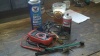
Renix Jeep C101 Connector Refreshing
The C101 connector on 1987 and 1988 Renix Jeeps was a source of electrical resistance when the vehicles were new. So much so that the factory eliminated this connector in the 1989 and 1990 models. The factory recommended cleaning this connector to insure the proper voltage and ground signals between the ECU and the fuel injection sensors. We can only imagine how this connector has become a larger source of voltage loss and increased resistance over a period of almost 25 years. The C101 connector needs to be cleaned at least once in the lifetime of your vehicle. Chances are it’s never been done before.
Almost every critical signal between the engine sensors, injectors, and the ECU travel the path through the C101.
The C101 is located on the driver’s side firewall above and behind the brake booster. It is held together with a single bolt in it’s center. To get the connectors apart, simply remove the bolt and pull the halves apart. You will find the connector is packed with a black tar like substance which has hardened over time.
Take a pocket screwdriver or the like and scrape out all the tar crap you can. Follow up by spraying out both connector halves with brake cleaner and then swabbing out the remainder of the tar. Repeat this procedure until the tar is totally removed. This may require 3 or more repetitions. Wipe out the connectors after spraying with a soft cloth.
If you have a small pick or dental tool tweak the female connectors on the one side so they grab the pins on the opposite side a bit tighter. Apply a true dielectric grease, not the stuff that came with your brake pads, to the connection and bolt it back together.
Revised 11-29-2011
The C101 connector on 1987 and 1988 Renix Jeeps was a source of electrical resistance when the vehicles were new. So much so that the factory eliminated this connector in the 1989 and 1990 models. The factory recommended cleaning this connector to insure the proper voltage and ground signals between the ECU and the fuel injection sensors. We can only imagine how this connector has become a larger source of voltage loss and increased resistance over a period of almost 25 years. The C101 connector needs to be cleaned at least once in the lifetime of your vehicle. Chances are it’s never been done before.
Almost every critical signal between the engine sensors, injectors, and the ECU travel the path through the C101.
The C101 is located on the driver’s side firewall above and behind the brake booster. It is held together with a single bolt in it’s center. To get the connectors apart, simply remove the bolt and pull the halves apart. You will find the connector is packed with a black tar like substance which has hardened over time.
Take a pocket screwdriver or the like and scrape out all the tar crap you can. Follow up by spraying out both connector halves with brake cleaner and then swabbing out the remainder of the tar. Repeat this procedure until the tar is totally removed. This may require 3 or more repetitions. Wipe out the connectors after spraying with a soft cloth.
If you have a small pick or dental tool tweak the female connectors on the one side so they grab the pins on the opposite side a bit tighter. Apply a true dielectric grease, not the stuff that came with your brake pads, to the connection and bolt it back together.
Revised 11-29-2011

Thread
Thread Starter
Forum
Replies
Last Post
Blue94xj
Stock XJ Cherokee Tech. All XJ Non-modified/stock questions go here
21
Oct 27, 2024 12:13 PM
Austindude2015
Cherokee Chat
17
Dec 28, 2020 05:12 PM
Carl Holmes
Stock XJ Cherokee Tech. All XJ Non-modified/stock questions go here
8
Oct 10, 2015 06:26 AM
justown
Stock XJ Cherokee Tech. All XJ Non-modified/stock questions go here
1
Sep 20, 2015 06:54 AM
Currently Active Users Viewing This Thread: 1 (0 members and 1 guests)