


do I neeed sway bars.


Thread Starter
Banned
Joined: Nov 2013
Posts: 551
Likes: 0
From: Philadelphia
Year: 1999
Model: Cherokee
Engine: 4.0 high output

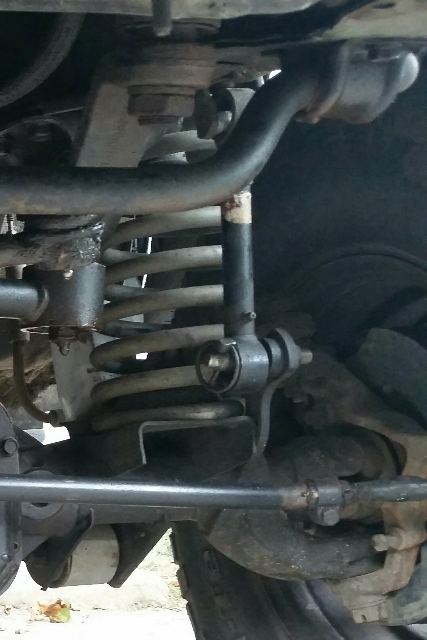
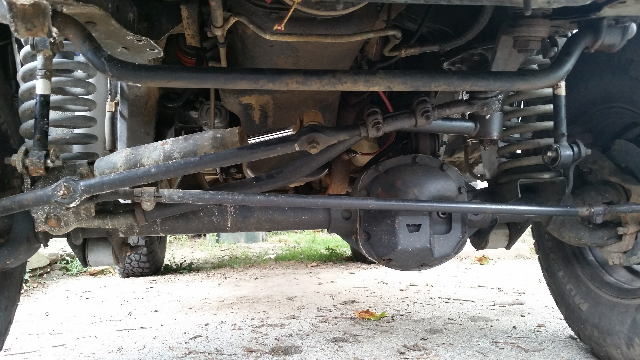
I posted a thread earlier about the jeep I just got the sway bars are just sitting there with nothing in either hole. my question is do I need them can I just take them off ? Like unbolt and done easy or is it a pain
Last edited by Mikeythrash; Jul 24, 2014 at 01:19 PM.

Seasoned Member
Joined: Jun 2011
Posts: 489
Likes: 0
From: San Antonio
Year: 1992
Model: Cherokee
Engine: 6 Cyl
A buddy of mine swears you don't need them and after driving mine without front and rear sway bars, I disagree. Especially if your rig is driven on the street. Just a trail rig, nope, you don't need them
CF Veteran


Joined: Jul 2012
Posts: 3,134
Likes: 360
From: Andover, VT
Year: 1999
Model: Cherokee (XJ)
Engine: 4.0 L
If it's a strictly wheelin rig then pull them off, if you drive it on the street then keep the front one, but ditch the back one. Those look like nice disconnects. Look into getting some bushings for them, probably pretty cheap and easy.
Thread Starter
Banned
Joined: Nov 2013
Posts: 551
Likes: 0
From: Philadelphia
Year: 1999
Model: Cherokee
Engine: 4.0 high output
Thats the thing idk what I need I know bushings but which ones someone said there jks disconnects but the one pic its missing. Both top and bottom is the top bushings too?
Thread Starter
Banned
Joined: Nov 2013
Posts: 551
Likes: 0
From: Philadelphia
Year: 1999
Model: Cherokee
Engine: 4.0 high output

CF Veteran
Joined: Mar 2013
Posts: 1,023
Likes: 0
From: salem, OR
Year: 1997
Model: Cherokee
Engine: 4.0L
Then again we haven't even taken in considerations of driver experience and skills lol
Trending Topics
Seasoned Member
Joined: Nov 2013
Posts: 347
Likes: 0
From: Boston
Year: 1993
Model: Cherokee
Engine: 4.0 Litre
Do you need sway bars, maybe not but if you ever need to perform an emergency lane change at speed on the highway or any speed above 45 mph you'll wish you had them.
Just because someone you know may say they've driven without them for 20 years and never had a problem doesn't mean it's actually safe, it just means they were lucky enough to never end up in a situation where no amount of driver skill could overcome the laws of physics.
Just because someone you know may say they've driven without them for 20 years and never had a problem doesn't mean it's actually safe, it just means they were lucky enough to never end up in a situation where no amount of driver skill could overcome the laws of physics.
Seasoned Member
Joined: Nov 2013
Posts: 347
Likes: 0
From: Boston
Year: 1993
Model: Cherokee
Engine: 4.0 Litre
Look up the thread "well now I've done it  "
"
I'd leave a link but I can't figure out how from my iPhone... A member rolled his XJ and put some of the blame on a missing quick disconnect pin. It was less than a month ago.
" I'd leave a link but I can't figure out how from my iPhone... A member rolled his XJ and put some of the blame on a missing quick disconnect pin. It was less than a month ago.
CF Veteran
Joined: Jul 2012
Posts: 3,134
Likes: 360
From: Andover, VT
Year: 1999
Model: Cherokee (XJ)
Engine: 4.0 L
Pull them off and then get in contact with JCR and they'll hook you up with what you need. It will be easy to press new bushings in
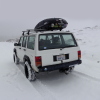
CF Veteran
Joined: Nov 2011
Posts: 2,381
Likes: 6
From: SoCal
Year: 1989
Model: Cherokee
Engine: 4.0
Here's a link to that thread...
https://www.cherokeeforum.com/f59/we...e-done-195975/
A sway bar works by transferring forces from the loaded side of a vehicle to the unloaded side. This really only matters on paved surfaces where speed and traction can conspire to flip your Jeep. These situations are typically those that require reflexive, involuntary reactions such as collision avoidance. It's not necessarily the swerve that's dangerous, it's the correction. When you swerve, your Jeep body sways like a pendulum on the axles, loading one side with an enormous amount of potential energy. When you correct for that evasive maneuver (always the opposite of what you did first), a lot of the energy is absorbed by the sway bar, preventing that energy from being transferred too quickly to the other side. Without the sway bar, the energy is not absorbed but rather multiplied and transmitted directly to the opposite side. In dirt, the energy is then dissipated by a loss of traction at the loaded tire, if you're lucky. On pavement the energy is dissipated through the friction of your roof on the asphalt and whatever got in your way.
As Demonoid said, stiff springs and responsive (stiff compression valving with more free-flowing rebound) shocks can mimic the affects of a sway bar by preventing body roll. It's still not as effective as a sway bar but much better than nothing on the highway. However, stiff springs and firm shocks are as detrimental to off-roading as a sway bar and you're kind of stuck with them no matter what whereas a sway bar can be disconnected or even removed when not needed.
I suggest getting bushings as quickly as possible. Driving it with the links just riding on their pins like that will oval out the bushing sleeve, rendering them useless.
https://www.cherokeeforum.com/f59/we...e-done-195975/
A sway bar works by transferring forces from the loaded side of a vehicle to the unloaded side. This really only matters on paved surfaces where speed and traction can conspire to flip your Jeep. These situations are typically those that require reflexive, involuntary reactions such as collision avoidance. It's not necessarily the swerve that's dangerous, it's the correction. When you swerve, your Jeep body sways like a pendulum on the axles, loading one side with an enormous amount of potential energy. When you correct for that evasive maneuver (always the opposite of what you did first), a lot of the energy is absorbed by the sway bar, preventing that energy from being transferred too quickly to the other side. Without the sway bar, the energy is not absorbed but rather multiplied and transmitted directly to the opposite side. In dirt, the energy is then dissipated by a loss of traction at the loaded tire, if you're lucky. On pavement the energy is dissipated through the friction of your roof on the asphalt and whatever got in your way.
As Demonoid said, stiff springs and responsive (stiff compression valving with more free-flowing rebound) shocks can mimic the affects of a sway bar by preventing body roll. It's still not as effective as a sway bar but much better than nothing on the highway. However, stiff springs and firm shocks are as detrimental to off-roading as a sway bar and you're kind of stuck with them no matter what whereas a sway bar can be disconnected or even removed when not needed.
I suggest getting bushings as quickly as possible. Driving it with the links just riding on their pins like that will oval out the bushing sleeve, rendering them useless.
Last edited by F1Addict; Jul 23, 2014 at 01:34 AM.
Thread Starter
Banned
Joined: Nov 2013
Posts: 551
Likes: 0
From: Philadelphia
Year: 1999
Model: Cherokee
Engine: 4.0 high output
Thread Starter
Banned
Joined: Nov 2013
Posts: 551
Likes: 0
From: Philadelphia
Year: 1999
Model: Cherokee
Engine: 4.0 high output
Here's a link to that thread...
https://www.cherokeeforum.com/f59/we...e-done-195975/
A sway bar works by transferring forces from the loaded side of a vehicle to the unloaded side. This really only matters on paved surfaces where speed and traction can conspire to flip your Jeep. These situations are typically those that require reflexive, involuntary reactions such as collision avoidance. It's not necessarily the swerve that's dangerous, it's the correction. When you swerve, your Jeep body sways like a pendulum on the axles, loading one side with an enormous amount of potential energy. When you correct for that evasive maneuver (always the opposite of what you did first), a lot of the energy is absorbed by the sway bar, preventing that energy from being transferred too quickly to the other side. Without the sway bar, the energy is not absorbed but rather multiplied and transmitted directly to the opposite side. In dirt, the energy is then dissipated by a loss of traction at the loaded tire, if you're lucky. On pavement the energy is dissipated through the friction of your roof on the asphalt and whatever got in your way.
As Demonoid said, stiff springs and responsive (stiff compression valving with more free-flowing rebound) shocks can mimic the affects of a sway bar by preventing body roll. It's still not as effective as a sway bar but much better than nothing on the highway. However, stiff springs and firm shocks are as detrimental to off-roading as a sway bar and you're kind of stuck with them no matter what whereas a sway bar can be disconnected or even removed when not needed.
I suggest getting bushings as quickly as possible. Driving it with the links just riding on their pins like that will oval out the bushing sleeve, rendering them useless.
See you say the pins like that will oval out the bushings sleeve.I dont know how long they have been like this.bought this from a brothers friend.he had it for three month bought it from someone in maryland so he probably drove like that from maryland to pa where I am.so is bushings the way to go or new ones.idk what to do I have a 2 yr old I need to make it safe.

CF Veteran
Joined: Feb 2012
Posts: 1,258
Likes: 0
From: Hamburg, NY
Year: 2001
Model: Cherokee
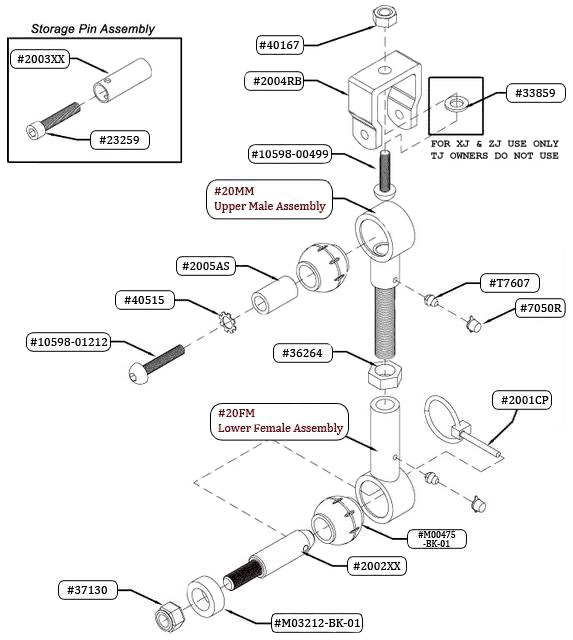
They are JKS, I just put them on my XJ yesterday. Based on your picture, order up upper& lower bushings, and new pins if they're tough to remove. They are stout, good sway bars. WhEn you take them off to install new bushings, be sure to torque everything to the required ft/lb. don't want to have something come loose.
I ran without them for a week when I installed my lift. Would NEVER do that again (if you drive it on the road). Body roll was terrible, add lift & wind, = DANGER RIDE....
I ran without them for a week when I installed my lift. Would NEVER do that again (if you drive it on the road). Body roll was terrible, add lift & wind, = DANGER RIDE....