


starts but wont stay running!!??please help


Thread Starter
Seasoned Member
Joined: Dec 2011
Posts: 437
Likes: 0
From: Southern Maine
Year: 1999
Model: Cherokee
Engine: 4.0L
 starts but wont stay running!!??please help
ok guys question and or thoughts ive been searching for the past few hours literally everything i can or would have thought of to type to search and still no clear answers....this is the problem im having this morning i came out to start my jeep it cranked started and shut off so i started it up again had no problem cranking but i had to feather the gas to get it to fire up and as soon as i let out of the gas it dies....so here are a few thoughts from my research...
1. Ive read that there is a possibility that the IAC is bad and or dirty so i will try that
2. Ive also read there could be a vacuum leak i was by myself so i couldn't go under the hood and keep it running to check
3. I just recently did my coil, dist. cap, plugs, and wires....just wanted to eliminate that...
If you guys could be of any help id greatly appreciate it when i get out of work later id like to tackle this and hopefully get it fixed thanx in adavanced guys!
1. Ive read that there is a possibility that the IAC is bad and or dirty so i will try that
2. Ive also read there could be a vacuum leak i was by myself so i couldn't go under the hood and keep it running to check
3. I just recently did my coil, dist. cap, plugs, and wires....just wanted to eliminate that...
If you guys could be of any help id greatly appreciate it when i get out of work later id like to tackle this and hopefully get it fixed thanx in adavanced guys!


CF Veteran


Joined: Nov 2010
Posts: 5,841
Likes: 117
From: In the middle of Minnesota!
Year: 1999
Model: Cherokee
Engine: 4.0
This smells of a fuel system issue. I'd suggest some testing to get to root cause. Don't throw parts at this.
1. Test your throttle position sensor. How to do that is shown below. Having to "tip in the throttle" is one of the symptoms of a faulty TPS.
2. If the TPS checks out, test your fuel pressure. Must be done with a gauge; there can be no shortcuts here. For a 99, you should have 49 psi, plus or minus 5 psi. Many parts stores will rent you this gauge inexpensively.
------------------------------------------------------
The throttle position sensor is connected to the throttle shaft on the throttle body. It sends throttle valve angle information to the PCM. The PCM uses this information to determine how much fuel the engine needs. The TPS is really just a simple potentiometer with one end connected to 5 volts from the PCM and the other to ground. A third wire is connected to the PCM. As you move the accelerator pedal with your foot, the output of the TPS changes. At a closed throttle position, the output of the TPS is low, about a half a volt. As the throttle valve opens, the output increases so that, at wide open throttle, the output voltage should be above 3.9 volts. Testing can be performed with an electrical meter. Analog meter is best. You are looking for a smooth sweep of voltage throughout the entire throttle band. While slowly opening and closing the throttle, take note to the movement of the voltmeter needle. There should be a direct relationship between the needle motion to the motion of the throttle. If at anytime the needle moves abruptly or inconsistently with the movement of the throttle, the TPS is bad
You should have 5 volts going into the TPS. At idle, TPS output voltage must be greater than 200 millivolts. At wide open throttle (WOT), TPS output voltage must be less than 4.8 volts.. The best is to use an analog meter (not digital) to see if the transition from idle to WOT is smooth with no dead spots. With your meter set for volts, put the black probe on a good ground like your negative battery terminal. With the key on, engine not running, test with the red probe of your meter (install a paper clip into the back of the plug of the TPS) to see which wire has the 5 volts. One of the other wires should show .26V (or so). The other wire will be the ground and should show no voltage. Move the throttle and look for smooth meter response up to the 4.49 at WOT.
Perform the test procedure again and wiggle and/or tap on the TPS while you watch the meter. If you notice any flat spots or abrupt changes in the meter readings, replace the TPS.
The TPS is sensitive to heat, moisture and vibration leading to the failure of some units. The sensor is a sealed unit and cannot be repaired only replaced. A TPS may fail gradually leading to a number of symptoms which can include one or more of the following: -
NOTE: The throttle position sensor is also DIRECTLY involved with transmission shifting characteristics! It should be verified early in the troubleshooting process, when a transmission issue is suspected!
• Poor idle control: The TPS is used by the ECU to determine if the throttle is closed and the car should be using the Idle Air Control Valve exclusively for idle control. A fault TPS sensor can confuse the ECU causing the idle to be erratic or "hunting".
• High Idle Speed: The TPS may report faulty values causing the engine idle speed to be increased above normal. This is normally found in conjunction with a slow engine return to idle speed symptom.
• Slow engine return to idle: A failing TPS can report the minimum throttle position values incorrectly which can stop the engine entering idle mode when the throttle is closed. Normally when the throttle is closed the engine fuel injectors will be deactivated until a defined engine RPM speed is reached and the engine brought smoothly to idle speed. When failing a TPS will not report the throttle closed and fueling will continue causing the engine to return to idle very slowly.
• Engine Hesitation on Throttle Application: The TPS is also used by the ECU to determine if the driver has applied the throttle quicker than the Manifold Air Pressure sensor can read. The fueling is adjusted acordingly to cope with the sudden increase in air volume, however a faulty sensor can cause the ECU to ignore this data and the engine will "hesitate" when applying the throttle. In extreme cases with the engine at idle, a sudden application of full throttle can stall the engine.
• Engine Misfire: A fault TPS can report values outside the deined acceptable range causing the ECU to incorrectly fuel the engine. This is noticable as a slight misfire and can trigger the misfire detection software and/or Malfunction Indicator Lamp (MIL) light on the dashboard. Extreme cases can cause excessing misfires resulting in one or more cylinders being shut down to prevent engine and catalytic converter damage.
1. Test your throttle position sensor. How to do that is shown below. Having to "tip in the throttle" is one of the symptoms of a faulty TPS.
2. If the TPS checks out, test your fuel pressure. Must be done with a gauge; there can be no shortcuts here. For a 99, you should have 49 psi, plus or minus 5 psi. Many parts stores will rent you this gauge inexpensively.
------------------------------------------------------
The throttle position sensor is connected to the throttle shaft on the throttle body. It sends throttle valve angle information to the PCM. The PCM uses this information to determine how much fuel the engine needs. The TPS is really just a simple potentiometer with one end connected to 5 volts from the PCM and the other to ground. A third wire is connected to the PCM. As you move the accelerator pedal with your foot, the output of the TPS changes. At a closed throttle position, the output of the TPS is low, about a half a volt. As the throttle valve opens, the output increases so that, at wide open throttle, the output voltage should be above 3.9 volts. Testing can be performed with an electrical meter. Analog meter is best. You are looking for a smooth sweep of voltage throughout the entire throttle band. While slowly opening and closing the throttle, take note to the movement of the voltmeter needle. There should be a direct relationship between the needle motion to the motion of the throttle. If at anytime the needle moves abruptly or inconsistently with the movement of the throttle, the TPS is bad
You should have 5 volts going into the TPS. At idle, TPS output voltage must be greater than 200 millivolts. At wide open throttle (WOT), TPS output voltage must be less than 4.8 volts.. The best is to use an analog meter (not digital) to see if the transition from idle to WOT is smooth with no dead spots. With your meter set for volts, put the black probe on a good ground like your negative battery terminal. With the key on, engine not running, test with the red probe of your meter (install a paper clip into the back of the plug of the TPS) to see which wire has the 5 volts. One of the other wires should show .26V (or so). The other wire will be the ground and should show no voltage. Move the throttle and look for smooth meter response up to the 4.49 at WOT.
Perform the test procedure again and wiggle and/or tap on the TPS while you watch the meter. If you notice any flat spots or abrupt changes in the meter readings, replace the TPS.
The TPS is sensitive to heat, moisture and vibration leading to the failure of some units. The sensor is a sealed unit and cannot be repaired only replaced. A TPS may fail gradually leading to a number of symptoms which can include one or more of the following: -
NOTE: The throttle position sensor is also DIRECTLY involved with transmission shifting characteristics! It should be verified early in the troubleshooting process, when a transmission issue is suspected!
• Poor idle control: The TPS is used by the ECU to determine if the throttle is closed and the car should be using the Idle Air Control Valve exclusively for idle control. A fault TPS sensor can confuse the ECU causing the idle to be erratic or "hunting".
• High Idle Speed: The TPS may report faulty values causing the engine idle speed to be increased above normal. This is normally found in conjunction with a slow engine return to idle speed symptom.
• Slow engine return to idle: A failing TPS can report the minimum throttle position values incorrectly which can stop the engine entering idle mode when the throttle is closed. Normally when the throttle is closed the engine fuel injectors will be deactivated until a defined engine RPM speed is reached and the engine brought smoothly to idle speed. When failing a TPS will not report the throttle closed and fueling will continue causing the engine to return to idle very slowly.
• Engine Hesitation on Throttle Application: The TPS is also used by the ECU to determine if the driver has applied the throttle quicker than the Manifold Air Pressure sensor can read. The fueling is adjusted acordingly to cope with the sudden increase in air volume, however a faulty sensor can cause the ECU to ignore this data and the engine will "hesitate" when applying the throttle. In extreme cases with the engine at idle, a sudden application of full throttle can stall the engine.
• Engine Misfire: A fault TPS can report values outside the deined acceptable range causing the ECU to incorrectly fuel the engine. This is noticable as a slight misfire and can trigger the misfire detection software and/or Malfunction Indicator Lamp (MIL) light on the dashboard. Extreme cases can cause excessing misfires resulting in one or more cylinders being shut down to prevent engine and catalytic converter damage.

Trending Topics

Thread Starter
Seasoned Member
Joined: Dec 2011
Posts: 437
Likes: 0
From: Southern Maine
Year: 1999
Model: Cherokee
Engine: 4.0L
Alright update for you guys first let me say thank you for all your help....so I figured id start with the easy stuff so I took the IAC out cleaned it out with throttle body cleaner reassembled and bam she runs like a top now....thanx again guys!

Newbie
Joined: Oct 2022
Posts: 1
Likes: 1

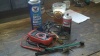
Had same problem replaced ida, tps, and map sensor still had sam problem in the end my fix was the adjusting screw you see in the picture. Now she starts with no problem and stays perfect idel. Hope that helps some of you

::CF Moderator::
Joined: Aug 2011
Posts: 43,971
Likes: 1,579
From: Prescott, Az
Year: 1990
Model: Cherokee (XJ)
Engine: 4.0
Gotta love the simple maintenance stuff!!!


Newbie
Joined: Mar 2025
Posts: 1
Likes: 0
I have a 1997 grand Cherokee and it has been starting and running fine up until I drove it 5 minutes to my grandparents house, and after parking and turning it off, the problem started. I noticed that the signal lights and hazards were blinking even though the car was completely off, and the car wouldn’t start again. It just fires up for a second and then dies. I’ve replaced the TPS, cleaned the IAC, and searched all over for answers but I have no idea what is happening or how to fix it.
CF Veteran


Joined: Aug 2020
Posts: 2,153
Likes: 585
From: SoCal
Year: 1988
Model: Cherokee (XJ)
Engine: 4.0L
Since you have a GRAND Cherokee, you should look around in here:
https://www.cherokeeforum.com/f5/
Those symptoms sound like the immobilizer (security system). The good folk in the Grand Cherokee forum should be able to help.
https://www.cherokeeforum.com/f5/
Those symptoms sound like the immobilizer (security system). The good folk in the Grand Cherokee forum should be able to help.

Thread
Thread Starter
Forum
Replies
Last Post
manamongtheruins
Stock XJ Cherokee Tech. All XJ Non-modified/stock questions go here
7
Jul 6, 2021 08:21 PM
samclemmons
Stock XJ Cherokee Tech. All XJ Non-modified/stock questions go here
7
Jul 24, 2016 05:27 PM
70hemicuda
Stock XJ Cherokee Tech. All XJ Non-modified/stock questions go here
21
Dec 26, 2015 07:18 PM
K-SKI
Stock XJ Cherokee Tech. All XJ Non-modified/stock questions go here
16
May 20, 2012 09:12 AM
Currently Active Users Viewing This Thread: 1 (0 members and 1 guests)

