Jeep Grand Cherokee 1993-1998: Why is My Serpentine Belt Squeaking/Squealing?
If your serpentine belt is squealing or chirping, learn how to diagnose the problem and fix it permanently.
This article applies to the Jeep Grand Cherokee ZJ (1993-1998).
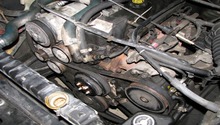
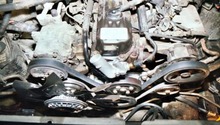
We have all heard, at one time or another, that annoying squeaking and squealing sound from under the hood. The serpentine belt often gets the blame for this really annoying noise that drives you up the wall. Although in some cases, it is not the belt at all that is causing the noise, but instead a loose pulley causing some slippage. No matter what you think may be the cause, it should not be ignored. A squeaking belt (no matter the cause) can soon enough turn into a broken belt. A broken belt will occur when you least want it to—as you are driving someplace. Don't let yourself get stranded. Use this guide to troubleshoot what is making that awful sound and get it fixed right away. Diagnosing the root cause is easy and free; fixing the problem may be fairly cheap to moderately expensive. Most repairs can be done on your own with minimal mechanical know-how, and the end result is a fixed Jeep that didn't cost you nearly as much as taking it to a shop to diagnose and solve your problem.

Materials Needed
- Tensioner pulley tool
- New serpentine belt
Step 1 – Check the condition of the serpentine belt
The belt itself is the most common cause of the squeaking noise.
Bad belts squeak because they are slipping on the pulleys. Even a new belt that has sat for a long time is prone to dry rot and other brittle conditions that cause it to lose its grip on the pulleys. Over time, this slippage is going to cause high temperatures on the belt, which will lead to its failure. Any residue coming off the belt and building up on the pulleys can cause the belt to bind, which will quickly snap. Don't get caught on the side of the road; put a new belt on as soon as possible and see if that takes care of your squeaking problem.
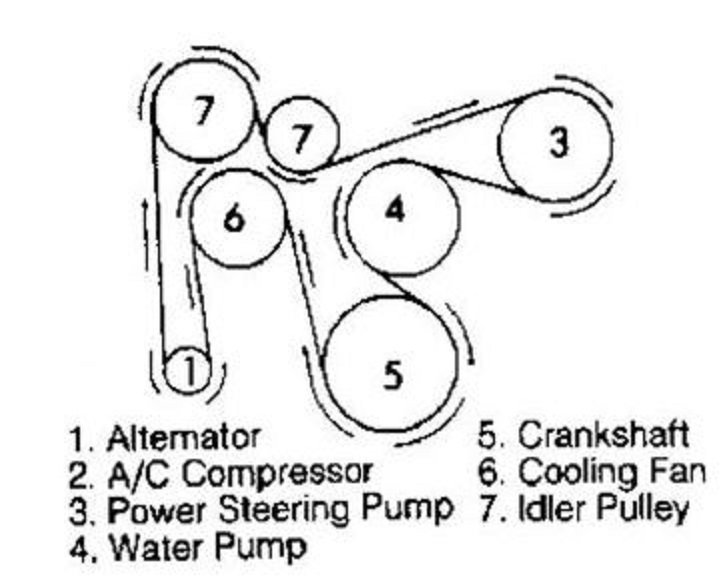
If you are still hearing the squeaking sound, start checking each component that is wrapped around the belt.
Step 2 – Check the pulleys
If the pulleys are misaligned, they will usually cause a chirping sound rather than a squeaking noise.
If the pulleys were incorrectly installed, they may be out of alignment. This is usually indicated by a loud, short and sharp chirping noise, rather than a long squeaking sound. The chirp sound never changes pitch with speed or temperature. If this is what you are experiencing, remove the serpentine belt and check each pulley. Make sure they are all properly mounted flush on the component they are mounted to. Check the condition of the bolts and make sure they are torqued according to manufacturer's specification.

If the pulleys look good and are mounted flush or you have a squeal rather than a chirp, start checking the tensioners.
Step 3 – Check the tensioner
If the tensioner is loose, the belt will slip and squeal.
The tensioner may be loose and can cause the belt to slip. Double check the tensioner bolt as well as the mounting bolts to make sure none are stripped and they are properly torqued.
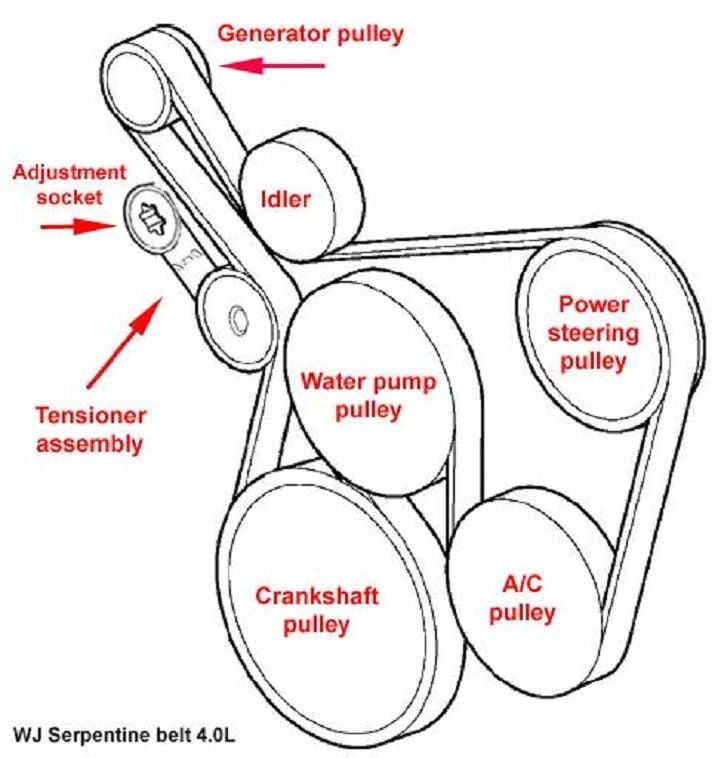
If the tensioner looks good, you may have bad bearings.
Step 4 – Check your pulleys for binding
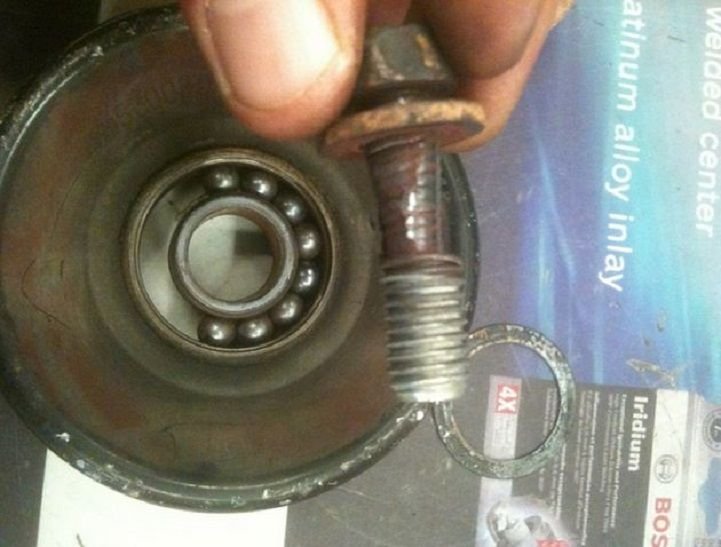
The A/C and alternator pulleys are common culprits for bad bearings.
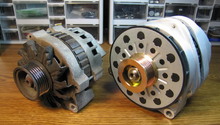
With the belt removed, spin each pulley, especially the A/C, water pump and alternator pulleys. These are more prone than any other to bind up. They should spin freely. If you feel any resistance at all, or wobble, the bearings may need to be replaced. The idler pulley is also another common culprit for binding. There are also rubber seals that are prone to rotting that maintain the integrity of those bearings. If the bearings are shot, the rubber seal is likely the culprit. The seals and the bearings will need to be replaced and repacked. Most shops will just replace the entire component with a new part, rather than rebuilding the bearings. This is more labor intensive, but for a DIY job, repacking new bearings and replacing the seals will be much less expensive.
Pro Tip
As tempting as it may be, do not use belt dressing of any kind on your serpentine belt. This will not only be a temporary solution at best, it can also hide the real problem as well as cause even more problems than you had to begin with.
Featured Video: Squeaking Belt on Jeep Grand Cherokee
Related Discussions
- Serpentine Belt Squeal - CherokeeForum.com
- Serpentine Belt Problems - CherokeeForum.com
- Bad Squeak? - CherokeeForum.com
- Serpentine Belt - CherokeeForum.com
- Squeaking Belt on Jeep Grand Cherokee - YouTube.com