


can someone break this down for me???


Thread Starter
Senior Member
Joined: Aug 2009
Posts: 723
Likes: 0
From: Ga and Va
Year: 15
Engine: 3.6
 can someone break this down for me???
ok after several times of reading about the different TCs. i know the difference in the 231s and the 242s. MY questiong is about the 242s.... i know that when in full-time 4H, it acts as a LSD and transfers some of the power, 52/48, if i can remember correctly.. But everything i read says that when in 4H, part-time, or 4L that it is "locked".... im going to be a NOOB and state that i figure its not actually locked like say being welded, but is it really locked? im beating my head on the table trying to find this out... maybe im just having a retard moment...
also what is the difference in CV vs U-joint type set ups? is one better?
lastly Full floating vs non????

also what is the difference in CV vs U-joint type set ups? is one better?
lastly Full floating vs non????
Senior Member
Joined: Dec 2008
Posts: 564
Likes: 0
From: Aldergrove,BC,Canada
Year: 1989
Model: Wagoneer
Engine: 4.0L I6
as cruiser said it acts like an open differential, when in 4FT and you turn on dry ground/pavement it disengages the front axle which is why it doesnt bind and bark as it would in 4PT, its nice for winter driving when the road surface differs and you dont gotta worry bout damaging u-joints.
with regards to ujoint/cv are you taking driveshaft or axles?
drive shafts you have you basic single ujoint then you have the double cardon joint which is commonly confused with a CV joint which do not come on our jeeps as far as i know, CV joints are used on the axles of FWD cars. Some jeeps had axle joints with rubber boots but IIRC it was still just a standard u joint.
Copied from wikipedia
Full-floating vs semi-floating
Full-floating
The full-floating design is typically used in most 3/4 and 1-ton light trucks, medium duty trucks and heavy-duty trucks, as well as most agricultural applications, such as large tractors and combines. There are a few exceptions, such as many Land-Rover vehicles. A full-floating axle can be identified by a protruding hub to which the axle shaft flange is bolted. These axles can carry more weight than a semi-floating or non-floating axle assembly because the hubs have two bearings riding on a fixed spindle. The axle shafts themselves do not carry any weight; they serve only to transmit torque from the differential to the wheels. Full-floating axle shafts are retained by the aforementioned flange bolted to the hub, while the hub and bearings are retained on the spindle by a large nut.
Semi-floating
The semi-floating design carry the weight of the vehicle on the axle shaft itself; there is a single bearing at the end of the axle housing that carries the load from the axle and that the axle rotates through. With a semi-floating axle, the axles themselves serve as the inner bearing race and are retained by c-clips that are in the differential carrier. This design is found under most 1/2 ton and lighter trucks and SUV's.
jeeps have semi-floating axles
with regards to ujoint/cv are you taking driveshaft or axles?
drive shafts you have you basic single ujoint then you have the double cardon joint which is commonly confused with a CV joint which do not come on our jeeps as far as i know, CV joints are used on the axles of FWD cars. Some jeeps had axle joints with rubber boots but IIRC it was still just a standard u joint.
Copied from wikipedia
Full-floating vs semi-floating
Full-floating
The full-floating design is typically used in most 3/4 and 1-ton light trucks, medium duty trucks and heavy-duty trucks, as well as most agricultural applications, such as large tractors and combines. There are a few exceptions, such as many Land-Rover vehicles. A full-floating axle can be identified by a protruding hub to which the axle shaft flange is bolted. These axles can carry more weight than a semi-floating or non-floating axle assembly because the hubs have two bearings riding on a fixed spindle. The axle shafts themselves do not carry any weight; they serve only to transmit torque from the differential to the wheels. Full-floating axle shafts are retained by the aforementioned flange bolted to the hub, while the hub and bearings are retained on the spindle by a large nut.
Semi-floating
The semi-floating design carry the weight of the vehicle on the axle shaft itself; there is a single bearing at the end of the axle housing that carries the load from the axle and that the axle rotates through. With a semi-floating axle, the axles themselves serve as the inner bearing race and are retained by c-clips that are in the differential carrier. This design is found under most 1/2 ton and lighter trucks and SUV's.
jeeps have semi-floating axles
Last edited by mud-dog27; Feb 19, 2012 at 03:26 PM.
Thread Starter
Senior Member
Joined: Aug 2009
Posts: 723
Likes: 0
From: Ga and Va
Year: 15
Engine: 3.6
Thanks. I guess my real question is, full floaters, like a bronco, when they are locked is the WHOLE axle locked Or is it still open diff? When you lock the hubs is that the equivalent of engaging a locker? Or does that just secure the axle?
I understand about the cv axles now thanks.
I understand about the cv axles now thanks.
Senior Member
Joined: Dec 2008
Posts: 564
Likes: 0
From: Aldergrove,BC,Canada
Year: 1989
Model: Wagoneer
Engine: 4.0L I6
Thanks. I guess my real question is, full floaters, like a bronco, when they are locked is the WHOLE axle locked Or is it still open diff? When you lock the hubs is that the equivalent of engaging a locker? Or does that just secure the axle?
I understand about the cv axles now thanks.
I understand about the cv axles now thanks.

this is a full floating rear axle

http://what-when-how.com/automobile/...le-automobile/ give this a read for in for on full floating and semi floating rear axles
Just google this stuff and you will get more information than i can give you and it will likely make more sense than me trying to explain it in my words.
Trending Topics
CF Veteran
Joined: Feb 2010
Posts: 5,420
Likes: 0
From: Soddy Daisy TN
Year: 97
Model: Cherokee
Engine: 4.0L
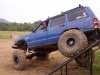
Just an FYI your front D30 as well as a Bronco with a solid front axle is a full floating axle. Weight of the vehicle is on the bearings not the axle shafts. All solid front axles are full floaters, locking hubs or not.
Senior Member
Joined: Dec 2008
Posts: 564
Likes: 0
From: Aldergrove,BC,Canada
Year: 1989
Model: Wagoneer
Engine: 4.0L I6
and i lied earlier bout CVs being for FWD cars...... IFS 4x4s also run CV axles, poor bastards.
CF Veteran
Joined: Sep 2010
Posts: 4,968
Likes: 0
From: Salt Lake City, UT
Year: 2000
Model: Cherokee
Engine: 4.0L
Thread Starter
Senior Member
Joined: Aug 2009
Posts: 723
Likes: 0
From: Ga and Va
Year: 15
Engine: 3.6
Ok new question since you guys seem to be helpful... I'm building my lift. I have 3" spacers, JK shocks, do I have to have UCAs or LCAs? Will I still be able to wheel without them or is that highly recommended. Anything else I'm missing? Extended brake lines? Bump stops? What else do I really need. Asked in the lift thread but didn't get a response.
Senior Member
Joined: Dec 2008
Posts: 564
Likes: 0
From: Aldergrove,BC,Canada
Year: 1989
Model: Wagoneer
Engine: 4.0L I6
i dont know what shocks the JKs use as far as mounting points go, might be eyes on either end which will work but need to get the stud to eye adapter for the front, that is if grands are the same as XJs. JKS make them as thats what i have dont know who else makes em. http://store.jksmfg.com/merchant2/me...ory_Code=Shock
UCA wont be needed for a 3" lift, and LCA likely wont either but you may run into the tires hitting the rear of the front fender wells, so if you can score some adjustable LCAs or set length for a 3" kit that would be best.
brake lines are the same you can likely get away with stock but they may get tight at full droop, if ya do end up needing extended lines heres how to do so on the cheap with OEM parts http://www.4x4wire.com/jeep/tech/brakes/xjhoseext02/
as for bump stops......thats up to you, im at 4.5" and my rears deteriorate long ago fronts are stock and ive never had issue and never bother to get any, some will swear that you HAVE to have em but it all comes down to whether or not you want to deal with em.
other things to look at will be drop pitman arm, re-drilling or getting an relocation bracket for the trac bar or an adjustable trac bar but thats money.
UCA wont be needed for a 3" lift, and LCA likely wont either but you may run into the tires hitting the rear of the front fender wells, so if you can score some adjustable LCAs or set length for a 3" kit that would be best.
brake lines are the same you can likely get away with stock but they may get tight at full droop, if ya do end up needing extended lines heres how to do so on the cheap with OEM parts http://www.4x4wire.com/jeep/tech/brakes/xjhoseext02/
as for bump stops......thats up to you, im at 4.5" and my rears deteriorate long ago fronts are stock and ive never had issue and never bother to get any, some will swear that you HAVE to have em but it all comes down to whether or not you want to deal with em.
other things to look at will be drop pitman arm, re-drilling or getting an relocation bracket for the trac bar or an adjustable trac bar but thats money.
Last edited by mud-dog27; Feb 28, 2012 at 09:16 PM.

