


 Sep 21, 2015, 02:17 PM
Last edit by: IB Advertising
See related guides and technical advice from our community experts:
Browse all: Wheels and Tires
- Jeep Grand Cherokee ZJ 1993 to 1998 Tires General Information and Specs
Important information to help you understand your Jeep Grand Cherokee.
Browse all: Wheels and Tires

All Lift & Tire questions go here!!!

Junior Member
Joined: Aug 2015
Posts: 55
Likes: 0
From: SW MI Lake-effect snowbelt country
Year: 1996
Model: Cherokee
Engine: 4.0 HO

I've got 235s the goodyear Wrangler R/ts
they were on it when i got them. I have them filled with nitrogen@ 36/38 psi on the freeway@ 65-70 on cruise with a totally stock engine I normally get 19-20 mph depending on the terrain I'm running in. I'd like to go to a slightly more oversize tire without going wider. a little more oversize might help a bit more with mileage. I've lived in serious snow country all my life and wider tires are no big advantage---for my needs at least.
they were on it when i got them. I have them filled with nitrogen@ 36/38 psi on the freeway@ 65-70 on cruise with a totally stock engine I normally get 19-20 mph depending on the terrain I'm running in. I'd like to go to a slightly more oversize tire without going wider. a little more oversize might help a bit more with mileage. I've lived in serious snow country all my life and wider tires are no big advantage---for my needs at least.
CF Veteran
Joined: Jul 2010
Posts: 4,930
Likes: 3
From: 802
Year: 99
Model: Cherokee
Engine: 4.0
I've got 235s the goodyear Wrangler R/ts
they were on it when i got them. I have them filled with nitrogen@ 36/38 psi on the freeway@ 65-70 on cruise with a totally stock engine I normally get 19-20 mph depending on the terrain I'm running in. I'd like to go to a slightly more oversize tire without going wider. a little more oversize might help a bit more with mileage. I've lived in serious snow country all my life and wider tires are no big advantage---for my needs at least.
they were on it when i got them. I have them filled with nitrogen@ 36/38 psi on the freeway@ 65-70 on cruise with a totally stock engine I normally get 19-20 mph depending on the terrain I'm running in. I'd like to go to a slightly more oversize tire without going wider. a little more oversize might help a bit more with mileage. I've lived in serious snow country all my life and wider tires are no big advantage---for my needs at least.
1- Whats the fill up cost?
2- Why such high pressure?
3- Do you wheel?

CF Veteran
Joined: Jul 2010
Posts: 4,930
Likes: 3
From: 802
Year: 99
Model: Cherokee
Engine: 4.0
I prefer the dirty method of crawling under jeep and measuring from top of axle tube to bottom of frame rail. Stock height: F should be 6.75" +/-.5", R should be 6.00' +/-.5" anything over is lift.
Last edited by VTJeep; Aug 15, 2015 at 03:47 PM. Reason: words

Moderator of Jeeps
Joined: Jul 2011
Posts: 21,029
Likes: 3
From: Frederick, MD from Cleveland, OH
Year: 1993 YJ Wrangler
Engine: 4.0 I6
All Lift & Tire questions go here!!!
Yep. You want 2.5" wide springs with a spring rate a little higher than an XJ.
EDIT: Also, vehicles than are Sprung Under Axle (SUA) almost always have springs with a heavier arch than Sprung Over Axle (SOA). XJs are SOA, so using springs from a SUA will usually generate easy lift
EDIT: Also, vehicles than are Sprung Under Axle (SUA) almost always have springs with a heavier arch than Sprung Over Axle (SOA). XJs are SOA, so using springs from a SUA will usually generate easy lift
Last edited by NewKindOfClown; Aug 15, 2015 at 04:01 PM.

Seasoned Member
Joined: Jan 2009
Posts: 443
Likes: 2
From: Prescott, AZ
Year: 1996
Model: Cherokee
Engine: 4.0L
I'm sure this has been asked a thousand times, I just can't seem to find an answer right away. But will an add-a-leaf kit fix the sag in my leaf springs? They are starting to bend backwards. Just want to double check before I drop money on new OEM springs. Thanks.
Moderator of Jeeps
Joined: Jul 2011
Posts: 21,029
Likes: 3
From: Frederick, MD from Cleveland, OH
Year: 1993 YJ Wrangler
Engine: 4.0 I6
All Lift & Tire questions go here!!!
AAL will fix it for a short time, with a rough ride. You're better off buying new leaf springs
Seasoned Member


Joined: Mar 2015
Posts: 473
Likes: 8
From: Oregon
Year: 2000
Model: Cherokee (XJ)
Engine: 4.0 I6
It will for a little while but it wont take long till you'll be right back where you started. Spend a little extra cash and buy some new springs, you'll thank yourself for it later!
Member
Joined: Jul 2015
Posts: 156
Likes: 0
From: Tehachapi CA
Year: 1996
Model: Cherokee
Engine: 4.0 HO
Started working on the SYE today. Removed rear and front shaft. Removed the TC drop and put TC back to stock height. As kit instructed I measured 33-3/4 " from center of rear yoke to TC output shaft and made mark. This left me with just under 1" of spline remaining, over 1/4 shy of the minimum amount the instructions say. So what I did was marked the spline so there was exactly 1.25 inches of spline remaining (have not cut yet). I attached the front shaft to the rear yoke. I had someone hold the kit yoke in place so it would be approximately in place based on the mark I made on the output shaft. I lifted the front shaft into place. It was compressed all the way and I had to pull it out about 1" to where it would bolt onto the kit yoke.
So my concern now is where exactly the shaft should be in terms of extended / compressed, with the jeep in rested position ? I'm assuming you want to be so that it can shorten when suspension compresses and not bottom out as well as extend when needed. Any help appreciated.
So my concern now is where exactly the shaft should be in terms of extended / compressed, with the jeep in rested position ? I'm assuming you want to be so that it can shorten when suspension compresses and not bottom out as well as extend when needed. Any help appreciated.
Junior Member
Joined: Aug 2015
Posts: 55
Likes: 0
From: SW MI Lake-effect snowbelt country
Year: 1996
Model: Cherokee
Engine: 4.0 HO
Nitrogen, huh.. Couple Q's..
1- Whats the fill up cost?
2- Why such high pressure?
3- Do you "wheel"?
local shop fills them for about 20$ per tire. plus they top them off free If i ever need it---usual less than once a year provided nothing gets punctured. I also have NI in 3 other vehicles I am responsible for. camper only gets used half a dozen occasions a year. Never had an air leak-down since I switched it to NI
I run the higher pressure for added mileage----drive 25K M/year for work---the NI tires run a lot cooler than airfilled so you don't get heat build up. The larger nitrogen molecule or whatever does not bleed out through tires like normal atmospheric molecules do.
If you are asking if I'm an off-road rock and mud basher---no---not my form of recreation. At most just little off road for getting to hunting or flyfishing locations. no need for radical lifts, monster tires, aftermarket re-gears etc etc. I probably have not even put it in 4Wd more than half a dozen times since I got it last Fall. That that was for short distances in snow/ice conditions.
Obviously if I was an off-roader that was constantly airing up and down for. rockkrawling NI would be extremely impractical. but for a daily driver road car it has worked well for me so far.
1- Whats the fill up cost?
2- Why such high pressure?
3- Do you "wheel"?
local shop fills them for about 20$ per tire. plus they top them off free If i ever need it---usual less than once a year provided nothing gets punctured. I also have NI in 3 other vehicles I am responsible for. camper only gets used half a dozen occasions a year. Never had an air leak-down since I switched it to NI
I run the higher pressure for added mileage----drive 25K M/year for work---the NI tires run a lot cooler than airfilled so you don't get heat build up. The larger nitrogen molecule or whatever does not bleed out through tires like normal atmospheric molecules do.
If you are asking if I'm an off-road rock and mud basher---no---not my form of recreation. At most just little off road for getting to hunting or flyfishing locations. no need for radical lifts, monster tires, aftermarket re-gears etc etc. I probably have not even put it in 4Wd more than half a dozen times since I got it last Fall. That that was for short distances in snow/ice conditions.
Obviously if I was an off-roader that was constantly airing up and down for. rockkrawling NI would be extremely impractical. but for a daily driver road car it has worked well for me so far.
Last edited by DWStiles; Aug 15, 2015 at 07:02 PM.
CF Veteran
Joined: Jul 2010
Posts: 4,930
Likes: 3
From: 802
Year: 99
Model: Cherokee
Engine: 4.0
Nitrogen, huh.. Couple Q's..
1- Whats the fill up cost?
2- Why such high pressure?
3- Do you "wheel"?
local shop fills them for about 20$ per tire. plus they top them off free If i ever need it---usual less than once a year provided nothing gets punctured. I also have NI in 3 other vehicles I am responsible for. camper only gets used half a dozen occasions a year. Never had an air leak-down since I switched it to NI
I run the higher pressure for added mileage----drive 25K M/year for work---the NI tires run a lot cooler than airfilled so you don't get heat build up. The larger nitrogen molecule or whatever does not bleed out through tires like normal atmospheric molecules do.
If you are asking if I'm an off-road rock and mud basher---no---not my form of recreation. At most just little off road for getting to hunting or flyfishing locations. no need for radical lifts, monster tires, aftermarket re-gears etc etc. I probably have not even put it in 4Wd more than half a dozen times since I got it last Fall. That that was for short distances in snow/ice conditions.
Obviously if I was an off-roader that was constantly airing up and down for. rockkrawling NI would be extremely impractical. but for a daily driver road car it has worked well for me so far.
1- Whats the fill up cost?
2- Why such high pressure?
3- Do you "wheel"?
local shop fills them for about 20$ per tire. plus they top them off free If i ever need it---usual less than once a year provided nothing gets punctured. I also have NI in 3 other vehicles I am responsible for. camper only gets used half a dozen occasions a year. Never had an air leak-down since I switched it to NI
I run the higher pressure for added mileage----drive 25K M/year for work---the NI tires run a lot cooler than airfilled so you don't get heat build up. The larger nitrogen molecule or whatever does not bleed out through tires like normal atmospheric molecules do.
If you are asking if I'm an off-road rock and mud basher---no---not my form of recreation. At most just little off road for getting to hunting or flyfishing locations. no need for radical lifts, monster tires, aftermarket re-gears etc etc. I probably have not even put it in 4Wd more than half a dozen times since I got it last Fall. That that was for short distances in snow/ice conditions.
Obviously if I was an off-roader that was constantly airing up and down for. rockkrawling NI would be extremely impractical. but for a daily driver road car it has worked well for me so far.
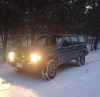
Newbie
Joined: Dec 2014
Posts: 24
Likes: 0
Year: 1998
Model: Cherokee
Engine: 4.0 V6
Okay im back with some more questions. I now have the money for my lift kit and am about ready to drop the hammer. I have been thinking on a simple Rusty's lift kit for a little under 400 so I can afford tires also. But now im debating spending a little more for a nicer lift kit and wait to save on some tires later. Any sugestions weather i should get a nicer lift up front.
Seasoned Member
Joined: Mar 2015
Posts: 473
Likes: 8
From: Oregon
Year: 2000
Model: Cherokee (XJ)
Engine: 4.0 I6
Okay im back with some more questions. I now have the money for my lift kit and am about ready to drop the hammer. I have been thinking on a simple Rusty's lift kit for a little under 400 so I can afford tires also. But now im debating spending a little more for a nicer lift kit and wait to save on some tires later. Any sugestions weather i should get a nicer lift up front.

Senior Member
Joined: Oct 2013
Posts: 509
Likes: 1
From: Hampton Roads
Year: 1997
Model: Cherokee
Engine: 4.0 L
Started working on the SYE today. Removed rear and front shaft. Removed the TC drop and put TC back to stock height. As kit instructed I measured 33-3/4 " from center of rear yoke to TC output shaft and made mark. This left me with just under 1" of spline remaining, over 1/4 shy of the minimum amount the instructions say. So what I did was marked the spline so there was exactly 1.25 inches of spline remaining (have not cut yet). I attached the front shaft to the rear yoke. I had someone hold the kit yoke in place so it would be approximately in place based on the mark I made on the output shaft. I lifted the front shaft into place. It was compressed all the way and I had to pull it out about 1" to where it would bolt onto the kit yoke.
So my concern now is where exactly the shaft should be in terms of extended / compressed, with the jeep in rested position ? I'm assuming you want to be so that it can shorten when suspension compresses and not bottom out as well as extend when needed. Any help appreciated.
So my concern now is where exactly the shaft should be in terms of extended / compressed, with the jeep in rested position ? I'm assuming you want to be so that it can shorten when suspension compresses and not bottom out as well as extend when needed. Any help appreciated.
