


 Sep 16, 2015, 06:27 PM
Last edit by: IB Advertising
See related guides and technical advice from our community experts:
Browse all: Specifications & General Maintenance
- Jeep Cherokee 1984-2001: How to Maximize Your MPG
Important information to help you understand your Jeep Cherokee
Browse all: Specifications & General Maintenance

Whats your MPG, Year and Make? Be truthful! We need better MPG's!

Newbie
Joined: Jun 2013
Posts: 6
Likes: 0
From: MB, Canada
Year: 1998
Model: Cherokee
Engine: 4.0 L I6

I was informed by a good pal that this actually worked on his XJ. Just like a lottery ticket, I'll take a chance and see if it's true. No big loss if it's the same result. lol


Senior Member
Joined: Dec 2012
Posts: 606
Likes: 20
From: cariboo, bc
Model: Cherokee
i only do 5mph over (trucker, need a clean license)
i keep the revs under 2000rpm
5w30 year round
check tire psi every trip, couple #'s extra for the highway
bought it already lifted, dont know if po changed the speedo gear thingy, but the speedo matches my 2 gps's and the odo matches routing software from point to point and highway sign distances, so confident that speedo is accurate.
i keep the revs under 2000rpm
5w30 year round
check tire psi every trip, couple #'s extra for the highway
bought it already lifted, dont know if po changed the speedo gear thingy, but the speedo matches my 2 gps's and the odo matches routing software from point to point and highway sign distances, so confident that speedo is accurate.


Seasoned Member
Joined: Dec 2009
Posts: 387
Likes: 2
From: Colorado
Year: 1997
Model: Cherokee
Last tank, 300 miles and 16.8 gals = 17.9 MPG
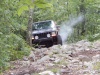
Mix of town, 4WD & Hwy. The last 3 mi to my house are all dirt, 500' elevation gain and a wheels in the water creek crossing.
My Tundra with an extra 1000 #s and a bigger engine does considerably better, but isn't near as much fun to drive. Besides, it has the camper on all summer, then it's 14 MPG.
FWIW
Mix of town, 4WD & Hwy. The last 3 mi to my house are all dirt, 500' elevation gain and a wheels in the water creek crossing.
My Tundra with an extra 1000 #s and a bigger engine does considerably better, but isn't near as much fun to drive. Besides, it has the camper on all summer, then it's 14 MPG.
FWIW
CF Veteran
Joined: Jun 2011
Posts: 1,023
Likes: 1
From: Southern Idaho
Year: 1994
Model: Cherokee
Engine: 4.0 L/242 CID I-6 High Output MFI
Well, guys and gals, I get an average of 21.5 mpg. The most I've ever tagged was 23 on the drive from Moscow, ID to Mountain Home, ID. My trip is almost 400 miles, and I almost always have at least an eighth of a tank left when I get back.
Member
Joined: Nov 2012
Posts: 149
Likes: 0
Year: 2001
Model: Cherokee
Engine: 4.0 Straight Six
Umm please explain HOW YOU GET SUCH GREAT GAS MILAGE. Lol I'd be lucky to get about 12 mpg
Senior Member
Joined: Mar 2013
Posts: 538
Likes: 0
From: McDonough, GA
Year: 1998
Model: Cherokee
Engine: 4.0
96 base model
4.0, aw4, np231
245k miles
3", 31" BFG's, 3.55 gears
I get about 17 with ethanol free gas after speedo and odo corrections... 70% highway, 30% city
4.0, aw4, np231
245k miles
3", 31" BFG's, 3.55 gears
I get about 17 with ethanol free gas after speedo and odo corrections... 70% highway, 30% city
CF Veteran
Joined: Jun 2011
Posts: 1,023
Likes: 1
From: Southern Idaho
Year: 1994
Model: Cherokee
Engine: 4.0 L/242 CID I-6 High Output MFI
Fuel is still being sprayed into your engine as long as the motor is turning and the ignition is on (higher RPM = more fuel). If it did not, your motor would shut off. I do not downshift, I coast as much as possible. No sense in racing to the light, stomping the brakes, and then having to race off to the next light. I roll through most lights in third gear.
I only have to use the starter about one out of five shut downs. Forget a Prius; it cost more than it saves. Paid $750 for the Cherokee and put some more $ into it. I used to to a Catalina 22 to the ocean and back once a month and used it last month to tow my 72 Chevelle and my wife's 66 Stang to our new house (one at a time). Try that with a Prius.
I only have to use the starter about one out of five shut downs. Forget a Prius; it cost more than it saves. Paid $750 for the Cherokee and put some more $ into it. I used to to a Catalina 22 to the ocean and back once a month and used it last month to tow my 72 Chevelle and my wife's 66 Stang to our new house (one at a time). Try that with a Prius.
The factory service manual clearly states for my '94 that when the throttle is not depressed and engine rpm's are above 1500, fuel to the injectors is cut off completely. Your engine will NOT shut off because it is still being spun by the drivetrain.
CF Veteran
Joined: Jun 2011
Posts: 1,023
Likes: 1
From: Southern Idaho
Year: 1994
Model: Cherokee
Engine: 4.0 L/242 CID I-6 High Output MFI
The only thing I haven't done is clean and replace my O2 sensor. Can't get the sonofagun out of the exhaust pipe. A new NTK (original used for my Jeep) is $30 on rockauto.com, shipped. I also removed my cat and have two inline glasspacks (keeps the noise down). Borla headers can help, but are expensive. A 99+ intake can help, too, but is expensive if you don't pull it from the junkyard.
CF Veteran
Joined: Jun 2011
Posts: 1,023
Likes: 1
From: Southern Idaho
Year: 1994
Model: Cherokee
Engine: 4.0 L/242 CID I-6 High Output MFI
My "information" comes from scientific research. Consider three things: Ideal gas law, Simple math, and Stochiometric A/F ratio.
Ideal gas law: P*V = n*R*T pressure times volume = number of moles times ideal gas constant times temperature. Knowing the manifold pressure, and air temperature, you can calculate the amount of air in a given engine cylinder per intake stroke. Higher vacuum = lower pressure = less air.
Simple math: By holding all other variables constant (air temp and manifold pressure) doubling the RPM will double the number of intake cycles per minute and the amount of air entering the engine per minute.
Stochiometric mass A/F ratio: Typically this is 14.7:1 (14.7 lbs of air per each pound of fuel). Stoichiometric air/fuel ratios are not necessarily the optimal target for best power or economy though. For best power, you will want to run rich, for best economy you will want to run lean of stoich. If you increase the amount of air going into the engine you will have to increase the fuel as well to prevent a lean combustion event and overheating the engine. If you think that increasing your RPMs by downshifting uses less fuel than coasting you are mistaken.
One final note: If you decide to buy that diesel to blow smoke, get an older one. We are constantly working on technology to reduce diesel smoke on newer engines to the point where they pollute less than gas engines. Better yet, get a new one, support the economy, and help support my company!! I need to buy some new test equipment next year.
Ideal gas law: P*V = n*R*T pressure times volume = number of moles times ideal gas constant times temperature. Knowing the manifold pressure, and air temperature, you can calculate the amount of air in a given engine cylinder per intake stroke. Higher vacuum = lower pressure = less air.
Simple math: By holding all other variables constant (air temp and manifold pressure) doubling the RPM will double the number of intake cycles per minute and the amount of air entering the engine per minute.
Stochiometric mass A/F ratio: Typically this is 14.7:1 (14.7 lbs of air per each pound of fuel). Stoichiometric air/fuel ratios are not necessarily the optimal target for best power or economy though. For best power, you will want to run rich, for best economy you will want to run lean of stoich. If you increase the amount of air going into the engine you will have to increase the fuel as well to prevent a lean combustion event and overheating the engine. If you think that increasing your RPMs by downshifting uses less fuel than coasting you are mistaken.
One final note: If you decide to buy that diesel to blow smoke, get an older one. We are constantly working on technology to reduce diesel smoke on newer engines to the point where they pollute less than gas engines.
Better yet, get a new one, support the economy, and help support my company!! I need to buy some new test equipment next year.You are still wrong because you are letting less air into the engine with the throttle closed. This means less fuel is required, even if your engine RPMs double. The throttle valve cannot open by vacuum, it requires input from the driver. If you downshift and keep the throttle closed you use less fuel. This is one reason why I get 23 mpg on the highway and 19+ in the city (lots of mountains on the highway). You will also notice an increase in fuel economy if you shift into fourth gear (in a five speed) while going up hills. Less throttle=less air=less fuel used, even at slightly elevated RPMs.
Still, the ECU cuts fuel when the throttle is closed and engine RPMs are above 1500 (in my '94).