When you click on links to various merchants on this site and make a purchase, this can result in this site earning a commission. Affiliate programs and affiliations include, but are not limited to, the eBay Partner Network.
Stock XJ Cherokee Tech. All XJ Non-modified/stock questions go hereXJ (84-01)
All OEM related XJ specific tech. Examples, no start, general maintenance or anything that's stock.
Can somebody with a HO and heater control valve (HCV) post up a picture of what their heater hoses look like? I took mine out in the process of redoing my cooling system, and can't figure out how to put it back together. Which heater hose is which coming from the firewall, and how do they connect to the HCV?
Can somebody with a HO and heater control valve (HCV) post up a picture of what their heater hoses look like? I took mine out in the process of redoing my cooling system, and can't figure out how to put it back together. Which heater hose is which coming from the firewall, and how do they connect to the HCV?
Leave it out as suggested and route hoses like this:
One thing you may want to consider, is removing/eliminating the heater control valve, if you haven't already. '96 down have the HCV, '97 up the Factory eliminated it.
During the warm months, with a HCV, (temp lever/**** never moved off cold) coolant sits and stagnates inside the heater core.....There's no fresh coolant/corrosion protection circulation through the heater core.
With the HCV removed/eliminated, coolant/corrosion protection flows through the heater core constantly when the motor is running, regardless of where the temp lever/**** is set.
Also, you don't have to remember to turn/slide the heat lever/**** when flushing/re-filling the cooling system because coolant is flowing to/through the heater core when the motor is running and the HCV is absent.
Be sure to plug/cap the small vacuum hose when eliminating the HCV.
The heat is controlled by the blend air door. I've eliminated at least 10 of them here in Arizona and my AC always works perfectly.
Let's not have this thread turn into one of those where folks think theory and conjecture trumps actual field experience which has been proven time and time again, by numerous different people.
It flat works. Period.
I've already stated the other benefits of keeping coolant flowing versus being stagnant in the heater core and the dangers/disastrous results of having one fail unexpectedly whether you're poking around the engine bay or driving down the highway or trail.
One thing you may want to consider, is removing/eliminating the heater control valve, if you haven't already. '96 down have the HCV, '97 up the Factory eliminated it.
During the warm months, with a HCV, (temp lever/**** never moved off cold) coolant sits and stagnates inside the heater core.....There's no fresh coolant/corrosion protection circulation through the heater core.
With the HCV removed/eliminated, coolant/corrosion protection flows through the heater core constantly when the motor is running, regardless of where the temp lever/**** is set.
Also, you don't have to remember to turn/slide the heat lever/**** when flushing/re-filling the cooling system because coolant is flowing to/through the heater core when the motor is running and the HCV is absent.
Be sure to plug/cap the small vacuum hose when eliminating the HCV.
If this were the case, it would seem that '97-up heater cores should last longer than '96-earlier ones.
It doesn't seem that this is the case. The majority of the threads on heater core replacement are '97-up.(I did a quick search, and the first page that popped up, only 1 was '96-earlier)
Either folks aren't replacing as many '96-earlier ones, or they are just not posting about it. (or most folks have already replaced the '96-earlier ones, and there are a bunch of older posts that i did'nt look at)
My '96 heater core is still original .
There may be some other factors in play here, such as the '97-up heater cores are subject to many more heating/cooling cycles throughout it's life, which may contribute to fatigue in the soldered/epoxied joints or core tubes................As opposed to the '96-earlier ones which may sit idle for quite some time with no heater use?
If this is the case, I would rather replace a HCV than a heater core.
Good point on remembering to turn the heater on while flushing.
I would guess a bunch of folks forget this step.
Last edited by Firehawk068; Jan 8, 2015 at 08:39 AM.
If this were the case, it would seem that '97-up heater cores should last longer than '96-earlier ones.
It doesn't seem that this is the case. The majority of the threads on heater core replacement are '97-up.(I did a quick search, and the first page that popped up, only 1 was '96-earlier)
Either folks aren't replacing as many '96-earlier ones, or they are just not posting about it. (or most folks have already replaced the '96-earlier ones, and there are a bunch of older posts that i did'nt look at)
My '96 heater core is still original .
There may be some other factors in play here, such as the '97-up heater cores are subject to many more heating/cooling cycles throughout it's life, which may contribute to fatigue in the soldered/epoxied joints or core tubes................As opposed to the '96-earlier ones which may sit idle for quite some time with no heater use?
If this is the case, I would rather replace a HCV than a heater core.
Good point on remembering to turn the heater on while flushing.
I would guess a bunch of folks forget this step.
.......and the advantage to the HCV is??????
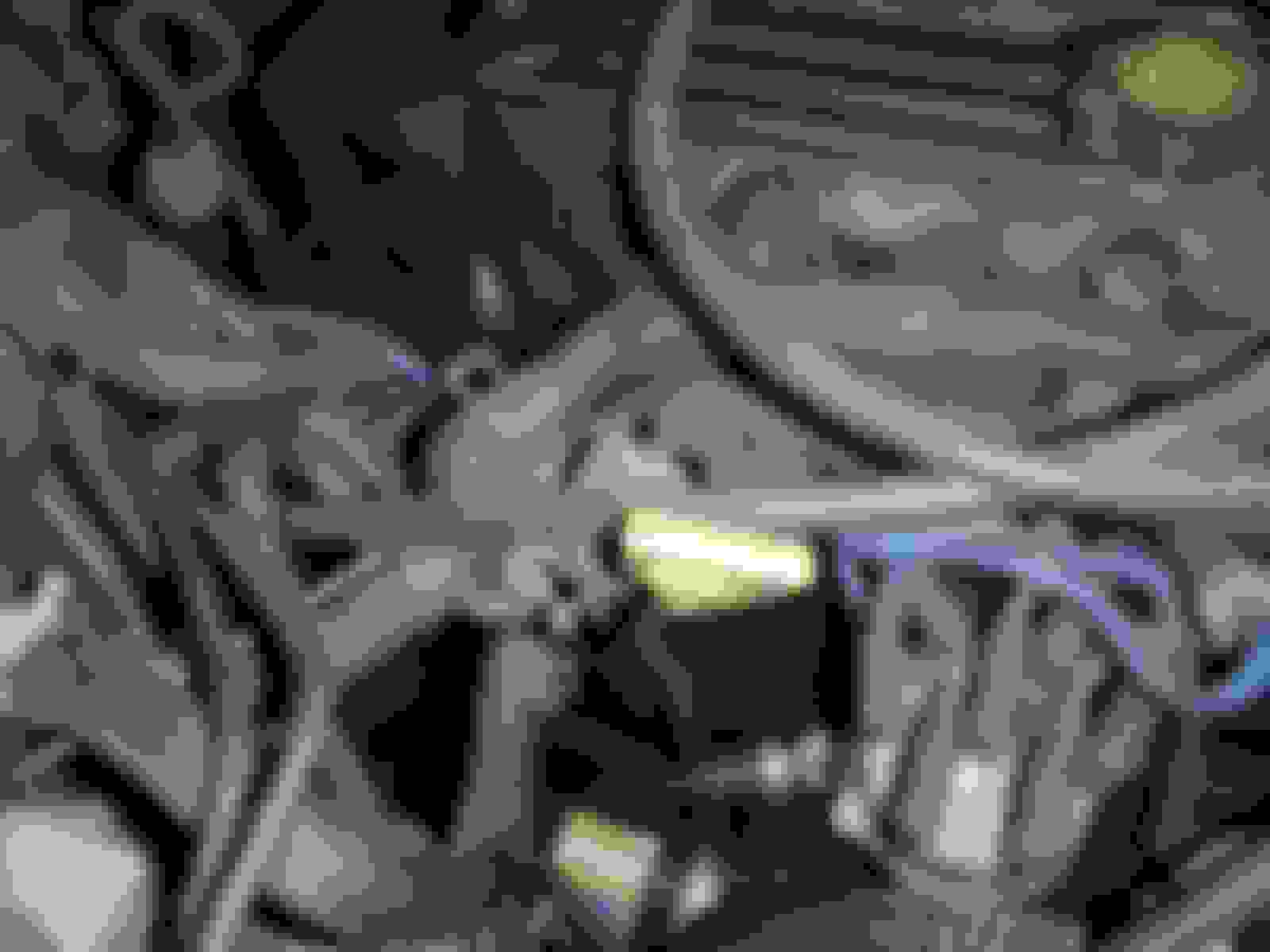
FWIW, I believe the above diagram is incorrect (reversed) regarding the heater hose connections at the firewall.
Two different size hoses its pretty straight forward really.
Originally Posted by Firehawk068
If you're referring to Cruiser's diagram, it looks correct to me?
Renix may be different from H.O. but as free said, 2 different size hoses (5/8" & 3/4"). U can see in this pic the hoses at the firewall r opposite from those in the diagram. At the firewall the 3/4" heater core nipple is on top, 5/8" nipple on bottom.
Mine is factory, and it runs from the thermostat housing into the bottom tube on the heater core, and from the top tube back to the water pump.
(as Cruiser's diagram would suggest)
Heater core should be the same for all years of XJ and MJ.



 HCV Orientation and Flow