


Blower Motor


Thread Starter
Newbie
Joined: Feb 2010
Posts: 10
Likes: 0
Model: Cherokee
 Blower Motor
2000 Cherokee, 6 cyl, 4x4. When I dial through the 4 fan settings on the climate control ****, the first 3 settings do nothing, then the 4th setting blows like holy hell (as it should). A/C and Heat work fine, but only on the 4th fan setting. Any ideas? Thank You!
Thread Starter
Newbie
Joined: Feb 2010
Posts: 10
Likes: 0
Model: Cherokee
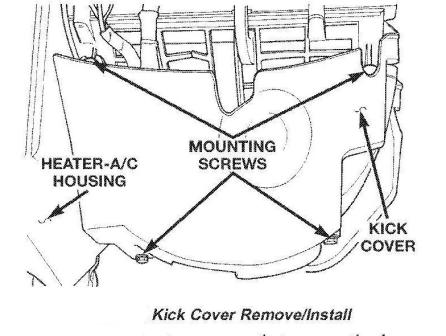
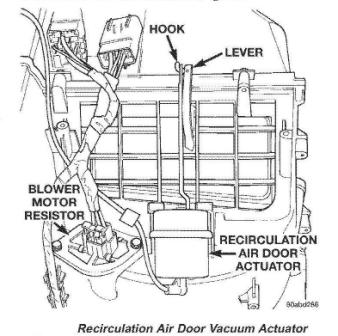
Do you have any idea how I get to it? I dropped the glove box down and didn't see anything that looked like the pictures I found on Google Images. Or is it under the kick plate under the glove box and only accessible by removing panels? The pictures make it looks like a big box with wire coils? Is that true for the 2000 model? Thank You!
CF Veteran
Joined: Mar 2011
Posts: 2,570
Likes: 4
From: California
Year: 1992
Model: Cherokee
Engine: 4.0 HO

Trending Topics

Senior Member
Joined: Mar 2013
Posts: 691
Likes: 2
From: Texas
Year: 1993
Model: Cherokee
Engine: 4.0L
There are three resistor coils and these rarely burn up. They do on occasion corrode and fail but the component that usually "blows" is the thermal diode that fails when the blower motor draws too much current as a result of failing bearings. Condition of the diode can be confirmed with a meter -- there should be no resistance at all across the diode.
If you replace the resistor pack or just the diode and it fails again, it's time to look at the blower motor.
An inexpensive fix if you are so inclined is to replace the diode with one from Radio Shack.
If you replace the resistor pack or just the diode and it fails again, it's time to look at the blower motor.
An inexpensive fix if you are so inclined is to replace the diode with one from Radio Shack.

CF Veteran
Joined: Aug 2010
Posts: 8,357
Likes: 103
From: Canton, MI
Year: 1999
Model: Cherokee
Engine: 4.0
There are three resistor coils and these rarely burn up. They do on occasion corrode and fail but the component that usually "blows" is the thermal diode that fails when the blower motor draws too much current as a result of failing bearings. Condition of the diode can be confirmed with a meter -- there should be no resistance at all across the diode.
If you replace the resistor pack or just the diode and it fails again, it's time to look at the blower motor.
An inexpensive fix if you are so inclined is to replace the diode with one from Radio Shack.
If you replace the resistor pack or just the diode and it fails again, it's time to look at the blower motor.
An inexpensive fix if you are so inclined is to replace the diode with one from Radio Shack.
Thread Starter
Newbie
Joined: Feb 2010
Posts: 10
Likes: 0
Model: Cherokee
I ohmed the blower motor resistor block and confirmed that the thermal fuse is an open circuit - thanks. My concern was how to get another one. I'll go to Radio shack.
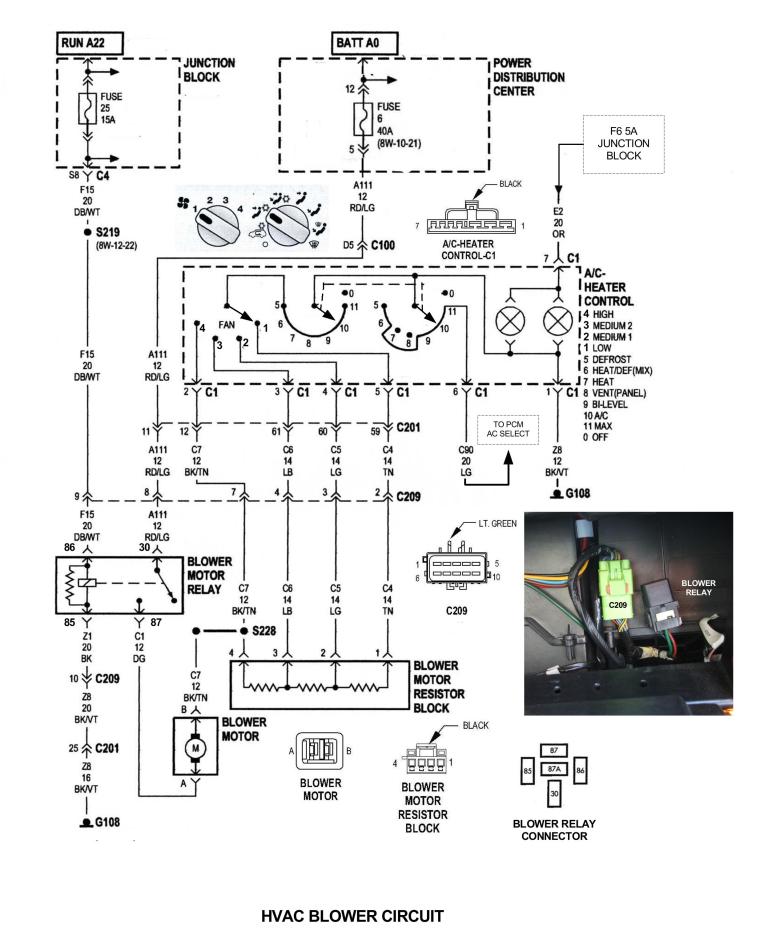
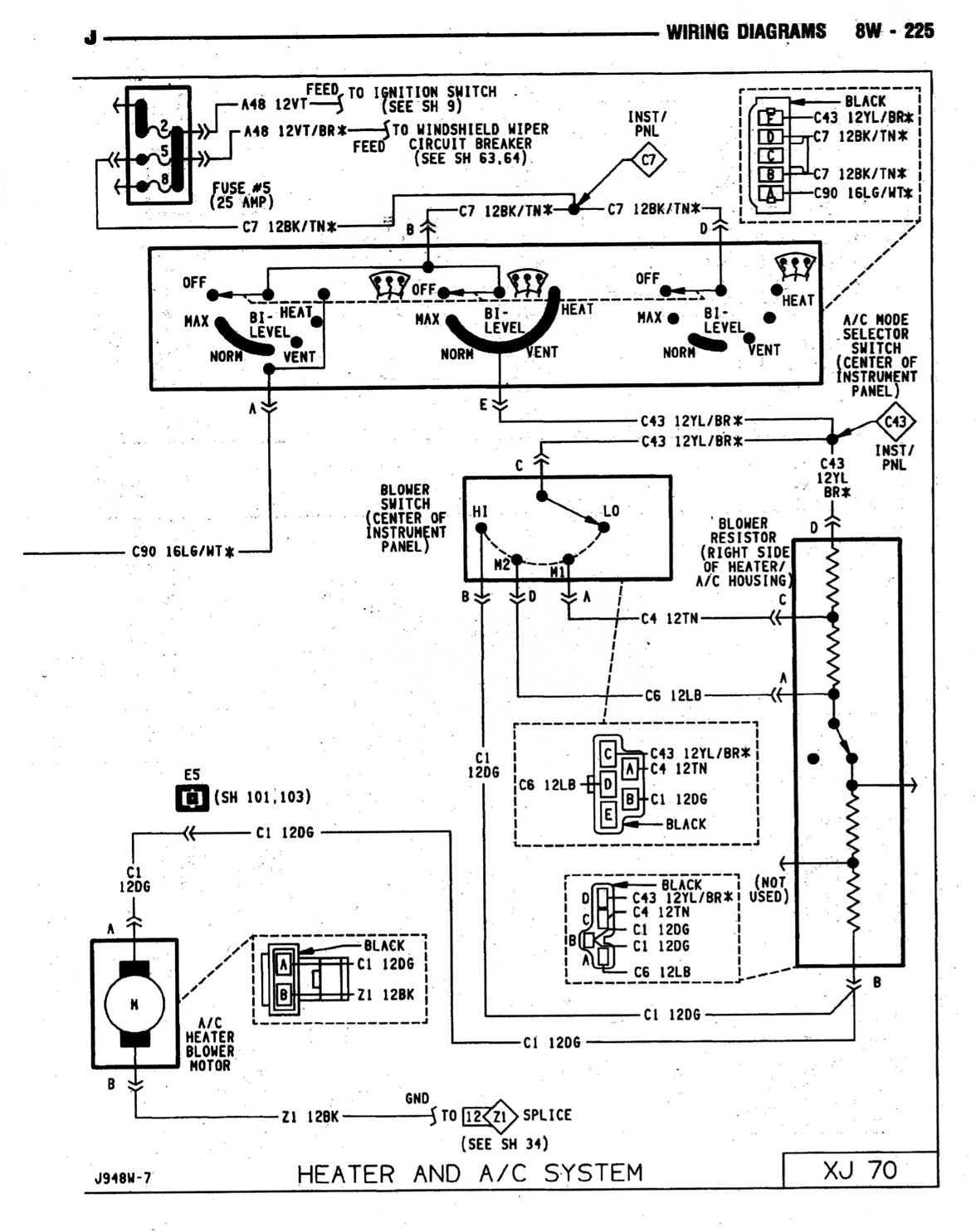
It's interesting that the circuit diagram above doesn't show the thermal fuse on the resistor block, but it's there.
If the thermal fuse fails again, do you replace the bearings or just the whole blower motor? Is it a bear to get out? Thanks for all the great replys!!!
It's interesting that the circuit diagram above doesn't show the thermal fuse on the resistor block, but it's there.
If the thermal fuse fails again, do you replace the bearings or just the whole blower motor? Is it a bear to get out? Thanks for all the great replys!!!
CF Veteran
Joined: Jul 2012
Posts: 1,395
Likes: 1
From: SD
Year: 1998
Model: Cherokee
Engine: 4.0
A quick look on NAPA's site shows a resistor for about $50 (BR257), and Echlin is a good brand. As said earlier, you may well end up blowing the new resistor, so I typically replace the resistor and blower motor together, but that's up to you.

Seasoned Member
Joined: Dec 2009
Posts: 387
Likes: 2
From: Colorado
Year: 1997
Model: Cherokee
I got my last resistor at Amazon:
Radio Shack won't have it, but any auto parts store should.
A more likely cause for the problem is rodents, not bearings. If your XJ sits for extended periods, then they will create a nest in the fan or plenum. The resistor depends on moving air to cool the fusible link.
The fan is extracted from the engine side of the firewall. IIRC something was in the way making it more difficult than three screws.

A more likely cause for the problem is rodents, not bearings. If your XJ sits for extended periods, then they will create a nest in the fan or plenum. The resistor depends on moving air to cool the fusible link.
The fan is extracted from the engine side of the firewall. IIRC something was in the way making it more difficult than three screws.
CF Veteran
Joined: Jul 2012
Posts: 1,395
Likes: 1
From: SD
Year: 1998
Model: Cherokee
Engine: 4.0
CF Veteran
Joined: Aug 2010
Posts: 8,357
Likes: 103
From: Canton, MI
Year: 1999
Model: Cherokee
Engine: 4.0
I ohmed the blower motor resistor block and confirmed that the thermal fuse is an open circuit - thanks. My concern was how to get another one. I'll go to Radio shack.
It's interesting that the circuit diagram above doesn't show the thermal fuse on the resistor block, but it's there.
If the thermal fuse fails again, do you replace the bearings or just the whole blower motor? Is it a bear to get out? Thanks for all the great replys!!!
It's interesting that the circuit diagram above doesn't show the thermal fuse on the resistor block, but it's there.
If the thermal fuse fails again, do you replace the bearings or just the whole blower motor? Is it a bear to get out? Thanks for all the great replys!!!
Below is a diagram that shows the resistor block for pre '97 XJ's. Note that this diagram shows the 'thermal fuse' and the previous diagram does not. If you have a 'thermal fuse' in your 2000 XJ resistor block it's the wrong one for your XJ.
Senior Member
Joined: Mar 2013
Posts: 691
Likes: 2
From: Texas
Year: 1993
Model: Cherokee
Engine: 4.0L
Hmmm... Perhaps one of those rare cases where providing some incorrect information actually helped clarify a problem?
I take it that the resistor block, as such, rarely causes a problem on the 97+ systems and that the fuse in the PDC provides the only protection for the HVAC blower circuit.
I take it that the resistor block, as such, rarely causes a problem on the 97+ systems and that the fuse in the PDC provides the only protection for the HVAC blower circuit.