


1994 xj 4.0 blown head gasket


Thread Starter
Junior Member
Joined: Sep 2011
Posts: 32
Likes: 0
Model: Cherokee
 1994 xj 4.0 blown head gasket
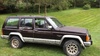
My engine blew the head gasket driving to CA. Coolant boiled over, oil burned and exhausted out the the tailpipe, lost engine power. Jeep is back home in the garage, i pulled one of the plugs out and didn't see any coolant, spark plug was crusty and burned.
What should I check or replace (besides oil, coolant and plugs) before try to run the engine again and assess the damage? Best case scenario being a new head, worst case being a new motor.
What should I check or replace (besides oil, coolant and plugs) before try to run the engine again and assess the damage? Best case scenario being a new head, worst case being a new motor.

Seasoned Member
Joined: Jul 2018
Posts: 419
Likes: 59
Model: Cherokee (XJ)
You did R&R the head gasket and get a look at the top end, right? That assumes the usual head-off checks were done like rolling the engine by hand and getting a good look at each cylinder wall, condition of valves, all pistons moving with crank without any piston rod bearing(s) play (movement lag), sweeping a straight edge over the milled side of the head looking for warping, etc., etc.. If convinced all is in working order on the top side, I'd drain the oil, drag a magnet through it to inspect for chips and clean out any residual water. Then, just for an added feel good measure, I'd drop the pan and get a look at the oil pump itself. I'd drop it and check for freedom of rotation, scoring on the walls and gears and clean the pick-up screen. There may be some acceptable minor scoring on an original 94 oil pump but nothing deeper than 0.002" max on a maximum of one score line. Satisfied with all of that and plugs, oil and coolant replaced, I'd give it a whirl. If it starts and I'd let it run for a few minutes carefully monitoring RPM and sound. Then I'd shut it down and drain the oil again to remove any water that might have been trapped in the rotating group and oil galleries that did not make it to the oil pan at last run. It's only a bit of work to ensure there's no latent overheat-related problems. Pressure checking the radiator couldn't hurt, either.

Old fart with a wrench
Joined: Nov 2010
Posts: 14,398
Likes: 741
From: Manlius, east of Syracuse, NY
Year: 2000 XJ Sport & WJ Laredo
Model: Grand Cherokee (WJ)
Engine: 4.0L
I don't think he's taken it apart yet. Yes, put water in the cooling system, new plugs and oil in it, and try to start it. You can get a much better assessment of it's condition if you can get it running.
Here's my take on the situation. It is not unusual for any engine with a long cylinder head like a straight 6 or especially an 8 to blow a head gasket near the center of the engine, basically because of the continuous and repeated thermal expansion of the cylinder head. Usually they burn the thin section between the center 2 cylinders or into the water jacket. Again, usually a small milling cleanup on the head can make it flat again and as long as no other damage was done, it will be perfectly okay. If the engine was run long enough to lose power and most of it's oil, I'd look farther into it's condition. Where did the oil go and how did it get into the cylinders? If you only have one spark plug that's fouled, I think you should pull that piston and check it for cracks around the piston pin that extend into the ring grooves. There are no pressurized oil passages that go thru the head. Any oil that gets to the top goes thru the pushrods, then drains back to the pan around them. If the crankcase becomes extremely pressurized with combustion gasses leaking out the head gasket, oil can enter the intake thru the CCV system. Look at the inside of the air filter housing and manifold for being oil soaked.
You also need to check the block deck for melted metal wherever that gasket was blown. A tiny bit can be covered by a thicker than normal head gasket, but if it's really bad, the block will have to be machined. This requires a total disassembly of the engine to put the block on a milling machine. Something you probably don't want to do.
I hope for your sake it was only the gasket that caused the problem, but the disappearance of the oil has me worried. Sorry for the long post.
Here's my take on the situation. It is not unusual for any engine with a long cylinder head like a straight 6 or especially an 8 to blow a head gasket near the center of the engine, basically because of the continuous and repeated thermal expansion of the cylinder head. Usually they burn the thin section between the center 2 cylinders or into the water jacket. Again, usually a small milling cleanup on the head can make it flat again and as long as no other damage was done, it will be perfectly okay. If the engine was run long enough to lose power and most of it's oil, I'd look farther into it's condition. Where did the oil go and how did it get into the cylinders? If you only have one spark plug that's fouled, I think you should pull that piston and check it for cracks around the piston pin that extend into the ring grooves. There are no pressurized oil passages that go thru the head. Any oil that gets to the top goes thru the pushrods, then drains back to the pan around them. If the crankcase becomes extremely pressurized with combustion gasses leaking out the head gasket, oil can enter the intake thru the CCV system. Look at the inside of the air filter housing and manifold for being oil soaked.
You also need to check the block deck for melted metal wherever that gasket was blown. A tiny bit can be covered by a thicker than normal head gasket, but if it's really bad, the block will have to be machined. This requires a total disassembly of the engine to put the block on a milling machine. Something you probably don't want to do.
I hope for your sake it was only the gasket that caused the problem, but the disappearance of the oil has me worried. Sorry for the long post.
Last edited by dave1123; Nov 23, 2018 at 09:21 AM.

Senior Member
Joined: Sep 2014
Posts: 580
Likes: 0
From: Saginaw Mi area
Year: 1994
Model: Cherokee
Engine: 4.0
Not sure that I would run it again until the head is off & things are inspected for what the failure was....If there is anti-freeze in there yet, maybe more damage can occur.....just my thoughts...
Junior Member

Joined: Jul 2017
Posts: 87
Likes: 5
From: S.W. WA State
Year: 1989 & 1990
Model: Cherokee (XJ)
Engine: 4.0
Agree.
Why run the engine before repairing it, if he already knows the head gasket has failed?
Pull the cylinder head and inspect for damage & repair.

CF Veteran


Joined: Nov 2010
Posts: 5,841
Likes: 117
From: In the middle of Minnesota!
Year: 1999
Model: Cherokee
Engine: 4.0
I would not run the engine, but would perform a simple compression test on all cylinders, which may likely identify the the exact location of the blown head gasket. I like as much data as possible as I troubleshoot, and a compression test takes very little time.
The compression spec for the 4.0 is 120-150 psi, with no more than a 30 psi variation between cylinders.
But that head is likely going to be coming off.
The compression spec for the 4.0 is 120-150 psi, with no more than a 30 psi variation between cylinders.
But that head is likely going to be coming off.
Last edited by tjwalker; Nov 24, 2018 at 09:51 AM.

Junior Member
Joined: May 2018
Posts: 39
Likes: 0
From: Jacksonville, AL
Year: 1997
Model: Cherokee (XJ)
Engine: 4.0 I6
Why would you want to run an engine that you "know" has a bad head gasket???
Do a compression test before pulling the head for more information on the motor. Once removed check the head for warpage.
Replace the lifters while the head is off the motor. Might want to replace the head bolts as they are only good for two uses.
Do a compression test before pulling the head for more information on the motor. Once removed check the head for warpage.
Replace the lifters while the head is off the motor. Might want to replace the head bolts as they are only good for two uses.
Trending Topics

CF Veteran
Joined: Dec 2015
Posts: 3,038
Likes: 338
From: PA
Year: 1997
Model: Cherokee
Engine: 4.0L
My engine blew the head gasket driving to CA. Coolant boiled over, oil burned and exhausted out the the tailpipe, lost engine power. Jeep is back home in the garage, i pulled one of the plugs out and didn't see any coolant, spark plug was crusty and burned.
What should I check or replace (besides oil, coolant and plugs) before try to run the engine again and assess the damage? Best case scenario being a new head, worst case being a new motor.
What should I check or replace (besides oil, coolant and plugs) before try to run the engine again and assess the damage? Best case scenario being a new head, worst case being a new motor.
Old fart with a wrench
Joined: Nov 2010
Posts: 14,398
Likes: 741
From: Manlius, east of Syracuse, NY
Year: 2000 XJ Sport & WJ Laredo
Model: Grand Cherokee (WJ)
Engine: 4.0L
My main point in running it was to see if there was any bottom end damage that was obvious. A bad rod knock means you pull the motor. A 30 second run could be the difference between looking for another motor or repairing this one. That's all. I wouldn't want to repair the top side, then start it up only to find out the bottom end is shot.

Senior Member
Joined: Nov 2010
Posts: 682
Likes: 134
From: Good 'ol WI
Year: 1987
Model: Cherokee
Engine: 4.0
How do you know it's a blown head gasket? You should pull all the plugs and look at the colors. Might as well run it like suggested to see if any bottom end damage. Check the dipstick for any coolant at the bottom before you run it. Make sure there's coolant/water in it, and the cap off. Look for bubbles in the coolant ...if your radiator has a cap. Sniff in there for combustion byproducts (before it gets hot).
Old fart with a wrench
Joined: Nov 2010
Posts: 14,398
Likes: 741
From: Manlius, east of Syracuse, NY
Year: 2000 XJ Sport & WJ Laredo
Model: Grand Cherokee (WJ)
Engine: 4.0L
The reason I said fill it with water is because water won't destroy bearings as quickly as coolant. It doesn't break down the oil film.
Old fart with a wrench
Joined: Nov 2010
Posts: 14,398
Likes: 741
From: Manlius, east of Syracuse, NY
Year: 2000 XJ Sport & WJ Laredo
Model: Grand Cherokee (WJ)
Engine: 4.0L
WAIT!
I just thought of something! If the head gasket is blown bad enough, it could fill a cylinder with water when you fill it. Pull the ASD relay and turn it over to make sure there's not enough water in a cylinder to cause hydraulic lock. If it fires and you hit a lock, it can bend rods and crack pistons.

CF Veteran

Joined: Nov 2015
Posts: 2,863
Likes: 201
From: syracuse ny
Year: 1997 230,000 miles
Model: Grand Cherokee (ZJ)
Engine: 4.0, new lifters valve job with new springs and exhaust valves, preload set with shims
What ever happened to simple? Put a radiator pressure tester on it and pump it up to 15 lbs. If it bleeds off you have a coolant leak. Keep pumping it and pump water through where it is leaking and examine plugs.
