
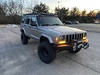
So, I’ve been searching and watching for good hood vent information. Mainly cuz my 01 has been running 210 ish this past year or two, but it used to be stable at the line below that. Which is 195?
i run steady below 210 on the highway and moving. Even with Nashville summers. But when I stop at a light, or go slow on a trail things can creep past 210 making me slightly uncomfortable. Although I’ve never overheated.
anyway, so today I drove around a bit. Got things up to operating temperature. I pulled off in a Walmart parking lot and opened the hood as high as I could and waited a few minutes. Temperature still crept up a little past 210, efan came on, but didn’t overheat. This is contrary findings to others saying vents help their xj run 10-15 cooler on the trail at low speed. For me it made no difference at all today when it was 88 degrees outside.
i run steady below 210 on the highway and moving. Even with Nashville summers. But when I stop at a light, or go slow on a trail things can creep past 210 making me slightly uncomfortable. Although I’ve never overheated.
anyway, so today I drove around a bit. Got things up to operating temperature. I pulled off in a Walmart parking lot and opened the hood as high as I could and waited a few minutes. Temperature still crept up a little past 210, efan came on, but didn’t overheat. This is contrary findings to others saying vents help their xj run 10-15 cooler on the trail at low speed. For me it made no difference at all today when it was 88 degrees outside.

EvanM
CF Veteran
close


Yesterday
- Join DateAug 2018
- LocationIdaho
- Posts:1,900
- Year89
- ModelCherokee (XJ)
- EnginePeddles
-
Likes:282
-
Liked:345 Times in 284 Posts
I'd say the fix is not hood vents. If only theyre was a way to suck the hot air through the hood vents with a snorkel through a dry ice cavity that regenerates then back to the combustion chamber..
would displace heat and the fan would almost act like a turbo charging the intake.
would displace heat and the fan would almost act like a turbo charging the intake.

Considering the whole underside is open, it does not surprise me that an open hood made no change. Vent probably are mainly useful to reduce heat soak after shutdown, when there is no fan nor forward motion to more air thru the engine bay.
210 is not bad, but before you worry about it much more, confirm the gage reads correct. it could well be that the temp sensor or gage is faulty, rather than a real increase in temperature.
of course maybe the jeep ran cooler a while ago as the weather might have been cooler?
210 is not bad, but before you worry about it much more, confirm the gage reads correct. it could well be that the temp sensor or gage is faulty, rather than a real increase in temperature.
of course maybe the jeep ran cooler a while ago as the weather might have been cooler?
Quote:
would displace heat and the fan would almost act like a turbo charging the intake.
sensing a little sarcasm here. Originally Posted by EvanM
I'd say the fix is not hood vents. If only theyre was a way to suck the hot air through the hood vents with a snorkel through a dry ice cavity that regenerates then back to the combustion chamber..would displace heat and the fan would almost act like a turbo charging the intake.
Quote:
210 is not bad, but before you worry about it much more, confirm the gage reads correct. it could well be that the temp sensor or gage is faulty, rather than a real increase in temperature.
of course maybe the jeep ran cooler a while ago as the weather might have been cooler?
I have just seen a lot of people claim their xj runs cooler with vents. Not convinced. Originally Posted by robsjeep
Considering the whole underside is open, it does not surprise me that an open hood made no change. Vent probably are mainly useful to reduce heat soak after shutdown, when there is no fan nor forward motion to more air thru the engine bay.210 is not bad, but before you worry about it much more, confirm the gage reads correct. it could well be that the temp sensor or gage is faulty, rather than a real increase in temperature.
of course maybe the jeep ran cooler a while ago as the weather might have been cooler?
last summer is when I noticed the change. Ran similar temps all winter. Entire cooling system is less than 3 years old. I replaced the temp sensor like 4 months ago. No change. Flushed about 3 weeks ago. No change. Gage seems to match my obd II reader connected to app. Maybe hose/flow constriction?
I am not worried, but like everyone I want mine to last. Trying to take care of it and willing to do things that make a difference. I always open the hood when I get home in the garage.
210 doesn’t bother me, but when it inches above that it’s hard to not take note.

CF Veteran
How's your fan clutch working and maybe using a grand cherokee fan clutch would help .

::CF Moderator::
cruiser54
::CF Moderator::
close
May 16, 2024
- Join DateAug 2011
- LocationPrescott, Az
- Posts:43,971
- Year1990
- ModelCherokee (XJ)
- Engine4.0
-
Likes:1,979
-
Liked:1,578 Times in 1,279 Posts
I would verify with an IR gun.
I tried the GC fan once. Took a ride and headed home to remove that loud thing.
I tried the GC fan once. Took a ride and headed home to remove that loud thing.
Quote:
I tried the GC fan once. Took a ride and headed home to remove that loud thing.
I have the grand cherokee fan clutch, no excessive noise, I like it.Originally Posted by cruiser54
I would verify with an IR gun.I tried the GC fan once. Took a ride and headed home to remove that loud thing.


Installing a toggle switch and relay for the e fan is a great first step. 01 even more so as the ecu doesnt close the fan relay until 225? Even if the A/C request is active.

Junior Member
Vents assist, they do not solve. I can personally vouch for the effectiveness of correctly placed vents, as they did lower my temperature verifiably - however, everyone's milage will vary. Opening the hood isn't the same as having vents that take advantage of air pressures under the hood. Good vents will almost want to receive the airflow from the cooling fans.
However, again, everyone's milage may vary. I used to run 200-210 depending on outside temps, and now I run 180-190 depending on outside temps with the vents.
You've probably already seen this post but I'll link it anyway. https://www.cherokeeforum.com/f67/xj...riteup-261924/
Edit: What Cummins said is also very good advice.
However, again, everyone's milage may vary. I used to run 200-210 depending on outside temps, and now I run 180-190 depending on outside temps with the vents.
You've probably already seen this post but I'll link it anyway. https://www.cherokeeforum.com/f67/xj...riteup-261924/
Edit: What Cummins said is also very good advice.

Junior Member
I have nice sized hood vents. I think the benefit to these is heat being able to escape when you are stuck in traffic, stopped at light. You can then see the heat waves coming out of the vents which I assume is the hot air escaping. The Vents are hot enough to grill a steak on, but the rest of the hood is only warm to the touch..
In Summer heat when engine is hot, a bit over 210, parking the jeep in open parking, turning off the engine for a short period of time. Once I get back into Jeep and turn the engine back on it seems to have come back down to a better temperature as compared to how it use to be with out vents
In Summer heat when engine is hot, a bit over 210, parking the jeep in open parking, turning off the engine for a short period of time. Once I get back into Jeep and turn the engine back on it seems to have come back down to a better temperature as compared to how it use to be with out vents
Junior Member
Quote:
In Summer heat when engine is hot, a bit over 210, parking the jeep in open parking, turning off the engine for a short period of time. Once I get back into Jeep and turn the engine back on it seems to have come back down to a better temperature as compared to how it use to be with out vents
Unfortunately engine heat doesn't really work that way. If the engine's hot, making the air around the engine less hot won't work as well as you think it will - the best way to assist the engine is to increase the cooling capacity of the radiator which means any combination of things.Originally Posted by llamley
I have nice sized hood vents. I think the benefit to these is heat being able to escape when you are stuck in traffic, stopped at light. You can then see the heat waves coming out of the vents which I assume is the hot air escaping. The Vents are hot enough to grill a steak on, but the rest of the hood is only warm to the touch..In Summer heat when engine is hot, a bit over 210, parking the jeep in open parking, turning off the engine for a short period of time. Once I get back into Jeep and turn the engine back on it seems to have come back down to a better temperature as compared to how it use to be with out vents
For about 90% of our rigs the problems can be solved with a very thorough look at the entire cooling system to assess anything that might be wrong. Is your radiator covered with leaves? Are your coolant hoses collapsed? Do you have a head gasket issue, so compression heat is exiting into the cooling jackets? How old/new is your fluid, and what kind is it? Is your water pump working? What pressure is your cap? Is it holding pressure?
After doing all the normal steps, the next things to do to increase efficiency of your cooling system are as follows, in my opinion.
Get a better radiator fan setup, get a bigger radiator, and ensure better airflow through the radiator. In my opinion, properly-functioning hood vents should assist with the last point. If you check the video in the linked post it's easy to see that there's a lot of radiator fan airflow exiting through those vents. Air operates as a fluid, and as such, it naturally picks the easiest path to leave a given area. Thus, logically, if the vents offered no benefit to airflow there would be little to no air blowing through them. The radiator needs to receive airflow, but in order to ensure optimal airflow the air needs to leave the engine bay in an efficient manner as well in order to reduce turbulence for continued operation. Like commuters stuck in a traffic jam, air molecules can stack up and reduce the efficiency of the whole. In my mind, all of this means that since the vents are clearly a preferred method for direct radiator fan airflow to immediately leave the engine bay, the air must have been having a harder time leaving beforehand and the increased ease of flow benefits the radiator's operation.
That's my theory, anyway. Just seeing heat wafting lazily out of a set of poorly-positioned hood vents means very little because of course heat will rise to that point - that doesn't really cool the engine because it's the insides of the engine subject to crazy high temperatures and it's the coolant's job to manage that inner heat, which is what the radiator exists for.
Edit: one important note to make is that from everything I've heard, 200-210 is standard operating coolant temperature and anything below 180 probably isn't good for the engine in the long term. So if an XJ safely holds a 200-210 operating temp then nothing is wrong.
Edit 2: Kind of had a funny comparison. You know when you take a bite of food that's way way way too hot and you've gotta go fhuhfuhhfufhfuhfuhffufhufuhfufhf with your mouth so cool air can get all around? Same theory here. The easier the cool air can get around in your mouth the better.
::CF Moderator::
cruiser54
::CF Moderator::
close
May 16, 2024
- Join DateAug 2011
- LocationPrescott, Az
- Posts:43,971
- Year1990
- ModelCherokee (XJ)
- Engine4.0
-
Likes:1,979
-
Liked:1,578 Times in 1,279 Posts
What ever happened to guys spacing the rear of the hood up a bit?
Junior Member
Quote:
Same effect as rear-mounted vents, IMO, but I dunno what happened to that. I thought it was a ricer thing, did jeepers do it at one point?Originally Posted by cruiser54
What ever happened to guys spacing the rear of the hood up a bit?
::CF Moderator::
cruiser54
::CF Moderator::
close
May 16, 2024
- Join DateAug 2011
- LocationPrescott, Az
- Posts:43,971
- Year1990
- ModelCherokee (XJ)
- Engine4.0
-
Likes:1,979
-
Liked:1,578 Times in 1,279 Posts
Yes, they did.