When you click on links to various merchants on this site and make a purchase, this can result in this site earning a commission. Affiliate programs and affiliations include, but are not limited to, the eBay Partner Network.
My goals for my jeep are to keep it as close to stock as possible while improving off road ability. Each modification should be something I can add or remove without sawing or something into the jeep
What are the most useful modifications to a jeep in order?
1) Tow Ropes
2) Trailer Hitch
3) Brush Guard
4) Shocks
5) Winch
6) Roof Basket
7) Gas Can
8) Traction recovery Boards <- Would you ever that kind of money for that? I could just take a two by four and some sand paper grip.
What is the best brush guard for a jeep? Can all brush guards add a winch?
Have you ever needed a gas can? How do you get a gas can set up so that it is secure, but doesn't cost a fortune?
What is the point of those replacement bumpers?
Use shocks to protect the engine and other components of the jeep?
Finally the lift kit:
What is the point of a lift kit? It is used for more than one thing, you can do more off roading, add bigger tires, maybe shocks. Which lift kit is optimal and most reasonable in general, a 1,2, or 3 inch lift kit? Maybe 1 inch lift it is pointless if you cannot add bigger tires, right?
How much does a lift kit add to what you can do off road?
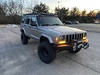
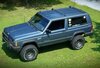
I have a XJ (84-01).
Last edited by XJ_XJ; May 2, 2021 at 05:42 PM.
Reason: Additional Information
I think a little bigger and better (all terrain) go along way. 31’s are a good spot because they don’t require re gearing. If you don’t want to cut, a 3 inch lift would be needed. I did 31’s and 4.5 inch. The desire to go bigger is real. Haha.
other than that. Recovery points front and rear. Maybe a steering box brace.
Personally I hate the look of roof baskets. It’s like a tiny little hat up there that doesn’t serve a lot of purpose. I’d skip that and save for something like the jcr rack. Which is on the list for me.
These vehicles are very capable off road right off the factory floor. Some aggressive stock size tires and some offroading experience would get you alot farther than you would think.
You lift the vehicle higher to gain ground clearance and to gain room for taller/wider tires. Both add to offroad capabilities. If you go from stock sized tires to 31 inch tires you will notice a major power reduction due to the gearing change. The taller the tires the worse it is going to get without adjusting the axle gear ratios to compensate or "even it out"
You cannot put a winch on a brush guard. You need a securely mounted bumper that attaches to the frame in order to be strong enough to handle the stress of a winch.
Brush guards add nothing to offroad capabilities.
Shocks do nothing to protect the engine. They are a part of the suspension system.
These vehicles are very capable off road right off the factory floor. Some aggressive stock size tires and some offroading experience would get you alot farther than you would think.
You lift the vehicle higher to gain ground clearance and to gain room for taller/wider tires. Both add to offroad capabilities. If you go from stock sized tires to 31 inch tires you will notice a major power reduction due to the gearing change. The taller the tires the worse it is going to get without adjusting the axle gear ratios to compensate or "even it out"
You cannot put a winch on a brush guard. You need a securely mounted bumper that attaches to the frame in order to be strong enough to handle the stress of a winch.
Brush guards add nothing to offroad capabilities.
Shocks do nothing to protect the engine. They are a part of the suspension system.
What purpose do shocks serve then, protect the suspension?
These vehicles are very capable off road right off the factory floor. Some aggressive stock size tires and some offroading experience would get you alot farther than you would think.
You lift the vehicle higher to gain ground clearance and to gain room for taller/wider tires. Both add to offroad capabilities. If you go from stock sized tires to 31 inch tires you will notice a major power reduction due to the gearing change. The taller the tires the worse it is going to get without adjusting the axle gear ratios to compensate or "even it out"
You cannot put a winch on a brush guard. You need a securely mounted bumper that attaches to the frame in order to be strong enough to handle the stress of a winch.
Brush guards add nothing to offroad capabilities.
Shocks do nothing to protect the engine. They are a part of the suspension system.
Actually this is a really informative post.
What do shocks/struts do for off-roading then? If you want a smooth ride just drive on the highway.
So I watched this video: https://www.youtube.com/watch?v=2uRSfWkvRwU
If you don't know about this parts like me, then watch that.
Should I try to do something that can help protect my jeep while I am off roading. I still think the idea of tow ropes or winch is a good idea.
Tow ropes/chains, extra fuel, quality set of tools, hi-lift jack, spare tire, ect
all those are awesome to have in your Jeep when going offroading. But they dont enhance the offroad capabilities of your vehicle. They simply help you when things go wrong or not as you expected.
think about your suspension as a spring based cushion system for a vehicle. Springs bounce. Shocks stop the bounce but still allow the springs to cushion.
when you add suspension lift, you need to add the appropriate length shocks because the shock mounting points are farther apart.
I checked out my shocks and they look to be the same ones from when the jeep was made in early 90s. There is also this plastic/rubber tube sticking in the middle of the spring on the front axle. These tubes do not have anything that tie them down to the axle, they just stop mid way. Should something be in those tubes when the jeep came off the lot? Or where they always like that? Also is that where I could put some shocks or struts on the jeep?
There is a picture in here that shows the spring that I am talking about, it looks like the tube in the middle of the spring does not go all the way down here either.
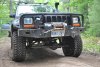
the question is, how much are you gonna use this jeep offroad? all you really need to have a good starting point is winch and winch bumper, properly mounted with longer frame mounts than your factory bumper. you will need some shackle points on that bumper for strap pulling and a place to attach your winch hook while not in use, and a place to mount a ****** block for 3 line pulls. you can get a winch bumper that has a bull bar, for tree protection.
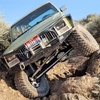
you want at least a 3 inch lift to get any real use for the money. that includes shocks and sway bar disconnects. you get what you pay for, cheap lift will give you a less than desirable ride.
31's are for beginners, if you advance to intermediate, go with 33 inch MT or AT tires, on 8 inch rims with 3.75 backspace to keep the tires from rubbing control arms. you may need to trim fenders. don't worry, we all have been there.
skid plates. you want minimum gas tank skid and transfer case skid. then you can add rock rails to protect your rockers and lower doors.
then you can add roof basket for your camping gear or spare tire. keep in mind, a spare on the roof adds weight and can make the jeep top heavy on off camber trails. not a big deal, i've had a 36 bias spare that weighs about 100lbs up there.
than the rest of your mods are cosmetic. you can add a snorkel, if you venture into water holes, lights for at night, lockers for traction, etc.
but most important is recovery gear. proper etiquette is to use your own strap or gear if you are getting pulled out. don't rely on someone else. just as you won't want to use your gear to pull someone else, putting your 60 dollar strap in jeopardy.
and last, but not least, a proper size spare tire. your stock spare won't work here. rim or tire width doesn't matter, what matters is it's the same diameter.
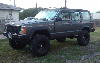
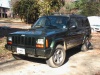
All the stuff you need to cut to fit 31's without a lift are rust prone anyway, or need to go for an aftermarket bumper. This is mine with no lift on 31x10.5. optionally you can do the grand cherokee control arms or adjust the steering stops to fix the full lock rub. For me, I did not have to do either. It depends on the tire. 3" lift tho is a chef's kiss.
My goals for my jeep are to keep it as close to stock as possible while improving off road ability. Each modification should be something I can add or remove without sawing or something into the jeep
What are the most useful modifications to a jeep in order?
1) Tow Ropes
2) Trailer Hitch
3) Brush Guard
4) Shocks
5) Winch
6) Roof Basket
7) Gas Can
8) Traction recovery Boards <- Would you ever that kind of money for that? I could just take a two by four and some sand paper grip.
What is the best brush guard for a jeep? Can all brush guards add a winch?
Have you ever needed a gas can? How do you get a gas can set up so that it is secure, but doesn't cost a fortune?
What is the point of those replacement bumpers?
Use shocks to protect the engine and other components of the jeep?
Finally the lift kit:
What is the point of a lift kit? It is used for more than one thing, you can do more off roading, add bigger tires, maybe shocks. Which lift kit is optimal and most reasonable in general, a 1,2, or 3 inch lift kit? Maybe 1 inch lift it is pointless if you cannot add bigger tires, right?
How much does a lift kit add to what you can do off road?
I have a XJ (84-01).
Strap your gas can to the roof rack. one of the safer locations for it. So you will need the rack inorder to carry the gas can. the jeep is thirsty, specially offroad. 8 mpg is typical, terrain dependant. I do not like to carry the gas on the bumper. Been rear ended badly three times. had a gas can been back there, yikes. I suppose after impact as the can splits open, and rear window breaks, you will feel a cool shower of fuel hit you neck, just prior to the flash and heat of the fireball. No thnaks! go for the roof.
Now a 5 gallon can is a bit heavy to put up and down on a tall roof, so 2.5 gallon cans can be used instead. I am not tall, so the smaller can makes life easy for me
One thing no one has yet mentioned that can make a huge difference is to learn what the **** you're doing before you hit the trail. It's funny, but it's true. And don't forget to air down.



 Most Useful Modifications?









 It's funny, but it's true. And don't forget to air down.