


Things to look for on a used engine


Thread Starter
Member
Joined: Mar 2011
Posts: 190
Likes: 0
From: Denver, CO
Year: 2000
Model: Cherokee
Engine: 4.0 Inline 6
 Things to look for on a used engine
I was looking into a reman engine, but I do not think it is in the cards at this point.
so,I am going to go look at a used engine in the next couple of days. It supposedly came out of a rolled xj with 78000 miles on it. The current owner of the engine never heard it run, and never ended up using it because he found out his engine issue was minor and didnt need it. It has been sitting in his garage for a couple of years.
As I will not be able to hear the engine, and if I am willing to take the risk here, what are things I can look at visually to inspect what kind of shape it is in?
That or any other advice would be great
Thanks
so,I am going to go look at a used engine in the next couple of days. It supposedly came out of a rolled xj with 78000 miles on it. The current owner of the engine never heard it run, and never ended up using it because he found out his engine issue was minor and didnt need it. It has been sitting in his garage for a couple of years.
As I will not be able to hear the engine, and if I am willing to take the risk here, what are things I can look at visually to inspect what kind of shape it is in?
That or any other advice would be great
Thanks
Member
Joined: Jun 2011
Posts: 242
Likes: 1
From: Portersville, Pennsylvania
Year: 1997 & 1998
Model: Cherokee
Engine: 4.0
Buying any used engine is a roll of the dice unless the source can give you a good history, which is often unusual to find.
The mileage of the engine you mention makes it quite desirable. The one I put in my wife's '97 had 80,000 on it and I was lucky to find it, especially at the price I paid.
Look for obvious leaks. Don't count things like valve cover gaskets or oil pan gaskets. They are normal wear items and should be replaced before you install it anyway. Check the oil pan for excessive corrosion which might mean replacement. You can always swap out the one from your current motor which will save you $$. I had to do just that myself.
Expect to change out the water pump, gaskets, and anything that you wish to freshen up. It will make your life easier to do this all before you install the replacement engine. You will be happier in the long run to invest the extra $$ in renewing as much as possible before you drop it in your XJ. I went as far as replacing the injectors also. Her car has run like new since the swap and the dependability was increased by renewing more than just the engine itself from the get go. This will be a perfect time to replace the motor mounts also. They are not expensive and should be replaced during an engine swap as they are also a wear item.
Look for obvious damage to anything and everything. Take a breaker bar and proper size socket and turn the crankshaft. Make sure that the motor is free turning. If the motor obviously looks abused, be wary.
The fact that it was stored inside by the current owner is a plus. I'd rather get one that was stored inside than left outside in the elements. The one I bought was still installed in the donor car which is the next best thing, IMHO.
Used 4.0s have gone for around $500 to nearly $1000. Low mileage ones obviously go for more than high mileage ones, but that is not necessarily always the norm. I've seen high mileage ones go for premium $$. Good used 4.0s are not as plentiful as they were a while back. I paid $450 at a wrecking yard for the '96 motor I bought over a year and a half ago and was very fortunate to get it at that price with the low mileage it had.
If you are still uncertain, take someone with you that is more familiar with engines than you may be. Chances are that the engine is a good one, but your caution is a good thing.
The mileage of the engine you mention makes it quite desirable. The one I put in my wife's '97 had 80,000 on it and I was lucky to find it, especially at the price I paid.
Look for obvious leaks. Don't count things like valve cover gaskets or oil pan gaskets. They are normal wear items and should be replaced before you install it anyway. Check the oil pan for excessive corrosion which might mean replacement. You can always swap out the one from your current motor which will save you $$. I had to do just that myself.
Expect to change out the water pump, gaskets, and anything that you wish to freshen up. It will make your life easier to do this all before you install the replacement engine. You will be happier in the long run to invest the extra $$ in renewing as much as possible before you drop it in your XJ. I went as far as replacing the injectors also. Her car has run like new since the swap and the dependability was increased by renewing more than just the engine itself from the get go. This will be a perfect time to replace the motor mounts also. They are not expensive and should be replaced during an engine swap as they are also a wear item.
Look for obvious damage to anything and everything. Take a breaker bar and proper size socket and turn the crankshaft. Make sure that the motor is free turning. If the motor obviously looks abused, be wary.
The fact that it was stored inside by the current owner is a plus. I'd rather get one that was stored inside than left outside in the elements. The one I bought was still installed in the donor car which is the next best thing, IMHO.
Used 4.0s have gone for around $500 to nearly $1000. Low mileage ones obviously go for more than high mileage ones, but that is not necessarily always the norm. I've seen high mileage ones go for premium $$. Good used 4.0s are not as plentiful as they were a while back. I paid $450 at a wrecking yard for the '96 motor I bought over a year and a half ago and was very fortunate to get it at that price with the low mileage it had.
If you are still uncertain, take someone with you that is more familiar with engines than you may be. Chances are that the engine is a good one, but your caution is a good thing.
Last edited by wjnfirearms; Sep 27, 2012 at 08:20 AM.
Thread Starter
Member
Joined: Mar 2011
Posts: 190
Likes: 0
From: Denver, CO
Year: 2000
Model: Cherokee
Engine: 4.0 Inline 6
Buying any used engine is a roll of the dice unless the source can give you a good history, which is often unusual to find.
The mileage of the engine you mention makes it quite desirable. The one I put in my wife's '97 had 80,000 on it and I was lucky to find it, especially at the price I paid.
Look for obvious leaks. Don't count things like valve cover gaskets or oil pan gaskets. They are normal wear items and should be replaced before you install it anyway. Check the oil pan for excessive corrosion which might mean replacement. You can always swap out the one from your current motor which will save you $$. I had to do just that myself.
Expect to change out the water pump, gaskets, and anything that you wish to freshen up. It will make your life easier to do this all before you install the replacement engine. You will be happier in the long run to invest the extra $$ in renewing as much as possible before you drop it in your XJ. I went as far as replacing the injectors also. Her car has run like new since the swap and the dependability was increased by renewing more than just the engine itself from the get go. This will be a perfect time to replace the motor mounts also. They are not expensive and should be replaced during an engine swap as they are also a wear item.
Look for obvious damage to anything and everything. Take a breaker bar and proper size socket and turn the crankshaft. Make sure that the motor is free turning. If the motor obviously looks abused, be wary.
The fact that it was stored inside by the current owner is a plus. I'd rather get one that was stored inside than left outside in the elements. The one I bought was still installed in the donor car which is the next best thing, IMHO.
Used 4.0s have gone for around $500 to nearly $1000. Low mileage ones obviously go for more than high mileage ones, but that is not necessarily always the norm. I've seen high mileage ones go for premium $$. Good used 4.0s are not as plentiful as they were a while back. I paid $450 at a wrecking yard for the '96 motor I bought over a year and a half ago and was very fortunate to get it at that price with the low mileage it had.
If you are still uncertain, take someone with you that is more familiar with engines than you may be. Chances are that the engine is a good one, but your caution is a good thing.
The mileage of the engine you mention makes it quite desirable. The one I put in my wife's '97 had 80,000 on it and I was lucky to find it, especially at the price I paid.
Look for obvious leaks. Don't count things like valve cover gaskets or oil pan gaskets. They are normal wear items and should be replaced before you install it anyway. Check the oil pan for excessive corrosion which might mean replacement. You can always swap out the one from your current motor which will save you $$. I had to do just that myself.
Expect to change out the water pump, gaskets, and anything that you wish to freshen up. It will make your life easier to do this all before you install the replacement engine. You will be happier in the long run to invest the extra $$ in renewing as much as possible before you drop it in your XJ. I went as far as replacing the injectors also. Her car has run like new since the swap and the dependability was increased by renewing more than just the engine itself from the get go. This will be a perfect time to replace the motor mounts also. They are not expensive and should be replaced during an engine swap as they are also a wear item.
Look for obvious damage to anything and everything. Take a breaker bar and proper size socket and turn the crankshaft. Make sure that the motor is free turning. If the motor obviously looks abused, be wary.
The fact that it was stored inside by the current owner is a plus. I'd rather get one that was stored inside than left outside in the elements. The one I bought was still installed in the donor car which is the next best thing, IMHO.
Used 4.0s have gone for around $500 to nearly $1000. Low mileage ones obviously go for more than high mileage ones, but that is not necessarily always the norm. I've seen high mileage ones go for premium $$. Good used 4.0s are not as plentiful as they were a while back. I paid $450 at a wrecking yard for the '96 motor I bought over a year and a half ago and was very fortunate to get it at that price with the low mileage it had.
If you are still uncertain, take someone with you that is more familiar with engines than you may be. Chances are that the engine is a good one, but your caution is a good thing.
Thanks for all of the info. I agree caution is a good thing. I will buy all new gaskets, and motor mounts. My current timing chain is 3 weeks old, due to replacement trying to diagnose my current problem. Water pump and thermostat housing are all a few months old, so those are all things I would transfer over to the new engine.
Could you explain how to manually turn the crank? I am going to try and take someone more mechanically inclined with me, but in case I cannot, that is something I would definitely like to check myself.
Also, my mechanic friend said that sometimes, when engines sit unused for a long time, the seals can dry out. Is he referring to just the gaskets, or something else, and is this something I should worry about?
Thanks
Member
Joined: Jun 2011
Posts: 242
Likes: 1
From: Portersville, Pennsylvania
Year: 1997 & 1998
Model: Cherokee
Engine: 4.0
You're welcome. Glad to help.
To turn the crank, you put the bar on the center bolt of the crankshaft pulley and while supporting the motor (if it isn't already supported by being securely propped up or on an engine stand) just turn it to see if the internals are free or if you hear anything untoward such as grinding. No turning speed has to be a concern, just to see that the moving parts move freely. That's all. It may sound a bit dry and this is normal as there's no oil being sent up through the galleys and the engine will be dry.
He likely means things like the valve seals and more so external others like the rear main located on the back of the block behind the flywheel and this was good advice to follow. I'd replace the rear main just as a matter of course. They have a tendency to wear out after time and replacing it after it's installed means either moving the transmission or the engine to service it. I just replaced one on the wife's '97 and as I couldn't find time to do it myself, it ended up costing me $300 to replace a $14 seal.
If you have new parts to swap over, all the better.
Another thing I neglected to mention before is if you do buy this motor, when you have the oil pan off to replace the gasket, take a good look at the oil pump pickup. Clean it with a solvent while you have access to remove any sludge that may have accumulated over the 78,000 miles of use. You don't know how often the oil was changed during the first part of it's life and it may have accumulated some crap which could restrict the flow of oil. I used plain old carb cleaner spray and wiped it down thoroughly. It cleaned up like nearly new.
As to your old motor, you might want to scavenge what old parts might be of possible use in the future that still are in good shape before you scrap it. I saved the throttle body, oil pump/pickup and a few other odds & ends that weren't badly worn out. I'm kind of a pack rat to begin with, but being one has saved me money and hassle more times than I care to remember. I wish I had saved the exhaust manifold as I needed one months later when the one on the replacement motor cracked. Luckily, one of our esteemed members on the board helped me out with that, but I could have saved the $$ if I had kept it. They are known to develop issues with cracks.
To turn the crank, you put the bar on the center bolt of the crankshaft pulley and while supporting the motor (if it isn't already supported by being securely propped up or on an engine stand) just turn it to see if the internals are free or if you hear anything untoward such as grinding. No turning speed has to be a concern, just to see that the moving parts move freely. That's all. It may sound a bit dry and this is normal as there's no oil being sent up through the galleys and the engine will be dry.
He likely means things like the valve seals and more so external others like the rear main located on the back of the block behind the flywheel and this was good advice to follow. I'd replace the rear main just as a matter of course. They have a tendency to wear out after time and replacing it after it's installed means either moving the transmission or the engine to service it. I just replaced one on the wife's '97 and as I couldn't find time to do it myself, it ended up costing me $300 to replace a $14 seal.
If you have new parts to swap over, all the better.
Another thing I neglected to mention before is if you do buy this motor, when you have the oil pan off to replace the gasket, take a good look at the oil pump pickup. Clean it with a solvent while you have access to remove any sludge that may have accumulated over the 78,000 miles of use. You don't know how often the oil was changed during the first part of it's life and it may have accumulated some crap which could restrict the flow of oil. I used plain old carb cleaner spray and wiped it down thoroughly. It cleaned up like nearly new.
As to your old motor, you might want to scavenge what old parts might be of possible use in the future that still are in good shape before you scrap it. I saved the throttle body, oil pump/pickup and a few other odds & ends that weren't badly worn out. I'm kind of a pack rat to begin with, but being one has saved me money and hassle more times than I care to remember. I wish I had saved the exhaust manifold as I needed one months later when the one on the replacement motor cracked. Luckily, one of our esteemed members on the board helped me out with that, but I could have saved the $$ if I had kept it. They are known to develop issues with cracks.
Thread Starter
Member
Joined: Mar 2011
Posts: 190
Likes: 0
From: Denver, CO
Year: 2000
Model: Cherokee
Engine: 4.0 Inline 6
You're welcome. Glad to help.
To turn the crank, you put the bar on the center bolt of the crankshaft pulley and while supporting the motor (if it isn't already supported by being securely propped up or on an engine stand) just turn it to see if the internals are free or if you hear anything untoward such as grinding. No turning speed has to be a concern, just to see that the moving parts move freely. That's all. It may sound a bit dry and this is normal as there's no oil being sent up through the galleys and the engine will be dry.
He likely means things like the valve seals and more so external others like the rear main located on the back of the block behind the flywheel and this was good advice to follow. I'd replace the rear main just as a matter of course. They have a tendency to wear out after time and replacing it after it's installed means either moving the transmission or the engine to service it. I just replaced one on the wife's '97 and as I couldn't find time to do it myself, it ended up costing me $300 to replace a $14 seal.
If you have new parts to swap over, all the better.
Another thing I neglected to mention before is if you do buy this motor, when you have the oil pan off to replace the gasket, take a good look at the oil pump pickup. Clean it with a solvent while you have access to remove any sludge that may have accumulated over the 78,000 miles of use. You don't know how often the oil was changed during the first part of it's life and it may have accumulated some crap which could restrict the flow of oil. I used plain old carb cleaner spray and wiped it down thoroughly. It cleaned up like nearly new.
As to your old motor, you might want to scavenge what old parts might be of possible use in the future that still are in good shape before you scrap it. I saved the throttle body, oil pump/pickup and a few other odds & ends that weren't badly worn out. I'm kind of a pack rat to begin with, but being one has saved me money and hassle more times than I care to remember. I wish I had saved the exhaust manifold as I needed one months later when the one on the replacement motor cracked. Luckily, one of our esteemed members on the board helped me out with that, but I could have saved the $$ if I had kept it. They are known to develop issues with cracks.
To turn the crank, you put the bar on the center bolt of the crankshaft pulley and while supporting the motor (if it isn't already supported by being securely propped up or on an engine stand) just turn it to see if the internals are free or if you hear anything untoward such as grinding. No turning speed has to be a concern, just to see that the moving parts move freely. That's all. It may sound a bit dry and this is normal as there's no oil being sent up through the galleys and the engine will be dry.
He likely means things like the valve seals and more so external others like the rear main located on the back of the block behind the flywheel and this was good advice to follow. I'd replace the rear main just as a matter of course. They have a tendency to wear out after time and replacing it after it's installed means either moving the transmission or the engine to service it. I just replaced one on the wife's '97 and as I couldn't find time to do it myself, it ended up costing me $300 to replace a $14 seal.
If you have new parts to swap over, all the better.
Another thing I neglected to mention before is if you do buy this motor, when you have the oil pan off to replace the gasket, take a good look at the oil pump pickup. Clean it with a solvent while you have access to remove any sludge that may have accumulated over the 78,000 miles of use. You don't know how often the oil was changed during the first part of it's life and it may have accumulated some crap which could restrict the flow of oil. I used plain old carb cleaner spray and wiped it down thoroughly. It cleaned up like nearly new.
As to your old motor, you might want to scavenge what old parts might be of possible use in the future that still are in good shape before you scrap it. I saved the throttle body, oil pump/pickup and a few other odds & ends that weren't badly worn out. I'm kind of a pack rat to begin with, but being one has saved me money and hassle more times than I care to remember. I wish I had saved the exhaust manifold as I needed one months later when the one on the replacement motor cracked. Luckily, one of our esteemed members on the board helped me out with that, but I could have saved the $$ if I had kept it. They are known to develop issues with cracks.
Thanks again
CF Veteran
Joined: Oct 2010
Posts: 1,889
Likes: 2
From: Long Island N.Y.
Year: 1999
Model: Cherokee
Engine: I6 4.0
The center bolt is 3/4 and be careful of mileage cause if he says it has 78000 ask if he has proof of the mileage if not it could or could not have 78000 miles i could pull a motor with 200000 miles on it and tell you it has 54000 just a little tip of advice
Thread Starter
Member
Joined: Mar 2011
Posts: 190
Likes: 0
From: Denver, CO
Year: 2000
Model: Cherokee
Engine: 4.0 Inline 6
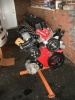
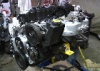
I went and checked out that used engine tonight. He was an older guy, did not get the feeling he was trying to screw me over, the story about the engine seemed to make sense. From the general looks of it, it looks like it only had 78000 miles on it, although I know that is relative. I checked the crank, it moves smoothly with no grinding, the inside of the exhaust manifold/throttle body looked clean. I put a flashlight in the oil filler cap, and it looked clean as well, no real oil sludge build up or anything. The coil pack is cracked through from the roll-over, which is no big deal, because mine is fine. Overall it looked much better than my current engine from the outside.
I have attached some pictures I took of it.
Of course I would use my new water pump, thermostat housing, maybe my harmonic balancer and pullies, these ones look a bit rusty, as well as swap out my new timing chain that I just put on trying to diagnose my problem.
I am leaning toward getting it.
I have attached some pictures I took of it.
Of course I would use my new water pump, thermostat housing, maybe my harmonic balancer and pullies, these ones look a bit rusty, as well as swap out my new timing chain that I just put on trying to diagnose my problem.
I am leaning toward getting it.
Trending Topics

Seasoned Member
Joined: Jan 2012
Posts: 422
Likes: 0
From: Valley Park, MO
Year: 1989
Model: Cherokee
Engine: 4.0L Renix Freshly Rebuilt!!
I think WJNFirearms gave some excellent tips! But to me if the motor turns without to much force and doesnt make any weird noises while turning over... Then I say you got yourself a good motor. Also the fact that the PO of the engine seemed pretty straight that would give me a little reassurence as well.
Thread Starter
Member
Joined: Mar 2011
Posts: 190
Likes: 0
From: Denver, CO
Year: 2000
Model: Cherokee
Engine: 4.0 Inline 6
So with a "new" used engine, should the first oil change be cheap oil and drain it after 1000 miles or so, or should I put some thicker Rotella-like oil in it for the first time in a few years?
CF Veteran
Joined: Aug 2010
Posts: 1,168
Likes: 4
From: Williamsport, Pa
Year: 1997
Model: Cherokee
Engine: 4.0L
I would use the recommended oil weight and what ever brand you want although Brad Penn would be my choice. Also, fashion up a tool to prime the oil pump with a drill and maybe have someone slowly turning the crank over while you do.
Even on a budget it's still not a bad idea in this case to pull that head and have it checked out. This engine is prone to cracked heads and aside from that the valve seals may need replacing. It's easier to pull that head now and freshen it up than it would be to do it later.
Even on a budget it's still not a bad idea in this case to pull that head and have it checked out. This engine is prone to cracked heads and aside from that the valve seals may need replacing. It's easier to pull that head now and freshen it up than it would be to do it later.

Senior Member
Joined: May 2011
Posts: 749
Likes: 1
Year: 1997
Model: Cherokee
Engine: 4.0
i bought a used 4.0 with 155k. i heard it run and it had excellent oil pressure, no noises.
the problem with engines that have been sitting is expect to change every gasket and sensor on the engine. try to hear it run if you can.
i trashed a 4.0 with only 90k on it but hey it still ran and only had 90k on it.
as far as the oil change goes run a decent oil for 500 miles with a decent filter.
remember this engine has been sitting.
the problem with engines that have been sitting is expect to change every gasket and sensor on the engine. try to hear it run if you can.
i trashed a 4.0 with only 90k on it but hey it still ran and only had 90k on it.
as far as the oil change goes run a decent oil for 500 miles with a decent filter.
remember this engine has been sitting.

Senior Member
Joined: Apr 2012
Posts: 578
Likes: 4
From: Ocean, New Jersey
Year: 2000
Model: Cherokee
Engine: 4.0
If it is a 2000 XJ motor, the 0331 head will be the weakest link. There is a lot of info here if you search. The crack may or may not be visible if you remove the valve cover and look at head bosses between cyl 3 and 4 near the stamping driver side.

Thread
Thread Starter
Forum
Replies
Last Post
Blackcherokee290
Stock XJ Cherokee Tech. All XJ Non-modified/stock questions go here
28
Jan 8, 2025 11:36 PM
03cheroke
Stock Grand Cherokee Tech. All ZJ/WJ/WK Non-modified/stock questions go here!
2
Aug 27, 2015 06:07 AM
lgrant
Stock Grand Cherokee Tech. All ZJ/WJ/WK Non-modified/stock questions go here!
1
Aug 27, 2015 05:49 AM
Currently Active Users Viewing This Thread: 1 (0 members and 1 guests)