


Temp rising on hills....

Thread Starter
CF Veteran
Joined: Jan 2011
Posts: 2,765
Likes: 0
From: Littleton, CO
Year: 1991
Model: Cherokee
Engine: 2001 4.0L

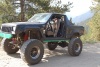
Figured I would update this thread since it seems to be fixed.
I had a camping trip planned this weekend to spread my buddies ashes, who sadly took his own life in April. So this was a HUGE trip for me to make.
With my XJ still climbing temp on hills and offroad I started to think of ANYTHING that could be causing this. After replacing virtually everything in the cooling system, I started thinking about fuel delivery. My fuel pressure was good, but my XJ seemed to be running rich when I gassed it hard or decellerated.
I tossed a can of SeaFoam in my gas tank with only 1/4 tank left, ten drove home from my shop.
I instantly noticed that it did not smell as rich as before, and I could soon not smell unburned fuel.
Made the 3 hr drive thru the good ol CO Rockies, and my XJ never went past 210*
Went wheeling the next day, and never got above 200*!!
So Im gonna have to say, it was either plugged injectors, or a plugged fuel filter that was causing my overheating! I will replace my fuel filter this week and see what my MPGs look like.
Thank You Jeep Gods!!!!!
I had a camping trip planned this weekend to spread my buddies ashes, who sadly took his own life in April. So this was a HUGE trip for me to make.
With my XJ still climbing temp on hills and offroad I started to think of ANYTHING that could be causing this. After replacing virtually everything in the cooling system, I started thinking about fuel delivery. My fuel pressure was good, but my XJ seemed to be running rich when I gassed it hard or decellerated.
I tossed a can of SeaFoam in my gas tank with only 1/4 tank left, ten drove home from my shop.
I instantly noticed that it did not smell as rich as before, and I could soon not smell unburned fuel.
Made the 3 hr drive thru the good ol CO Rockies, and my XJ never went past 210*
Went wheeling the next day, and never got above 200*!!
So Im gonna have to say, it was either plugged injectors, or a plugged fuel filter that was causing my overheating! I will replace my fuel filter this week and see what my MPGs look like.
Thank You Jeep Gods!!!!!

Newbie
Joined: Nov 2010
Posts: 16
Likes: 0
Model: Cherokee
Engine: 4.0
Over heating issues
Hello guys, I am also having overheating issues. I have a 2000 4.0. In 2010 I had a sudden oil pressure drop while driving back home from LA to Fresno. It began to over heat and at idle oil pressure would drop to 0. As long as I put it in neutral and kept my foot on the gas, I would have oil pressure. When I got home, I check everything out and found no oil in the coolant nor coolant in the oil. As with every Jeep I have owned, once you fix one thing, something else breaks. The night before I drove to LA from Fresno, I had replaced the o rings in the oil filter housing to fix a small leak. Then the oil pressure drop happened. When reading some posts on this issue, I found that the only solution out there was replacing a cracked head. So after nearly a year of driving with the low oil pressure issue, I finally pulled the head to have it check, sure enough it was irreparably cracked. Installed a new(refurbd) head to find that the oil pressure problem still exists. Like I said above, after about 3 months of driving the radiator cracked. I had no time or $ to swap it out till last weekend. I should mention that when I did the head swap, I broke the fan shroud. I had to drive this whole summer with no fan shroud and a cracked radiator. I work a mile from home, so once a week I would fill with more water unless I had to drive farther then I would fill before I left. So I changed the radiator & tstat last weekend and sure enough the water pump started leaking the next day. I swapped out the water pump last night Wednesday and had to go back in to work. It ran beautifully. Saw the temp go up to 210* and could tell the thermostat opened when it went back down below 210*. I went out on the freeway this afternoon about 95*(ambient) and it is running over 210* I have never owned a Jeep that ran over 210* without the air on at idle or wheelin' for extended periods of time. I have not burped the system yet, so it might be low on coolant, but when I had been running on the cracked radiator all summer long and no fan shroud (BTW I got a junkyard fan shroud when I did the radiator) it was obviously low on fluid but NEVER when above 210* Does water cool better than coolant?
CF Veteran
Joined: Mar 2011
Posts: 2,570
Likes: 4
From: California
Year: 1992
Model: Cherokee
Engine: 4.0 HO
Yes, water does cool better than a 50/50 mix. However running straight water doesn't provide lubrication for the water pump. I'm also in Fresno, I run about 210* in town and 220* highway.


Senior Member
Joined: Aug 2011
Posts: 760
Likes: 6
From: Landers, CA
Year: Several
Model: Cherokee
Engine: 4.0
I've been reading this thread with interest. I've heard of the problem before, and experienced it once on a converted Renix. It started out as pure conjecture, then after a few tests I confiirmed it, then cured it.
What got me thinking - I was in a burger place, ordered a soft drink. Every time I sucked on the straw I got foam, not liquid. It turned out the straw had a pinhole in it, letting in air, mixing with the soda creating the foam.
Everything on the Renix was new like some of these here are. It overheated at hiway speeds and on hills.
Conjecture - the water pump really doesn't use pressure to circulate coolent, it uses suction. The only time pressure is used is in the upper radiator hose. Everything else works on suction.
The pump "sucks" coolant from the from the head, from the block, and from the lower radiator hose. Any place where air can get “sucked in” will allow it to mix with the liquid coolant, creating foam. Foam does not carry heat very well.
A high flow pump only makes he problem worse! Higher suction pulls in more air.
So why don't we see foam in the radiator? The upper hose dumps into the radiator on the passenger side, if the radiator was replaced with a newer one, the cap/filler is on the opposite end - driver's side. Antifreeze have an anti foaming agent in it, so bubbles don't stick around long.
To prove or disprove it - I made an adapter to see what the upper hose was really carrying, liquid or foam.
The upper hose has a place where it's 1.5” ID - I cut the hose, inserted 2 short pieces of 1.5 OD steel tubing, then inserted about a 3” long piece of acrylic 1.5” ID clear tubing - home depot.
Sure enough, the upper hose was flowing mostly foam, not much liquid at the higher R's.
I did not try a restrictor, but I'd bet the restrictor works because it cuts down on the amount of suction, cutting down on the air leak, cutting down on the foam.
So where is the air leak? Yes, the entire system is under pressure, but if the suction within the system is lower than atmospheric, it could suck in air.
The culprit? The hose clamps!
We all get rid of the constant tension type OEM clamps in favor of the screw/worm types.
The OEM types are a real pain to use, so we get rid of he OEM type whenever we can.
The problem - the screw/worm type clamps tend to “gather” or wrinkle the hose, often creating a small gather or gap where it can leak.
I doubt the OEM used the hated constant tension clamps just to frustrate us - they used them because they WORK!
I replaced all the screw worm clamps with he OEM types, no more foam, no more overheating!
This may not be the cure for all of them, but it sure worked on mine!
I'm sure it's not only the 4.0, but almost all engines could have the problem. Almost all of them circulate by suction.
What got me thinking - I was in a burger place, ordered a soft drink. Every time I sucked on the straw I got foam, not liquid. It turned out the straw had a pinhole in it, letting in air, mixing with the soda creating the foam.
Everything on the Renix was new like some of these here are. It overheated at hiway speeds and on hills.
Conjecture - the water pump really doesn't use pressure to circulate coolent, it uses suction. The only time pressure is used is in the upper radiator hose. Everything else works on suction.
The pump "sucks" coolant from the from the head, from the block, and from the lower radiator hose. Any place where air can get “sucked in” will allow it to mix with the liquid coolant, creating foam. Foam does not carry heat very well.
A high flow pump only makes he problem worse! Higher suction pulls in more air.
So why don't we see foam in the radiator? The upper hose dumps into the radiator on the passenger side, if the radiator was replaced with a newer one, the cap/filler is on the opposite end - driver's side. Antifreeze have an anti foaming agent in it, so bubbles don't stick around long.
To prove or disprove it - I made an adapter to see what the upper hose was really carrying, liquid or foam.
The upper hose has a place where it's 1.5” ID - I cut the hose, inserted 2 short pieces of 1.5 OD steel tubing, then inserted about a 3” long piece of acrylic 1.5” ID clear tubing - home depot.
Sure enough, the upper hose was flowing mostly foam, not much liquid at the higher R's.
I did not try a restrictor, but I'd bet the restrictor works because it cuts down on the amount of suction, cutting down on the air leak, cutting down on the foam.
So where is the air leak? Yes, the entire system is under pressure, but if the suction within the system is lower than atmospheric, it could suck in air.
The culprit? The hose clamps!
We all get rid of the constant tension type OEM clamps in favor of the screw/worm types.
The OEM types are a real pain to use, so we get rid of he OEM type whenever we can.
The problem - the screw/worm type clamps tend to “gather” or wrinkle the hose, often creating a small gather or gap where it can leak.
I doubt the OEM used the hated constant tension clamps just to frustrate us - they used them because they WORK!
I replaced all the screw worm clamps with he OEM types, no more foam, no more overheating!
This may not be the cure for all of them, but it sure worked on mine!
I'm sure it's not only the 4.0, but almost all engines could have the problem. Almost all of them circulate by suction.
Last edited by rrich; Sep 28, 2012 at 02:40 AM.
CF Veteran
Joined: May 2011
Posts: 2,516
Likes: 4
From: va
Year: 1996
Model: Cherokee
Engine: i-6 4.0
Originally Posted by rrich
I've been reading this thread with interest. I've heard of the problem before, and experienced it once on a converted Renix. It started out as pure conjecture, then after a few tests I confiirmed it, then cured it.
What got me thinking - I was in a burger place, ordered a soft drink. Every time I sucked on the straw I got foam, not liquid. It turned out the straw had a pinhole in it, letting in air, mixing with the soda creating the foam.
Everything on the Renix was new like some of these here are. It overheated at hiway speeds and on hills.
Conjecture - the water pump really doesn't use pressure to circulate coolent, it uses suction. The only time pressure is used is in the upper radiator hose. Everything else works on suction.
The pump "sucks" coolant from the from the head, from the block, and from the lower radiator hose. Any place where air can get "sucked in" will allow it to mix with the liquid coolant, creating foam. Foam does not carry heat very well.
A high flow pump only makes he problem worse! Higher suction pulls in more air.
So why don't we see foam in the radiator? The upper hose dumps into the radiator on the passenger side, if the radiator was replaced with a newer one, the cap/filler is on the opposite end - driver's side. Antifreeze have an anti foaming agent in it, so bubbles don't stick around long.
To prove or disprove it - I made an adapter to see what the upper hose was really carrying, liquid or foam.
The upper hose has a place where it's 1.5" ID - I cut the hose, inserted 2 short pieces of 1.5 OD steel tubing, then inserted about a 3" long piece of acrylic 1.5" ID clear tubing - home depot.
Sure enough, the upper hose was flowing mostly foam, not much liquid at the higher R's.
I did not try a restrictor, but I'd bet the restrictor works because it cuts down on the amount of suction, cutting down on the air leak, cutting down on the foam.
So where is the air leak? Yes, the entire system is under pressure, but if the suction within the system is lower than atmospheric, it could suck in air.
The culprit? The hose clamps!
We all get rid of the constant tension type OEM clamps in favor of the screw/worm types.
The OEM types are a real pain to use, so we get rid of he OEM type whenever we can.
The problem - the screw/worm type clamps tend to "gather" or wrinkle the hose, often creating a small gather or gap where it can leak.
I doubt the OEM used the hated constant tension clamps just to frustrate us - they used them because they WORK!
I replaced all the screw worm clamps with he OEM types, no more foam, no more overheating!
This may not be the cure for all of them, but it sure worked on mine!
I'm sure it's not only the 4.0, but almost all engines could have the problem. Almost all of them circulate by suction.
What got me thinking - I was in a burger place, ordered a soft drink. Every time I sucked on the straw I got foam, not liquid. It turned out the straw had a pinhole in it, letting in air, mixing with the soda creating the foam.
Everything on the Renix was new like some of these here are. It overheated at hiway speeds and on hills.
Conjecture - the water pump really doesn't use pressure to circulate coolent, it uses suction. The only time pressure is used is in the upper radiator hose. Everything else works on suction.
The pump "sucks" coolant from the from the head, from the block, and from the lower radiator hose. Any place where air can get "sucked in" will allow it to mix with the liquid coolant, creating foam. Foam does not carry heat very well.
A high flow pump only makes he problem worse! Higher suction pulls in more air.
So why don't we see foam in the radiator? The upper hose dumps into the radiator on the passenger side, if the radiator was replaced with a newer one, the cap/filler is on the opposite end - driver's side. Antifreeze have an anti foaming agent in it, so bubbles don't stick around long.
To prove or disprove it - I made an adapter to see what the upper hose was really carrying, liquid or foam.
The upper hose has a place where it's 1.5" ID - I cut the hose, inserted 2 short pieces of 1.5 OD steel tubing, then inserted about a 3" long piece of acrylic 1.5" ID clear tubing - home depot.
Sure enough, the upper hose was flowing mostly foam, not much liquid at the higher R's.
I did not try a restrictor, but I'd bet the restrictor works because it cuts down on the amount of suction, cutting down on the air leak, cutting down on the foam.
So where is the air leak? Yes, the entire system is under pressure, but if the suction within the system is lower than atmospheric, it could suck in air.
The culprit? The hose clamps!
We all get rid of the constant tension type OEM clamps in favor of the screw/worm types.
The OEM types are a real pain to use, so we get rid of he OEM type whenever we can.
The problem - the screw/worm type clamps tend to "gather" or wrinkle the hose, often creating a small gather or gap where it can leak.
I doubt the OEM used the hated constant tension clamps just to frustrate us - they used them because they WORK!
I replaced all the screw worm clamps with he OEM types, no more foam, no more overheating!
This may not be the cure for all of them, but it sure worked on mine!
I'm sure it's not only the 4.0, but almost all engines could have the problem. Almost all of them circulate by suction.
Last edited by jeepsurfer1; Sep 28, 2012 at 03:53 AM.
CF Veteran
Joined: May 2011
Posts: 2,516
Likes: 4
From: va
Year: 1996
Model: Cherokee
Engine: i-6 4.0
Hose info "The specification of the part: Hose End (1) Inside Diameter (In): 1.19,Hose End (1) Outside Diameter (In): 1.565,Hose End (2) Inside Diameter (In): 1.44,Hose End (2) Outside Diameter (In):1.815,Maximum Working Pressure (psi): 40, Length:15.50 In."
Senior Member
Joined: Aug 2011
Posts: 760
Likes: 6
From: Landers, CA
Year: Several
Model: Cherokee
Engine: 4.0
Have a look at an old hose end that used a screw/worm clamp. Notice the impression it made on the hose end. Sometimes you can see where it created a gap.
Compare with a constant tension clamp.
Then the obvious question - why doesn't it also leak coolant?
1 Air is thinner than coolant.
2 And sometimes you can have a one way leak - leaks in one direction but not the other.
In AC it's not unusual. The system can pass a good evacuation leak test but after pressurizing with Freon, it still leaks. Compressor shaft seals and O ring seals are famous for that.
Like gold - a leak is where you find it!
Compare with a constant tension clamp.
Then the obvious question - why doesn't it also leak coolant?
1 Air is thinner than coolant.
2 And sometimes you can have a one way leak - leaks in one direction but not the other.
In AC it's not unusual. The system can pass a good evacuation leak test but after pressurizing with Freon, it still leaks. Compressor shaft seals and O ring seals are famous for that.
Like gold - a leak is where you find it!
Senior Member
Joined: Aug 2011
Posts: 760
Likes: 6
From: Landers, CA
Year: Several
Model: Cherokee
Engine: 4.0
Those specs are for the ends. The hose itself is about 1.5" ID about 3-4" back from the radiator in the straight part before the big bend.
You can get an adapter to mount a separate temp gauge sending unit at that spot - the 1.5" size works.
Also available is an in-line pressure cap for that same spot if you don't want to replace the radiator when converting from closed to open system.
Jeggs, Summt, and e-bay have them.
You can get an adapter to mount a separate temp gauge sending unit at that spot - the 1.5" size works.
Also available is an in-line pressure cap for that same spot if you don't want to replace the radiator when converting from closed to open system.
Jeggs, Summt, and e-bay have them.
Senior Member
Joined: Aug 2011
Posts: 760
Likes: 6
From: Landers, CA
Year: Several
Model: Cherokee
Engine: 4.0
I just used a hunk of clear stuff from Home Depot. It's not for permanent - heat will probbly melt it. But it worked long enough to let me see what was going on.
Don't get me wrong - I HATE the oem clamps as much as anyboy - they are a real PITA - but they work.
Another place they are needed - K&N AIR FILTERS - cone type - have a bad rep for letting dirt in. They supply them with a screw/worm type clamp. Some of the dirt they let in is from the gap the clamp makes.
Don't get me wrong - I HATE the oem clamps as much as anyboy - they are a real PITA - but they work.
Another place they are needed - K&N AIR FILTERS - cone type - have a bad rep for letting dirt in. They supply them with a screw/worm type clamp. Some of the dirt they let in is from the gap the clamp makes.
CF Veteran
Joined: May 2011
Posts: 2,516
Likes: 4
From: va
Year: 1996
Model: Cherokee
Engine: i-6 4.0
Originally Posted by rrich
Those specs are for the ends. The hose itself is about 1.5" ID about 3-4" back from the radiator in the straight part before the big bend.
You can get an adapter to mount a separate temp gauge sending unit at that spot - the 1.5" size works.
Also available is an in-line pressure cap for that same spot if you don't want to replace the radiator when converting from closed to open system.
Jeggs, Summt, and e-bay have them.
You can get an adapter to mount a separate temp gauge sending unit at that spot - the 1.5" size works.
Also available is an in-line pressure cap for that same spot if you don't want to replace the radiator when converting from closed to open system.
Jeggs, Summt, and e-bay have them.
CF Veteran
Joined: Nov 2009
Posts: 8,172
Likes: 17
From: The Republic of TEXAS
Year: 1998
Model: Cherokee
Engine: 4.0L HO
.....So after much research I found this link.....
http://jeep-xj.info/HowtoRadiatorRestrictor.htm
Made my restrictor out of 3/16 steel and drilled the center hole to 9/16.
My XJ now runs right around 210* and climbs to 220* on hills. No more boiling over.......
http://jeep-xj.info/HowtoRadiatorRestrictor.htm
Made my restrictor out of 3/16 steel and drilled the center hole to 9/16.
My XJ now runs right around 210* and climbs to 220* on hills. No more boiling over.......
........With my XJ still climbing temp on hills and offroad I started to think of ANYTHING that could be causing this. After replacing virtually everything in the cooling system, I started thinking about fuel delivery. My fuel pressure was good, but my XJ seemed to be running rich when I gassed it hard or decellerated..........
Senior Member
Joined: Aug 2011
Posts: 760
Likes: 6
From: Landers, CA
Year: Several
Model: Cherokee
Engine: 4.0
I think the short piece od clear I used was about $2.
The restrictors - I've seen them used when T-stats were removed. The theorey is it slows the water down enough to let the heat transfer to the radiator.
But if it's fast it also had less time to pick-up the heat from the engine. But since it's fast, more water is flowing. Seems like a trade-off.
The restrictors - I've seen them used when T-stats were removed. The theorey is it slows the water down enough to let the heat transfer to the radiator.
But if it's fast it also had less time to pick-up the heat from the engine. But since it's fast, more water is flowing. Seems like a trade-off.

