


Head Gasket Tricks ?


Thread Starter
Newbie
Joined: May 2009
Posts: 14
Likes: 0
Model: Cherokee
 Head Gasket Tricks ?
Hello
I am about to change the head gasket on my 2001 Cherokee 4.0. I have went through the Hayes manual and it looks straight forward but just wanted to check if there are any tricks that might make it simpler...
sometimes the manuals do not always show the easiest way to do something,
thanks
I am about to change the head gasket on my 2001 Cherokee 4.0. I have went through the Hayes manual and it looks straight forward but just wanted to check if there are any tricks that might make it simpler...
sometimes the manuals do not always show the easiest way to do something,
thanks
CF Veteran
Joined: Aug 2011
Posts: 1,090
Likes: 0
From: Lehigh Valley, Pennsylvania
Year: 1999
Model: Cherokee
Engine: 4.0 stroked to 4.6, Thanks to Teasdale'sMachine!
X2 on having the head at least checked at a machine shop while its off.
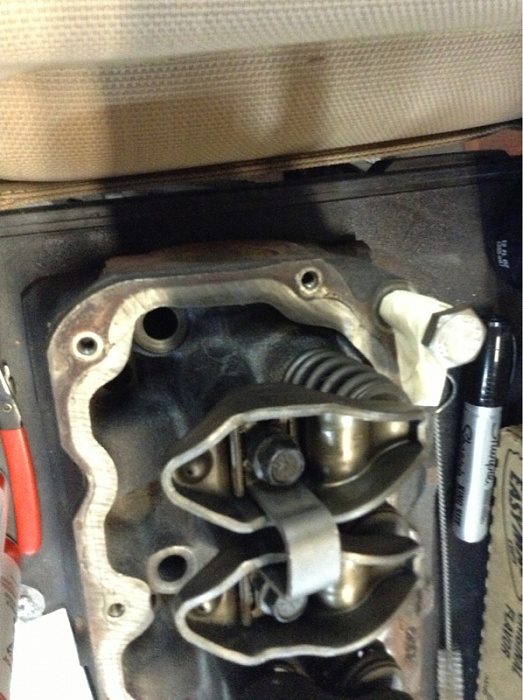
The only suggestion I would make, is to put the rear bolt in on the drivers side of the head. Use masking tape around the upper part of bolt to hold it up so the the threads don't catch on the gasket.
And if you have a hoist or a crane,(or a few drunk buddies), attach both manifolds before placing the head on.
The only suggestion I would make, is to put the rear bolt in on the drivers side of the head. Use masking tape around the upper part of bolt to hold it up so the the threads don't catch on the gasket.

And if you have a hoist or a crane,(or a few drunk buddies), attach both manifolds before placing the head on.

CF Veteran


Joined: Nov 2010
Posts: 5,841
Likes: 117
From: In the middle of Minnesota!
Year: 1999
Model: Cherokee
Engine: 4.0
Just wondering how you diagnosed a head gasket failure.......
I'm not saying that is not your problem. But I will go on record as saying that the factory 0331 head ITSELF cracks more frequently than the head gasket blows.
Because the 0331 head is a dog, my strategy is this. If that head comes off, it doesn't go back on. Too much of a risk of it cracking and if not caught soon enough, toasting the engine bearings.
I'm not saying that is not your problem. But I will go on record as saying that the factory 0331 head ITSELF cracks more frequently than the head gasket blows.
Because the 0331 head is a dog, my strategy is this. If that head comes off, it doesn't go back on. Too much of a risk of it cracking and if not caught soon enough, toasting the engine bearings.
Thread Starter
Newbie
Joined: May 2009
Posts: 14
Likes: 0
Model: Cherokee
My cherokee is a 2x4 2001 Sport
About 18 months ago, i was out of town on business when the thermostat went ba . It overheated but I let it cool down and got it back to the hotel and changed the thermostat. It was fine after that with no problems. Then last Xmas, I noticed lots of steam coming from the tail pipe. I did not have to tear into replacing the gasket, so I took a chance and tried some pour in headgasket sealer. I had good luck with it before on my old land rover. It seemed to do the trick but ran a little rough afterwards. A few months later I had time some time and took it to a garage to get the gasket changed and they told me it was fine & the vibration was from bad motor mounts.
The rough running and vibration go worse, so I did a compression check. and got these results
1 - 120 psi
3 - 60 psi
4 - 80 psi
5 - 120 psi
6 - 120 psi
I did a wet test and got these results
1 - 125 psi
3 - 60 psi
4 - 95 psi
5 - 130 psi
6 - 130 psi
So I am thinking I have a gasket break between # 3 & 4 Cyls. The jeep fires up and does not smoke and has good power, it just has a bad vibration, especialy at lower RPM. As also changed the motor mounts per the garage, which made the vibration worse. I have also changed the coil pack, plugs and injectors, just to cover the bases. But a cracked head maybe a possibility
About 18 months ago, i was out of town on business when the thermostat went ba . It overheated but I let it cool down and got it back to the hotel and changed the thermostat. It was fine after that with no problems. Then last Xmas, I noticed lots of steam coming from the tail pipe. I did not have to tear into replacing the gasket, so I took a chance and tried some pour in headgasket sealer. I had good luck with it before on my old land rover. It seemed to do the trick but ran a little rough afterwards. A few months later I had time some time and took it to a garage to get the gasket changed and they told me it was fine & the vibration was from bad motor mounts.
The rough running and vibration go worse, so I did a compression check. and got these results
1 - 120 psi
3 - 60 psi
4 - 80 psi
5 - 120 psi
6 - 120 psi
I did a wet test and got these results
1 - 125 psi
3 - 60 psi
4 - 95 psi
5 - 130 psi
6 - 130 psi
So I am thinking I have a gasket break between # 3 & 4 Cyls. The jeep fires up and does not smoke and has good power, it just has a bad vibration, especialy at lower RPM. As also changed the motor mounts per the garage, which made the vibration worse. I have also changed the coil pack, plugs and injectors, just to cover the bases. But a cracked head maybe a possibility


Trending Topics
CF Veteran
Joined: Aug 2011
Posts: 1,090
Likes: 0
From: Lehigh Valley, Pennsylvania
Year: 1999
Model: Cherokee
Engine: 4.0 stroked to 4.6, Thanks to Teasdale'sMachine!
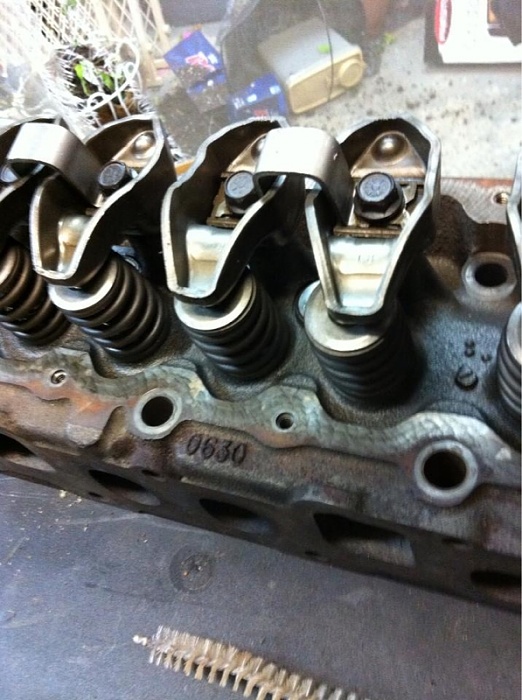
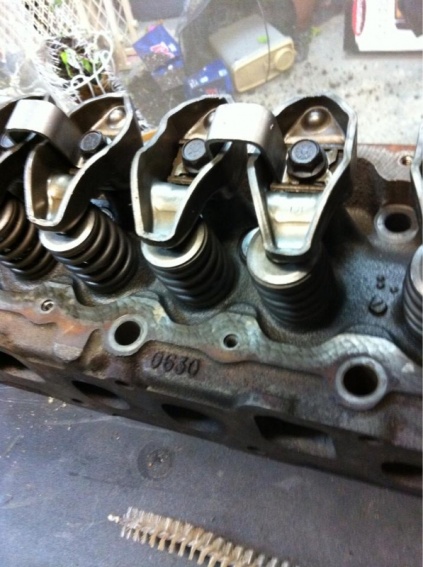
Look at your head, if you see 0331, go find on that's looks like this. There's plenty of them out there.

Newbie
Joined: Feb 2011
Posts: 2
Likes: 0
Model: Cherokee
The exhaust ports on the 0630 head are larger than on the 0331 head and it does not have the mounting bosses on the head for your coil pack to bolt to,the 0331 head does allways crack between #3 and #4 clylinders.I have replaced at least a dozen of those heads and have two in my driveway in need of replacement.You IMHO have one of 2 choices find a head from a 2003 0r 04 model Grand Cherokee or Wrangler Those heads were improved in the area known for cracking and will have the name TUPY embossed under the Valve cover the other option Is a head from Clearwater Heads which is a NEW much stronger head and costs around 450$ which is really not bad when you look at a ATK remaned head at Advance for 462$ and will still be the same head you have now.
CF Veteran
Joined: Oct 2011
Posts: 2,613
Likes: 0
From: Summerville, South Carolina
Year: 99
Model: Cherokee
Engine: 4.0
Go to a junk yard and find one in good shape off a older model XJ, and if worse comes to worst you might have to get the exhausts with it. But even then you will still be WAY less in to it then buying from a shop

Newbie
Joined: Oct 2010
Posts: 3
Likes: 1
From: Bothell, WA
Year: 1998
Model: Cherokee
Engine: 4.0L
I just did my head gasket in September at 213,000 miles (1998 XJ). I had a water pump go out, overheated, and blew the gasket on cylinders 2, 3 & 4. I was out of town and limped back home, adding lots of coolant and water. It was pushing combustion gases into the coolant, intake and exhaust too, but mostly into the coolant passages. My compression values looked a bit like yours -- 60's on the bad cylinders and 120's on the good ones.
X3 on having head checked by a machine shop. Mine cost $149, which included a surface grind, magnaflux test, and pressure test, along with replacement of valve guides. The valves just needed a good cleaning, and they said new guides would keep the valves lined up well.
X3 on using the tape on the driver side bolt near the firewall to lift it out of the way.
Some of this is in any good guide.
1) Check the flatness of your block. It's probably okay. Mine was. Use a very good straight-edge.
2) Check your lifters. This is your chance to get to them.
3) Keep track of your push rods and rocker arms. Poke them in a box and number them.
4) Expect your catalytic converter to be bad now. Mine was completely toasted. The innards rattled around. I guess coolant isn't good for a cat. Thankfully, I have non-california emissions and an after-market cat wasn't too expensive. They say a bad cat can damage the engine again.
Other ideas for that kind of mileage.
1) I dropped the oil pan and installed new rings and connecting rod bearings. My pistons and cylinders were in good shape. I did my own cylinder hone to help the new rings seat properly. But I'd been burning some oil, and wanted to check the rings. I'm glad I did. There was carbon buildup in the ring grooves, and the little holes that allow oil to ooze back into the crankcase were completely blocked. Several of the connecting rod bearings were just out of tolerance. After replacement, the new bearings were perfect because the crankshaft was in good shape.
2) With the pan off, do new front and rear seals. I had to do my seals at about 180K when they were leaking, so you may be due at this kind of mileage.
3) Oil Pump -- I don't know how often these go bad, but at 213K... why not? Beware. It was a pain to get the new pickup tube into the new pump. If I did it again, I'd probably get a pump with a new pickup tube already installed.
4) Check for new engine mounts and transmission mount. My engine mounts were OEM stock, and after I got them off, I saw how bad they were. Access to them was easier with the block lightened up. After the engine was back together, I had a strange sound from the transmission, and it went away after swapping the Trans mount. The new engine mounts lifted the engine a bit and highlighted the bad trans mount, and it's recommended that all three be changed together anyway.
5) I replaced the distributor cap, rotor, plug wires, plugs, PCV... typical tune-up stuff and high-mileage stuff.
6) My final oil leak was the oil-filter adapter. That was a tricky one. THe oil oozes to the back of the block and makes you think you have a rear-seal leak, but it still dripped oil there after replacing the rear seal earlier. I found the O-ring on the oil adapter had dried up. Easy fix with the engine mount loosened up on that side.
7) Timing chain kit. It was due. I had replaced mine at about 100K, and it was definitely needed again.
8) Water Pump/Thermostat -- Mine was bad anyway and probably instigated the whole affair.
9) Of course, new gaskets -- head, Valve cover, Oil Pan, thremostat, Intake/Exhaust. Other stuff came with their own gaskets - water pump, timing kit, oil pump. I chose Victor Reinz gaskets this time. (I rebuilt my son's Ford Focus in July and used Fel-Pro). Both brands seemed the same to me.
10) Oh, I needed a new radiator. Combustion pressures had blown the plastic part of the radiator.
I'm happy to have the engine running well again, for a total cost of about $1,000. The expensive items were the head work at the machine shop, the new catalytic converter, the radiator, and the oil pump. The jeep was down for about 4 weeks. I could have done it faster, but I was checking and double checking everything. I wanted it to start up and run good.
The head is heavy. It's definitely a two-person removal, or a lift of some kind. I made the following lift with 4x4 and some old posts. some rope and a come-along with a couple chains. Once I got the head lifted up, two of us could grab it while a third released the come-along. I installed the same way. In the picture, the ropes to the side are holding the lift steady with bolts in the walls of the garage. There is very little force on them. The force is on the 4x4 and the legs. I don't trust my ceiling joists for stuff like this.

X3 on having head checked by a machine shop. Mine cost $149, which included a surface grind, magnaflux test, and pressure test, along with replacement of valve guides. The valves just needed a good cleaning, and they said new guides would keep the valves lined up well.
X3 on using the tape on the driver side bolt near the firewall to lift it out of the way.
Some of this is in any good guide.
1) Check the flatness of your block. It's probably okay. Mine was. Use a very good straight-edge.
2) Check your lifters. This is your chance to get to them.
3) Keep track of your push rods and rocker arms. Poke them in a box and number them.
4) Expect your catalytic converter to be bad now. Mine was completely toasted. The innards rattled around. I guess coolant isn't good for a cat. Thankfully, I have non-california emissions and an after-market cat wasn't too expensive. They say a bad cat can damage the engine again.
Other ideas for that kind of mileage.
1) I dropped the oil pan and installed new rings and connecting rod bearings. My pistons and cylinders were in good shape. I did my own cylinder hone to help the new rings seat properly. But I'd been burning some oil, and wanted to check the rings. I'm glad I did. There was carbon buildup in the ring grooves, and the little holes that allow oil to ooze back into the crankcase were completely blocked. Several of the connecting rod bearings were just out of tolerance. After replacement, the new bearings were perfect because the crankshaft was in good shape.
2) With the pan off, do new front and rear seals. I had to do my seals at about 180K when they were leaking, so you may be due at this kind of mileage.
3) Oil Pump -- I don't know how often these go bad, but at 213K... why not? Beware. It was a pain to get the new pickup tube into the new pump. If I did it again, I'd probably get a pump with a new pickup tube already installed.
4) Check for new engine mounts and transmission mount. My engine mounts were OEM stock, and after I got them off, I saw how bad they were. Access to them was easier with the block lightened up. After the engine was back together, I had a strange sound from the transmission, and it went away after swapping the Trans mount. The new engine mounts lifted the engine a bit and highlighted the bad trans mount, and it's recommended that all three be changed together anyway.
5) I replaced the distributor cap, rotor, plug wires, plugs, PCV... typical tune-up stuff and high-mileage stuff.
6) My final oil leak was the oil-filter adapter. That was a tricky one. THe oil oozes to the back of the block and makes you think you have a rear-seal leak, but it still dripped oil there after replacing the rear seal earlier. I found the O-ring on the oil adapter had dried up. Easy fix with the engine mount loosened up on that side.
7) Timing chain kit. It was due. I had replaced mine at about 100K, and it was definitely needed again.
8) Water Pump/Thermostat -- Mine was bad anyway and probably instigated the whole affair.
9) Of course, new gaskets -- head, Valve cover, Oil Pan, thremostat, Intake/Exhaust. Other stuff came with their own gaskets - water pump, timing kit, oil pump. I chose Victor Reinz gaskets this time. (I rebuilt my son's Ford Focus in July and used Fel-Pro). Both brands seemed the same to me.
10) Oh, I needed a new radiator. Combustion pressures had blown the plastic part of the radiator.
I'm happy to have the engine running well again, for a total cost of about $1,000. The expensive items were the head work at the machine shop, the new catalytic converter, the radiator, and the oil pump. The jeep was down for about 4 weeks. I could have done it faster, but I was checking and double checking everything. I wanted it to start up and run good.
The head is heavy. It's definitely a two-person removal, or a lift of some kind. I made the following lift with 4x4 and some old posts. some rope and a come-along with a couple chains. Once I got the head lifted up, two of us could grab it while a third released the come-along. I installed the same way. In the picture, the ropes to the side are holding the lift steady with bolts in the walls of the garage. There is very little force on them. The force is on the 4x4 and the legs. I don't trust my ceiling joists for stuff like this.

Thread
Thread Starter
Forum
Replies
Last Post
verissimo_n
Stock XJ Cherokee Tech. All XJ Non-modified/stock questions go here
0
Sep 22, 2015 10:33 AM
nvcasper
Stock XJ Cherokee Tech. All XJ Non-modified/stock questions go here
6
Sep 19, 2015 11:35 PM
Azzy
Stock XJ Cherokee Tech. All XJ Non-modified/stock questions go here
0
Sep 8, 2015 10:49 PM
Currently Active Users Viewing This Thread: 1 (0 members and 1 guests)