


wheels and mpg's


CF Veteran
Joined: Aug 2011
Posts: 3,648
Likes: 4
Model: Cherokee
CF Veteran
Joined: Aug 2011
Posts: 3,648
Likes: 4
Model: Cherokee

Inertia is a VERY important part of the equation tho. it is in every day-to-day driving scenario.
when cruising at speed. (which I make 300+ mile trips often) that rotation mass working for you keep you at speed will help drop the RPM's maybe only 10rpms, but that 10 rpms over 300 miles at a consistent 75 mph which is about 4 hours or 240 minutes is 2400 revolutions your engine does not have to turn.
granted the world is not perfect, but inertia is a VERY important part
when cruising at speed. (which I make 300+ mile trips often) that rotation mass working for you keep you at speed will help drop the RPM's maybe only 10rpms, but that 10 rpms over 300 miles at a consistent 75 mph which is about 4 hours or 240 minutes is 2400 revolutions your engine does not have to turn.
granted the world is not perfect, but inertia is a VERY important part
CF Veteran
Joined: Aug 2011
Posts: 3,648
Likes: 4
Model: Cherokee
that is not what I am getting at. (see below)
extra energy that is put into stopping distance not into fuel consumption unless you are engine breaking, because essentially you are idling.
constant:
when you accelerate lets say you use a liter a minute accelerating to 50mph, and .6 liter a minute while at 50mph. and idle is .1liter a minute.
lets say it takes you one minute to accelerate from 0- 50 and 30 seconds to decelerate from 50 - 0
wheel weight
Now lets add some wheel weight. it now takes .1 liters more to accelerate but .05 liters is saved when traveling at constant speed. idle is still unaffected.
when you have rotational mass working with you it takes slightly less skinny peddle to stay at speed, resulting in less fuel consumed per mile.
using numbers that are made up, here is some visual to illustrate what I mean
picture 1 is constant, picture 2 is more wheel weight.
extra energy that is put into stopping distance not into fuel consumption unless you are engine breaking, because essentially you are idling.
constant:
when you accelerate lets say you use a liter a minute accelerating to 50mph, and .6 liter a minute while at 50mph. and idle is .1liter a minute.
lets say it takes you one minute to accelerate from 0- 50 and 30 seconds to decelerate from 50 - 0
wheel weight
Now lets add some wheel weight. it now takes .1 liters more to accelerate but .05 liters is saved when traveling at constant speed. idle is still unaffected.
when you have rotational mass working with you it takes slightly less skinny peddle to stay at speed, resulting in less fuel consumed per mile.
using numbers that are made up, here is some visual to illustrate what I mean
picture 1 is constant, picture 2 is more wheel weight.
Last edited by mr white; Sep 23, 2011 at 02:12 AM.
CF Veteran
Joined: Aug 2011
Posts: 3,648
Likes: 4
Model: Cherokee
Not necessarily. I forget the ratio of the effect of unsprung vs sprung weight, but unsprung weight affects your performance SIGNIFICANTLY more than any weigh sitting on the suspension.
CF Veteran
Joined: Aug 2011
Posts: 3,648
Likes: 4
Model: Cherokee
Actually, as I said before Im not assuming because I have actual real life experience in this.
Actually, no we can't agree on that. Weight in the trunk at speed basically only affects the tire friction you need to overcome. there is a slight add for lugging the weight around but not all that much. I think you are underestimating the performance change for weight in the wheels. There are estimates from 4 to 10 times more weight has to be removed from sprung mass to equal rotational mass. So worst case your 100 lbs is equal to 25 lbs wheel weight (that's total of 4, not each), which when comparing good alloys to steel it's likely to lose a lot more than that. The effect at cruising speed of extra weight doesn't mean as much as when accelerating, which goes for both, but I have done this as well (my dd is ~200 lbs lighter than stock) and the wheels make a much bigger difference on mileage.
Actually, no we can't agree on that. Weight in the trunk at speed basically only affects the tire friction you need to overcome. there is a slight add for lugging the weight around but not all that much. I think you are underestimating the performance change for weight in the wheels. There are estimates from 4 to 10 times more weight has to be removed from sprung mass to equal rotational mass. So worst case your 100 lbs is equal to 25 lbs wheel weight (that's total of 4, not each), which when comparing good alloys to steel it's likely to lose a lot more than that. The effect at cruising speed of extra weight doesn't mean as much as when accelerating, which goes for both, but I have done this as well (my dd is ~200 lbs lighter than stock) and the wheels make a much bigger difference on mileage.

Member
Joined: Jul 2011
Posts: 120
Likes: 0
From: Ohio
Year: 2000
Model: Cherokee
Engine: 4.0
Man in the real world with AIR and Gravity, no added weight is ever going to help you with mpg or performance. Point blank. Less weight is better. Why does everyone do this over thinking bad acid loop. Cherokee's are heavy, so more reason to worry about unneeded added weight.

Registered Users
Joined: Jul 2011
Posts: 618
Likes: 0
From: 92392
Model: Cherokee
Alright seriously? I can tell you yes wheel weights will matter in drag/autocross and such.
But in a jeep thats a daily driver? No! Probably wouldn't notice it! I would be more concerned with how aggressive your tread pattern is..or air pressure, or something that will make a difference!
How about coasting in between lights? How about shifting your automatic manually to get better/earlier shifts points to save a few drops of gas?
how about checking ECO modders for tips on saving gas...theres a few jeeps on that site and I've used a few tips that they posted!
I coast between lights, always travel the speed limit, try to stay in my motors operating range. And I try to optimize efficiency. I've wrapped my header, got the head shield for the intake, 703 injectors! Try to keep your jeep running efficiently and then coast whenever possible. Take off slower as well, because rabbit starts kill your in town mileage!
I try to draft bigger vehicles safetly when I'm on the highway! Myth busters have proved this to work, and it works very very very well..just look for the info! I draft big rigs safely and usually end up doing 60-65 and I get great mileage!!!
Once I'm in the air stream, I press the clutch and go to nuetral and if/when I start falling back some I'll catch back up. Usually I can coast/draft for a good mile or 2 without needing to get back on the gas.
For me with a 5 speed. I run first gear a little longer, then shift straight to 3rd. And I'm usually in 3rd while I'm in town because 30-45mph is perfect in 3rd..if I get a long stretch I go to 4th just to drop the rpms some.
I usually drive 1-3-4..or 1-3-5 on the highway.
But in a jeep thats a daily driver? No! Probably wouldn't notice it! I would be more concerned with how aggressive your tread pattern is..or air pressure, or something that will make a difference!
How about coasting in between lights? How about shifting your automatic manually to get better/earlier shifts points to save a few drops of gas?
how about checking ECO modders for tips on saving gas...theres a few jeeps on that site and I've used a few tips that they posted!
I coast between lights, always travel the speed limit, try to stay in my motors operating range. And I try to optimize efficiency. I've wrapped my header, got the head shield for the intake, 703 injectors! Try to keep your jeep running efficiently and then coast whenever possible. Take off slower as well, because rabbit starts kill your in town mileage!
I try to draft bigger vehicles safetly when I'm on the highway! Myth busters have proved this to work, and it works very very very well..just look for the info! I draft big rigs safely and usually end up doing 60-65 and I get great mileage!!!
Once I'm in the air stream, I press the clutch and go to nuetral and if/when I start falling back some I'll catch back up. Usually I can coast/draft for a good mile or 2 without needing to get back on the gas.
For me with a 5 speed. I run first gear a little longer, then shift straight to 3rd. And I'm usually in 3rd while I'm in town because 30-45mph is perfect in 3rd..if I get a long stretch I go to 4th just to drop the rpms some.
I usually drive 1-3-4..or 1-3-5 on the highway.
Last edited by Kamaran; Sep 23, 2011 at 03:11 AM.
Thread Starter
Senior Member
Joined: Aug 2010
Posts: 850
Likes: 4
From: Arcata California
Year: 1996
Model: Cherokee
Engine: 4.0
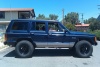
From what I can tell, putting steel rims on did not change the mpg's enough to notice. I get the same amount of miles to a tank of gas as I did before. in my case the rims made no diffence. Maybe the steel rims are the same weight as the old alloy, I dont know because I didnt put them on a scale befor I had them mounted.


CF Veteran
Joined: Jun 2010
Posts: 1,378
Likes: 0
From: Hayward, CA
Year: 1996
Model: Cherokee

Thread
Thread Starter
Forum
Replies
Last Post
Blue04
Stock Grand Cherokee Tech. All ZJ/WJ/WK Non-modified/stock questions go here!
8
Sep 12, 2015 10:54 AM
ronwu
Stock XJ Cherokee Tech. All XJ Non-modified/stock questions go here
3
Sep 8, 2015 11:57 PM
Currently Active Users Viewing This Thread: 1 (0 members and 1 guests)