

CF Veteran
Quote:
Deeper gears will help with getting the jeep moving using less gas because you have more torque, therefor Deeper gears will help around town with a lot of stop and go.
Think of a bicycle and the energy to start riding with a smaller gear for torque vs. a taller gear for speed, which one takes more energy to get moving?
Bryan
"Deeper" gears have always meant worse gas mileage, always.Originally Posted by bryweb
Not true..... as the transmission shifting will take effect to match speed.Deeper gears will help with getting the jeep moving using less gas because you have more torque, therefor Deeper gears will help around town with a lot of stop and go.
Think of a bicycle and the energy to start riding with a smaller gear for torque vs. a taller gear for speed, which one takes more energy to get moving?
Bryan

CF Veteran
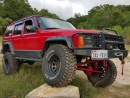
conundrum, dd with stock 3:55 auto trans-n-33's, stop-n-go traffic 12 miles round trip for werk, occasional highway rolling,(it is after all tree hours to Rausch), i was thinkin 4:10?
CF Veteran
Quote:
Deeper gears will help with getting the jeep moving using less gas because you have more torque, therefor Deeper gears will help around town with a lot of stop and go.
Think of a bicycle and the energy to start riding with a smaller gear for torque vs. a taller gear for speed, which one takes more energy to get moving?
Bryan
but think about if you stayed in that tall gear as you speed up, your legs will be pumping like crazy to keep it at that speed. but if you shift to a smaller gear it will take less energy to stay at the same speed Originally Posted by bryweb
Not true..... as the transmission shifting will take effect to match speed.Deeper gears will help with getting the jeep moving using less gas because you have more torque, therefor Deeper gears will help around town with a lot of stop and go.
Think of a bicycle and the energy to start riding with a smaller gear for torque vs. a taller gear for speed, which one takes more energy to get moving?
Bryan
ill agree hands down that deeper gears in the city would be better and youd have tons of torque on hand off road. but only for city driving where you wont go far above 45mph
but if your going to be doing alot of high way commuting like i do(40-65 miles a day) id recommend the gear that puts you closest to you stock ratio which will be the least stressfull on the engine

CF Veteran
Quote:
Can you explain how? As far as I know gas goes into the engine when you press on the gas pedal. What difference does it make if the engine is spinning high. Its still the same amount of gas going into it. Does the engine magically suck more fuel in? Originally Posted by HCCAFan
"Deeper" gears have always meant worse gas mileage, always.
Quote:
I loved my 4.56 auto and 33's. I did about 2250rpm at 65mph and plenty of gittyup around town. 4.56 for sure.Originally Posted by gone4x4
conundrum, dd with stock 3:55 auto trans-n-33's, stop-n-go traffic 12 miles round trip for werk, occasional highway rolling,(it is after all tree hours to Rausch), i was thinkin 4:10?
CF Veteran
Quote:
I loved my 4.56 auto and 33's. I did about 2250rpm at 65mph and plenty of gittyup around town. 4.56 for sure.
x2 4.56 and 33s with an auto are spot onOriginally Posted by Atmos
Can you explain how? As far as I know gas goes into the engine when you press on the gas pedal. What difference does it make if the engine is spinning high. Its still the same amount of gas going into it. Does the engine magically suck more fuel in? I loved my 4.56 auto and 33's. I did about 2250rpm at 65mph and plenty of gittyup around town. 4.56 for sure.


Quote:
gas is controlled by the throttle. deeper gears will mean you are using less throttle in order to accelerate because your RPM's are higher. you're taking less of the load off the engine and putting the axles to work.
where does that equate to worse gas mileage? sure if you're using 5.13's with 33's I see it being effected. but 1 ratio deeper?? someone correct me here
Originally Posted by Atmos
I have never understood this argument with deeper gears. gas is controlled by the throttle. deeper gears will mean you are using less throttle in order to accelerate because your RPM's are higher. you're taking less of the load off the engine and putting the axles to work.
where does that equate to worse gas mileage?
sure if you're using 5.13's with 33's I see it being effected. but 1 ratio deeper?? someone correct me here
Quote:
I loved my 4.56 auto and 33's. I did about 2250rpm at 65mph and plenty of gittyup around town. 4.56 for sure.
The difference is the power band. What you really want is to gear so that your foot isn't on the pedal as much. It's not as drastic with the 4.0 as with other engines, but if you're applying a lot of load at a lower RPM you can easily use way more fuel (throttle more open) than at a higher RPM where the engine is more efficient (throttle less open).Originally Posted by Atmos
Can you explain how? As far as I know gas goes into the engine when you press on the gas pedal. What difference does it make if the engine is spinning high. The same amount of gas is going into itI loved my 4.56 auto and 33's. I did about 2250rpm at 65mph and plenty of gittyup around town. 4.56 for sure.
At a certain point the engine is less efficient, or just moving too much air and you need to stand on the accelerator to keep it turning that fast. That's why we have overdrive

The situation is further complicated by stupid automatic transmissions that are programmed for stock parameters and will lock you into a gear that's too shallow or leave the torque converter open.
CF Veteran
So to summarize, even if I use the exact same amount of throttle with 4.56 as I would with 4.10 I could still get worse fuel economy because the engine is less efficient at highway speeds? I'll still take 1 deeper ratio any day
CF Veteran
Quote:
I loved my 4.56 auto and 33's. I did about 2250rpm at 65mph and plenty of gittyup around town. 4.56 for sure.
Yes. The torque curve comes on fairly early and stays mostly flat throughout the powerband of the Jeep 4.0. Have you ever ridden in a manual XJ with the upshift light? It tells you to upshift really early for fuel economy, because RPMs kill fuel economy. You may be using less throttle to get moving, but more RPMS means more times those fuel injectors have to spray. Anything over 1800-2000 RPMs in our Jeeps is past efficiency. I suppose if you can live your life under 2000 RPMs with shorter gears, it may be possible to save gas, but good luck with that.Originally Posted by Atmos
Can you explain how? As far as I know gas goes into the engine when you press on the gas pedal. What difference does it make if the engine is spinning high. Its still the same amount of gas going into it. Does the engine magically suck more fuel in? I loved my 4.56 auto and 33's. I did about 2250rpm at 65mph and plenty of gittyup around town. 4.56 for sure.
Quote:
I hate that stupid light. Perhaps my engine isn't as healthy as the PCM expects but that thing comes on way too easily. There's no way I'm going to shift into 5th hear at 60 km/h. Originally Posted by HCCAFan
Have you ever ridden in a manual XJ with the upshift light? It tells you to upshift really early for fuel economy, because RPMs kill fuel economy.
Quote:
Not necessarily. The fuel injection system is dynamic. Pulse with is set according to sensory input from a lot of things, but in this case let's concern ourselves with the MAP and TPS. High vacuum, low throttle = less fuel injected per pulse; low vacuum, high throttle = more fuel injected per pulse. The trick is to find the breaking point, which driving with a vacuum gauge helps out with. Originally Posted by HCCAFan
You may be using less throttle to get moving, but more RPMS means more times those fuel injectors have to spray. Anything over 1800-2000 RPMs in our Jeeps is past efficiency.
[QUOTE="HCCAFan;2446894I suppose if you can live your life under 2000 RPMs with shorter gears, it may be possible to save gas, but good luck with that.[/QUOTE]
Easymode! Shift it like a truck and not a race car. 4.0 has plenty of torque to shift it under 1500 RPM if you're bored.
CF Veteran
Quote:
Not necessarily. The fuel injection system is dynamic. Pulse with is set according to sensory input from a lot of things, but in this case let's concern ourselves with the MAP and TPS. High vacuum, low throttle = less fuel injected per pulse; low vacuum, high throttle = more fuel injected per pulse. The trick is to find the breaking point, which driving with a vacuum gauge helps out with.
Easymode! Shift it like a truck and not a race car. 4.0 has plenty of torque to shift it under 1500 RPM if you're bored.
Every 4th rotation of that crank and the injector is most certainly firing again. It's easier to calculate fuel consumption with duty cycle instead of pulse width. Assuming the injector sprays every 4th rotation, there are 500 sprays per minute in an engine turning 2000 RPMs. There are 875 sprays per minute in an engine turning 3500 RPMs. For simplicity, lets take a 450CC injector. At 33% duty cycle (say 1/3rd throttle with deeper gears) you are using 131,250CCs of fuel per injector, per minute. At double the duty cycle, 66% (say 2/3rd throttle with less gear) you are using 125,000 CCs of fuel per minute, per injector. Multiply the difference by 6 and the deeper gears are using 37,500 more CCs of fuel, every minute with only a 1500 RPM difference.Originally Posted by salad
I hate that stupid light. Perhaps my engine isn't as healthy as the PCM expects but that thing comes on way too easily. There's no way I'm going to shift into 5th hear at 60 km/h. Not necessarily. The fuel injection system is dynamic. Pulse with is set according to sensory input from a lot of things, but in this case let's concern ourselves with the MAP and TPS. High vacuum, low throttle = less fuel injected per pulse; low vacuum, high throttle = more fuel injected per pulse. The trick is to find the breaking point, which driving with a vacuum gauge helps out with.
Easymode! Shift it like a truck and not a race car. 4.0 has plenty of torque to shift it under 1500 RPM if you're bored.
Quote:
1500 RPM is a pretty big difference in a 4.0 Originally Posted by HCCAFan
Every 4th rotation of that crank and the injector is most certainly firing again. It's easier to calculate fuel consumption with duty cycle instead of pulse width. Assuming the injector sprays every 4th rotation, there are 500 sprays per minute in an engine turning 2000 RPMs. There are 875 sprays per minute in an engine turning 3500 RPMs. For simplicity, lets take a 450CC injector. At 33% duty cycle (say 1/3rd throttle with deeper gears) you are using 131,250CCs of fuel per injector, per minute. At double the duty cycle, 66% (say 2/3rd throttle with less gear) you are using 125,000 CCs of fuel per minute, per injector. Multiply the difference by 6 and the deeper gears are using 37,500 more CCs of fuel, every minute with only a 1500 RPM difference.
 For that sort of difference you'd see a major change in gearing. The whole picture is more complex than that of course, considering additional gearing in the transmission either becoming available or useless depending on changes made.
Anyway, within your example, pulse width becomes extremely important. As I don't know the real Jeep numbers I'll just use this to demonstrate (like your 125L fuel/minute lol). 66% throttle to 33% throttle is a reduction of 50% (ish). Let's say the airflow is reduced by 50% as well as the engine only needs to devlop 50% of the torque. Suddenly the pulse width is shortened 50% from 10ms to 5ms... presto, you're using the same amount (or less) of fuel.
At any rate it's pretty well demonstrated that if you want to keep stock mileage, retain a stock final drive ratio. Can't go wrong.
CF Veteran
Believe me. Entire brands have disappeared because the company was unable to meet EPA guidelines. If all you had to do was change the gears to get better fuel economy ... someone a lot smarter than any of us would have already done it.
Senior Member
Quote:
I think that is what Salad is trying to say...... if you regear your axles to makeup for the bigger tires, then you will keep at the same efficient settings that Jeep Engineers designed it for..... This is why my opinion is getting rid of your stock 3.55 when you bolt on some 33" tires and going with 4.56 which puts you about at the same FINAL GEAR RATIO as STOCK will save you GAS. I don't think anyone is saying that the steeper you go the better gas mileage. Originally Posted by HCCAFan
Believe me. Entire brands have disappeared because the company was unable to meet EPA guidelines. If all you had to do was change the gears to get better fuel economy ... someone a lot smarter than any of us would have already done it.
With that said, I believe (not stating as fact) that 4.10 would be better highway gas mileage because it would cruise at a slightly lower RPM's, 4.88 would give you better in town gas mileage because it would take less effort to get going in stop and go, and 4.56 would be a compromise of both.....
Bryan
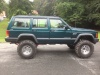
I don't really care about gas mileage, my mpg is probably going to be pretty poor anyways. I was just wondering if I would still be able to go down the highway doing 70 and then go hit some trails and have plenty of power for off road with 4.56. I've heard that 4.10s are better with 33s since I have a 5 speed
CF Veteran
Quote:
yea go 4.10s with the five speedOriginally Posted by wmpttr125
I don't really care about gas mileage, my mpg is probably going to be pretty poor anyways. I was just wondering if I would still be able to go down the highway doing 70 and then go hit some trails and have plenty of power for off road with 4.56. I've heard that 4.10s are better with 33s since I have a 5 speed