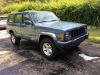
I don't have any rust on my XJ but I still want to learn how to weld. I am always coming up with or across opportunities to weld and then I can't.
I'm even thinking that if I can get good enough, it might be a decent retirement gig for some extra spending cash. I know I can't find welders that will take on small jobs.
learning to weld is a skill that will take time but all you have to do is start and TRY. Try to weld anything and work at it. Watch youtube for basic welding skills/technique if you must or even sign up for any welding class offered around you locally.
I did in fact learn how to weld to fix my Jeep(s) when i was a teen. I was using an old century mig welder, Wire fed flux core welding wire. The power was either a high/low switch with variable wire speed - it was a rough learning platform to say the least.
Floor board repairs, exhaust repairs, were the start for me
Cant stress it enough to embrace some struggle and learn it.
learning to weld is a skill that will take time but all you have to do is start and TRY. Try to weld anything and work at it. Watch youtube for basic welding skills/technique if you must or even sign up for any welding class offered around you locally.
I did in fact learn how to weld to fix my Jeep(s) when i was a teen. I was using an old century mig welder, Wire fed flux core welding wire. The power was either a high/low switch with variable wire speed - it was a rough learning platform to say the least.
Floor board repairs, exhaust repairs, were the start for me
Cant stress it enough to embrace some struggle and learn it.
I would really like to take some classes. So far the only classes they have around here are at the community college. They are full blown, get certified courses though (think expensive!). I just need a votech class at this point. I'd take the full blown course, but it wouldn't fit with my time or budget.
I would really like to take some classes. So far the only classes they have around here are at the community college. They are full blown, get certified courses though (think expensive!). I just need a votech class at this point. I'd take the full blown course, but it wouldn't fit with my time or budget.
I get what your saying, something simply entry level - get your feet wet and coached along the way. Unfortunately unless you have a buddy with the time and knowledge to share you may be hard pressed to find that cheaply.
I couldn't offer any personal experience on learning avenue's other than being stubborn enough to struggle through failures learning from self criticism and when around others who are welding in front of you - Asking questions! I've stuck to flux core mig welding and occasionally get into the mig welding with gas over the years. I feel that becoming proficient at welding flux core makes you a better mig welder overall because you have to use technique/pattern to get good welds. With gas mig you can be a little lazy and still have a presentable result.
Another thing to take into consideration with welding is no matter how Good you think your weld(s)/are there will always be someone to say they're $hit.
Hang onto the feedback from the people who offer constructive criticism and dismiss the folks who offer only negativity.
Self taught mig, tig and stick welder here. Definitely a great skill to learn. Anyone can pick up a mig welder and learn in no time. The tig is where it takes a lot and I mean a lot of time to get down. Like everything, it just takes time. No one should be afraid to pick up a welder and make some boogers!
Self taught mig, tig and stick welder here. Definitely a great skill to learn. Anyone can pick up a mig welder and learn in no time. The tig is where it takes a lot and I mean a lot of time to get down. Like everything, it just takes time. No one should be afraid to pick up a welder and make some boogers!
I know you don't know me, but would I be overreaching if I went straight to TIG? I feel like I could control using both hands and I like the way TIG welds look and I believe it is a little more versatile.
Or am I overthinking it as usual and I should be able to do everything I want to do with MIG?
Self taught mig, tig and stick welder here. Definitely a great skill to learn. Anyone can pick up a mig welder and learn in no time. The tig is where it takes a lot and I mean a lot of time to get down. Like everything, it just takes time. No one should be afraid to pick up a welder and make some boogers!
I'm self taught too with one exception. I took a Community College night course in auto restoration and the focus was on hammer welding. We were taught to weld sheet metal using only an O/A torch and no filler rod. This is essential when using an English wheel as any hard rod in the weld will nick the anvils.
I have never TIG welded. I mostly MIG weld now and you're right, it's pretty straight forward and probably has the second fastest learning curve. It's not essential but if you've done any torch or arc welding you'll pick it up in no time.
I said second fastest above because spot welding has to be the easiest. I almost feel embarrassed when I spot weld ... almost.
I might be convinced to go MIG. I want to be able to a variety of welding: fix broken stuff, create metal stands for stuff, metal table legs, some artsy-fartsy creations, and work on vehicles. I'd also like to turn it into a side gig/retirement gig to do repairs for people and make stuff. For example a guy needs a bracket welded back on his mower deck, etc.
I don't see myself replacing rusted out panels because I loathe rust and stay away from it at high costs, but you never know. I would like to close up some holes the PO put in my XJ on the windshield pillar and firewall.
If I already knew how to weld, I probably would have strengthened my Dana 30 when I rebuilt it.
Definitely go MIG...it will do everything you mentioned above. It's also got the easiest learning curve. Get the best machine you can afford, and don't forget to factor a bottle, consumables, and safety gear into the cost. Then get a stick of 2" flat bar, 1/8" thick, and cut it into 5-6" lengths. Use these to practice welding.
Start by just laying down a straight bead. When you get comfortable doing that, start overlapping them by 50% and fill the whole piece with overlapping welds.
Then you can start doing position and out of position welds and joints. Start with lap welds, where 2 of the plates overlap. Do them flat on the table, then horizontal, then perpendicular, then overhead. Then do the same, but with a butt weld, where the two plate butt together with a slight gap for the weld material. Then do the same again with tee joints.
By the time you finish all these you'll be fine. Everything I just detailed is basically what you would do at a community College or vocational school...difference being they'd throw different thickness materials at you, and you miss out on the hows and whys that an instructor brings. But do the above, watch some online videos, and you'll be burning with no problem.
Definitely go MIG...it will do everything you mentioned above. It's also got the easiest learning curve. Get the best machine you can afford, and don't forget to factor a bottle, consumables, and safety gear into the cost. Then get a stick of 2" flat bar, 1/8" thick, and cut it into 5-6" lengths. Use these to practice welding.
Start by just laying down a straight bead. When you get comfortable doing that, start overlapping them by 50% and fill the whole piece with overlapping welds.
Then you can start doing position and out of position welds and joints. Start with lap welds, where 2 of the plates overlap. Do them flat on the table, then horizontal, then perpendicular, then overhead. Then do the same, but with a butt weld, where the two plate butt together with a slight gap for the weld material. Then do the same again with tee joints.
By the time you finish all these you'll be fine. Everything I just detailed is basically what you would do at a community College or vocational school...difference being they'd throw different thickness materials at you, and you miss out on the hows and whys that an instructor brings. But do the above, watch some online videos, and you'll be burning with no problem.
Thanks! That sounds like a great plan. I'll start looking for a decent MIG welder!
I know you don't know me, but would I be overreaching if I went straight to TIG? I feel like I could control using both hands and I like the way TIG welds look and I believe it is a little more versatile.
Or am I overthinking it as usual and I should be able to do everything I want to do with MIG?
I would not jump straight into the TIG. Best to get the basics down with heat and penetration with the MIG. It will also get you used to making a consistent bead. Consistency is key when it comes to any type of welding.
I am going to be doing some aluminum welding today and will post some pictures later.
Definitely go MIG...it will do everything you mentioned above. It's also got the easiest learning curve. Get the best machine you can afford, and don't forget to factor a bottle, consumables, and safety gear into the cost. Then get a stick of 2" flat bar, 1/8" thick, and cut it into 5-6" lengths. Use these to practice welding.
Start by just laying down a straight bead. When you get comfortable doing that, start overlapping them by 50% and fill the whole piece with overlapping welds.
Then you can start doing position and out of position welds and joints. Start with lap welds, where 2 of the plates overlap. Do them flat on the table, then horizontal, then perpendicular, then overhead. Then do the same, but with a butt weld, where the two plate butt together with a slight gap for the weld material. Then do the same again with tee joints.
By the time you finish all these you'll be fine. Everything I just detailed is basically what you would do at a community College or vocational school...difference being they'd throw different thickness materials at you, and you miss out on the hows and whys that an instructor brings. But do the above, watch some online videos, and you'll be burning with no problem.
I have been window shopping welders. Looking at Miller, Forney, Hobart and Lincoln. It appears they all offer similar models in respect to duty cycle, amperage ,etc. I am looking at two models in each brand so as not to overwhelm myself with options. That is not to say I won't consider something else. I just need to start somewhere.
For each brand, I have a 110v and a 220v option. I have 220 in my garage so that is not an issue.
But do I need 220? Will I be happier in the long run? Or will I kick myself when I move and the new place doesn't have 220 available?
Interested in your input on voltage, brands, size.