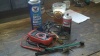
Oh my!! Well the harnesses are not essential as long as all of the connections are direct. The 2 harnesses (like with electrical units) allow the engine side to quickly decouple from the chassis side. You can follow the diagram Cruiser54 posted above to check. It's hard to tell from your pics if everything is routed correctly. I can see a line or two either missing or misplaced (MAP sensor, CCV hose).
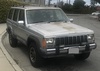
First for reference, here's my '88. Not a perfect example but I do have all the stock vacuum components in their factory location.
Here's a closeup of the junction block for the harnesses. They do rest in a metal bracket bolted to the intake manifold. Looks like yours is gone.
Connections on the back of the air box cover. The small ones are connected to a bimetalic sensor that operates the "preheat" servo at the front of the airbox. The servo diverts the fresh air inlet to the tube connected to the exhaust manifold. In my pic, the one with the 90deg elbow (on the right) comes from the intake manifold. The one on the left goes to the servo. If you don't have or want this working, plug the line coming from the intake manifold.
This is the front of the airbox with servo. Note the vac hose on the left that comes from the sensor on the rear of the cover. Not needed unless you want this all working.
Lastly, here's a different diagram that shows the factory harnesses. Again, Cruiser's is easier to follow for direct connections, but doesn't show the placement of the harnesses should you choose to reinstall them.
Finally, your AC discharge hose that swings over the valve cover should swing the other way (towards the fender). If your AC is charged, I'd leave it there for now. If not, slightly loosen the fittings and swing the hose over. Looks like you're already converted to R-134a.
Very good info and pictures.
Thank You.
My question is this, how is it possible that my engine still runs with all of that missing?
Would I benefit from putting it back?
Again, if the vacuum lines are still hooked up correctly, you do not need to use the OEM harnesses. In fact, that big junction block can be a source of vacuum leaks. If you look closer at the pic of the block, you may see some blue silicone. That's because mine developed a leak. At the time I was getting smog checked so I "patched it" rather than wait for a replacement. I would bypass it altogether but CA is rather "fussy" about changes that may affect emissions.
So back to your oil problem....
Again, it hard to tell from your pictures and I don't know what you've disassembled before you took these pics but here goes....
The line at the rear of the valve cover (VC), is the CCV orifice. It connects directly to the intake manifold. See the red line on the pic below. The one in the front is the fresh air supply for the CCV system. It connects to the rear port on the airbox cover to provide fresh, filtered air to the engine block. The red line draws a vacuum and thus draws fumes, vapors, etc., from the VC and into the intake to combust. The "air" removed from the engine is replaced with fresh air from the airbox. If the orifice is clogged, or your rings are worn and have excessive blowby, you could build up a slight pressure inside and that will blow oil past seals gaskets, etc. Those grommets are likely the easiest path.
Next, The port on the front of the air tube (part of the airbox cover in yellow) is part of the EVAP system. That tube eventually connects to the evap canister near the oil dipstick. The air box cover actually has a plastic venturi right there to help draw fumes from the evap canister into the intake. So this is a "suction" line. If you had the front CCV port (fresh air, blue line) connected to the evap port on the air box (yellow line), then it would draw fumes rather than supply fresh air. This too could cause excess oil to leak at the front grommet.
Oh, one more thing, your Intake Air Controller (IAC) is disconnected, Don't know if you did that working on it. Don't forget to reconnect it.
Thank you.
I am waiting on new grommets to put those line back together.
You pictures will be my reference for my jeep, yours looks much cleaner and more put together than mine.
Thank you for all the explanations.
The IAC is plugged in, but there is a 4 prong plug that is not being used. I have open ended plugs all over the place.
I do find this interesting, but restoring this jeep has been a huge pain, always 1 step forward and 2 back.