When you click on links to various merchants on this site and make a purchase, this can result in this site earning a commission. Affiliate programs and affiliations include, but are not limited to, the eBay Partner Network.
Stock XJ Cherokee Tech. All XJ Non-modified/stock questions go hereXJ (84-01)
All OEM related XJ specific tech. Examples, no start, general maintenance or anything that's stock.
This is going to be a long post (because I feel like I've covered every possibility). I'm in desperate need of help.
Jeep stats:
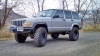
1991 Jeep Comanche, but for all diagnostic purposes, lets call it a 1998 Jeep Cherokee.
OBDII swapped from a 1998 Jeep Cherokee
Engine, transmission, transfer case, interior, gauges, sensors, doors, overhead console, etc.
I've put roughly 70K on this Jeep since owning it, and at least 30K in it's current configuration, minus a few major things.
Titan Engines 4.0 long block
Roughly 1,500 miles on it at this point
Balanced rotating assembly
Banks Header
99+ Intake
4 hole injectors replaced/installed in the last 30K
No sensor related codes present
To clarify further, the Jeep has had this configuration, minus the long block, for a long time and a lot of miles
AW4
Filter and fluid changed in the last 30K
Stock otherwise
NP242
Not really relevant to this, but might as well list
Clocked ~10 degrees to clear NP231 skid plate
Dana 30, C 8.25, 4.88 gears, rear auto locker, 33-34" tires
This has been the same for the last 40+K
I'll do a back story, then list the coolant related issues and attempts.
February of this year, at night, while taking my girlfriend on a date (In Denver, in a pretty good blizzard, and damn cold enough) we get stuck in traffic. Jeep (that I have driven all over the west, in this configuration, for the last 30K) starts to drastically overheat. We're stuck in the middle lane, so I pop it in neutral, and try to get water flowing through the engine. It continues to get hotter. We start moving. Hindsight is always 20/20; I should have pulled over and shut it off. We attempt to keep moving, the temp continues to climb. It maxes out on the gauge. We pull over. The engine is knocking. We are losing power. Pull into a gas station. It's boiling over. Literal melt down. Park it and walk across the street to the bar. Temporary feel good solutions! But I'm confused because I had been driving this thing all week.
At this point, I pull the engine. This engine had been rebuilt, and had an Edelbrock head on it (that I warped like crazy). It had roughly 30K on it. Now it's done for. My only theory for this is the thermostat stuck shut. That's why revving the engine didn't do anything. It was dead heading at the thermostat. I never found anything else that was wrong.
I order a Titan long block because I wanted the least amount of issues, and I want my Jeep to be as reliable as it used to be.
When I installed the engine, I also did:
New GMB high performance water pump
New fail safe 210 thermostat
New hoses
New radiator
All new coolant
This was to ensure that I never melted another 4.0
Install the engine, do the break in while running around the city, driving to work...etc. It runs amazing.
Take it wheeling for the first time, and while climbing into the mountains on the highway, I notice it gets hotter than it used to.
I test drive it on I-70 a bunch during the hot summer days (90+ degrees, steep hills going outside of town, torture test as far as I'm concerned).
The max I ever saw in all of my testing was 245, and this happened multiple times. Again, this Jeep has been up these mountains, and much more strenuous ones, fully loaded, a million times.
Explanation of issue:
It runs cool-ish around town. Sometimes gets above 210, but maintains it, even sitting in traffic with the AC on.
It gets 220+ while driving on the highway on flat ground. Doesn't really come down, or go up.
It gets 240+ if you're climbing mountain passes, with the truck empty and the AC off (best case scenario).
Alright, this is the complete list of what I have done since installing the engine in March:
All thermostats had a hole drilled at the "top" to help with air bleeding
Replaced the GMB water pump with a completely stock one from Napa
Yes, they all spun the correct way
Fan clutches
2-3 from parts stores, and now a Mopar one (current config.)
Questionable results from these changes, but didn't fix the issue
All of these were stock fan clutches
Radiators
I've replaced the radiator 3 times I believe
One was replaced because I theorized that there was junk in the engine from the reman process that had plugged the radiator, but didn't change anything
These were all the same Spectre stock radiator off Amazon.
Again, I put 70k on this Jeep with a stock radiator, so I don't believe I suddenly need a fancier radiator
Coolant bleed
I've probably bled the coolant 20 different times this year
I had a shop bleed it
I used a vacuum bleeder
I used the big funnel thing that attaches to the radiator cap interface
I've revved it and squeezed the absolute life out of every hose on the Jeep
The heater is always turned on and blows hot when the engine is hot
Coolant temp sensor
I changed it for kicks
I verified the temp with an infrared gun
When the gauge/OBDII app reads 245, the front of the engine reads from 220-250 on various points across the thermostat housing and head
Numerous compression tests before the head gasket
Never came back with obvious issues
Coolant chemical test
Didn't come back with any exhaust in the coolant
Head gasket
I recently just got it put back together
Nothing seemed wrong
No obviously blown head gasket
The head wasn't warped
I discovered that this reman engine is bored .040 over
I used a factory thickness MLS gasket for a replacement
Used ARP head studs
Upper O2 sensor
Replaced it in case it was causing the Jeep to run lean
Electric fan comes on when it's supposed to, but doesn't stop the overheating under load
Now, it's cooler in Denver. I just got back from the same test drive this evening, with the Mopar fan clutch being the most recent change, and it still got to 225 on the climb. The temperature outside was 60 degrees, for reference.
Needless to say, I am absolutely devastated that I've put this much time and money into this thing that means a lot to me, and it still fails to function. I think I've driven myself stupid with all of the ideas.
So, if anyone reads through this entire boring post, and has an idea that doesn't involve quad electric fans, hood vents, $500 radiators, or anything else that this Jeep has never needed before, I would eternally grateful. Really.
At speed, cooling is achieved by the speed of the vehicle forcing air through the radiator. From the factory, there's a splash shield that extends from the front crossmember clear back underneath the engine. This has the added benefit of keeping the air flow through the radiator separate from air flow under the vehicle. One of the downsides of lifting a vehicle is the increased air flow under the vehicle, causing more resistance against the engine, front axle, firewall, etc. Lifting the rear of the hood is common to prevent a high pressure area from building up under the hood. I suspect the tubular bumper isn't helping any by not pushing the air down and under the vehicle, instead allowing it to under high up, building up pressure behind the radiator.
Your issue lies between the winch and license plate destroying the air flow and causing it to go turbulent right in front of the radiator, and thus lower pressure, and the increased air flow under the vehicle increasing pressure behind the radiator. Have you tested it without the winch and that license plate mount?
At speed, cooling is achieved by the speed of the vehicle forcing air through the radiator. From the factory, there's a splash shield that extends from the front crossmember clear back underneath the engine. This has the added benefit of keeping the air flow through the radiator separate from air flow under the vehicle. One of the downsides of lifting a vehicle is the increased air flow under the vehicle, causing more resistance against the engine, front axle, firewall, etc. Lifting the rear of the hood is common to prevent a high pressure area from building up under the hood. I suspect the tubular bumper isn't helping any by not pushing the air down and under the vehicle, instead allowing it to under high up, building up pressure behind the radiator.
Your issue lies between the winch and license plate destroying the air flow and causing it to go turbulent right in front of the radiator, and thus lower pressure, and the increased air flow under the vehicle increasing pressure behind the radiator. Have you tested it without the winch and that license plate mount?
Ah, I'm glad you bring this up. I forgot to mention this part of my testing.
You make great points, but I can argue that this bumper, with the winch mounted, has been on the front of this Jeep for 50k or more. All over the deserts of Utah, and all over the mountains of Colorado, both in very hot weather.
Now, this has never had the factory splash guard. Again, the function of it makes perfect sense. Maybe that's something I should look into adding to the bottom.
As far as the testing goes, I took the winch and license plate off the front pretty early on, in order to take air flow out of the equation. Surprisingly there was no change. To further test it, I did space the rear of the hood up about an inch or so, enough to have a significant gap. Again, no change.
The winch is still off the Jeep, and it still gets uncomfortably warm.
I sincerely believe that the quality of aftermarket parts has taken a serious hit in the past 10 years. It's always been on the decline, but it's BAD now.
Try to find a Motorcraft RT-1139 thermostat. They're getting REALLY hard to find, but they're made by an OEM and have always done me well.
I sincerely believe that the quality of aftermarket parts has taken a serious hit in the past 10 years. It's always been on the decline, but it's BAD now.
Try to find a Motorcraft RT-1139 thermostat. They're getting REALLY hard to find, but they're made by an OEM and have always done me well.
Ford parts on a Jeep? Oh man.
That is a good point. I believe that's why the last engine got killed, and since then, I've tested every thermostat I've installed. I have found a few, right out of the box, that didn't open in boiling water. I know that's not a complete test, but still.
Did you test for timing and A/F ratio throughout the curve? Specifically, too lean, too much total timing at whatever RPM it starts to overheat. What PCM are you using?
Did you test for timing and A/F ratio throughout the curve? Specifically, too lean, too much total timing at whatever RPM it starts to overheat. What PCM are you using?
Originally Posted by Dave51
Clogged cats/muffler or collapsing lower radiator hose?
I can't say I would know how to do that without installing another wide band O2 sensor. Maybe the OBDII interface could tell me?
I'm using the stock 98 4.0 ECU and PCM, the same ones that the Jeep has always had.
The exhaust is fairly new, including a new cat. The radiator hose isn't collapsing when it gets hot, at least not that I can tell when I pull over and inspect it.
Last edited by poorboy76; Oct 25, 2024 at 01:13 PM.



 My Never Ending Overheating Problem