


Best traction for snow and ice?

Senior Member
Joined: Mar 2012
Posts: 974
Likes: 14
From: Racine, WI
Year: 1997
Model: Cherokee
Engine: 4.0

Please read this. JeepForum is my primary forum, but I'm trying to become more active elsewhere especially when I have expertise to contribute. You're asking for best traction, and you're getting some pretty bad advice from people who are probably getting the best traction they've ever gotten, but only because they've never tried anything better. BFG AT or GY Wrangler Radial as recommendations for BEST winter traction??? Jeez, guys.
In the event you refuse to read my post, I'll at least mention up here--no, airing down or up will not help your winter traction; keep your tire pressure where it's supposed to be.
http://www.jeepforum.com/forum/f15/w...2701698?page=1
Lots of threads around here about AT tires. Lots about MT tires as well. Lots of thread bashing or praising Brand X or Brand Y. Lots of size vs lift height threads, too--so many of those...too many!
Not as much discussion out there about winter tires, and since winter is on its way again, I thought it might be nice to put together a solid thread about winter tires.
First of all: I won't be calling them "snow tires," and I'd ask you not to either. Why? They're not just for snow. A study conducted by the Traffic Injury Research Foundation (http://www.tirf.ca/about/index.html) found that winter tires provide significantly greater traction in ALL conditions whenever temperatures are 7 deg C (~45 deg F) or below (http://tirf.ca/publications/PDF_publ...e_Report_7.pdf). All condtions. If it's 30 degrees outside and the road is completely dry/clean, winter tires are still superior. If it's 40 degrees and raining...winter tires. If you live somewhere that regularly sees temperatures below 45 deg F, you should seriously consider having a set of winter tires to use. I will discuss how this actually ISN'T much more expensive for you in the long run (if at all) to further down the page.
What IS a winter tire? The basics of winter tires consist of soft rubber, lots of siping/kerfs, and commonly directional tread patterns. The reason that other tires (yes, this includes AT and all season tires despite their names) perform so poorly in winter compared to winter tires is primarily due to the rubber compound used. As the rubber gets colder, it gets harder. The soft rubber used to make winter tires keeps them nice and pliable at low temperatures. This soft rubber is also what makes them wear very fast and can also make them dangerous in warm temperatures, so please do not use winter tires year-round (there can be exceptions to this, but not many). Lots of edges to bite with are also extremely helpful. Siping/kerfs are what achieve this, and you'll commonly see winter tires being much more heavily siped than other tires. Zig-zag siping is also extremely common--more surface area to bite with compared to a straight line. While far from mandatory, directional tread patterns are common due to the superiority of directional tread patterns to evacuate water and slush. Heard of hydroplaning? Slushplaning is actually a thing that tire manufacturers concern themselves with when designing winter tires, too.
Below is a comparison between two tires at the top of their respective categories (my opinion). Cooper AT3 representing all terrain and Nokian Hakkapeliitta R2 SUV representing winter.


I would like to point-out that the Mountain/Snowflake symbol does NOT denote a winter tire. It is the severe winter service symbol, but all that means is that the tire attains "110 compared to the ASTM E-1136 Standard Reference Test Tire when using the ASTM F-1805 snow traction test with equivalent percentage loads." That's a fancy way of saying it has at least about 10% better traction than the "average" tire. That standard may have been raised to 20% or some such higher level, but it's still a poor system and misleads and misinforms drivers. Frankly, that's almost as ****-poor as the M+S standard that used to be used which dealt with grooves and voids...basically any tire could be manipulated to be described as adhering to the M+S standard and not necessarily be any better off in mud or snow.
Studs. Oh, studs. Yep, studs are a very common option on winter tires. Studs generally increase ice and hard snow traction. I'm not a fan of studs. Studless tire technology is pretty much to the point where studs are obsolete. Studdable winter tires tend to be better with them, but there are numerous studless tires where studs aren't even an option, have no need for them, and even out-perform studded tires. Studs also have downsides. It isn't uncommon for a tire to suffer reduced dry and wet traction when studded vs no studs. Many states have also restricted or even banned stud use due to the increase in damage inflicted on roads. You can find information about what the laws regarding studs in your state (or other states) are using one of the links below.
http://drivinglaws.aaa.com/laws/studded-tires/
http://www.rma.org/tire-safety/seaso...assenger-cars/ (as of 2013)

Some people believe that lowering (or raising) tire pressure will assist in winter traction. This is incorrect. Like every other time of year, you want your tire's tread to make even contact with the ground. Lowering tire pressure will reduce the center tread's contact with the ground and cause increased wear on the shoulders, causing reduced traction and premature tire demise. Raising pressure will cause increased wear in the middle and reduce the shoulders' contact with the ground also reducing traction and causing increased wear on the middle and premature tire demise.
That being said, some manufacturer owner's manuals recommend higher winter tire pressure. Below are some of Tirerack's theories regarding this:
Yes, there are all season and all terrain tires that perform admirably in winter. For the most part, they tend to be the best of the best of their respective categories, and no, they don't hold a candle to the winter performance of a top winter tire. You're simply kidding yourself if you try to convince yourself that your Hankook 727, Cooper STT, Goodyear Silent Armor, Michelin MS2, etc is as good in winter as a good winter tire. There are some tires that do bridge the gap both from the all season/terrain side as well as from the winter side of the gap so well that they're worth mentioning, and I will mention these later when I discuss some of the best and/or most popular winter tire choices.
Most people seem to shy away from winter tires either because they don't think/know they need them OR because they think they can't afford them. We're all Jeepers here. I'm sure the vast majority of us have dropped stupid amounts of money on our rigs just for fun over the years. If you can afford toys for your Jeep, you can afford winter tires. Most winter tires are CHEAPER than their all season/terrain counterparts. Cheaper. Yes, this cost is in addition to the all seasons/terrains that you regularly buy as well, but that only matters the first time you buy winter tires. HUH?!
For simplicity's sake, let's say you spend $400 buying tires every 4 years. $100 per year annual budget. Most winter tires are cheaper, but it's also not uncommon for them to have slightly shorter tread lives, so we'll just say that evens-out and they cost exactly the same to keep this simple. The first time you buy winter tires, you'll spend $400 you otherwise wouldn't have. Well, you'll need wheels to mount them on. Winter is tough on wheels, so don't buy fancy, expensive wheels. Get some cheap steelies or buy some used wheels off of Craigslist or something. Let's say $50 per wheel; depending on your needs/taste, this could be more, or it could be less. We'll also say you're only buying 4 because what good is a full size spare on what has a high probability of being a directional tire (only 50% chance it'll be useful on the side you need it on). So we're up to a$600 buy-in. Yeah, that's not cheap, but how many of us have dropped $600 or more on lifts? Bumpers? Armor, racks, lights, winches, etc? You can also save toward this over a year or two or more if necessary if you want winter tires. You've lived without them til now, you can wait until you've saved enough if you're not made of money.
Once you have a set of winter tires, your long-term tire budget will STILL only be $100 per year. WHAT?! Why not $250 or $200 per year? Well, you only need to buy wheels once, so there's that. Also, when you're driving on your all season/terrains, your winter tires are accumulating 0 miles. When you're on your winters, your AS/T's are accumulating 0 miles. You replace tires when they wear-out, right? Well, they'll last longer time-wise now--you'll still be spending them same amount of money per mile driven on tires, but now you'll have much better and much safer traction in the winter.
Switching? Again, we're Jeepers. It's not much to jack the Jeep up and swap wheels twice a year. You should be rotating your tires anyway, so sync your swap up with a Spring/Fall rotation. Just make sure to keep track of wear your tires were when you take them off so that you know where to put them back on such that they'll have been properly rotated. If you really can't do this yourself, there are many shops that will do this very very little cost, and it's not terribly uncommon for a shop to do it for free especially if you're a customer and double especially if it's one of those places that you have a free lifetime rotation perk with.
Storage? I don't have any fancy advice here. If you really don't have room to store 4-5 tires, then you don't have the room, and I suppose you're one of the few people who really can't make winter tires work for them. Since they get stored for months at a time, I suggest you consider asking a friend or relative if they have space to keep them for your before you give up completely however. You only need to access them twice a year after all.
So, what tires do I recommend? Well, there are so many. I can't make a list that will work for everyone, so I'll make a list that will have some use to MOST of us around here. This isn't an exhaustive list. There may be great tires I don't list. There may be models I list that don't come in a size that works for you. I also won't be going in to great detail about the pros and cons of each of these tires. While I will try to order them roughly in order of my preference/recommendation, There are pros and cons. Just like any other tire category, one tire may be better for one person than another person. We can discuss them in detail as the thread progresses. This is just me trying to be helpful, and if you want more personalized assistance, I help many people via PM and would be happy to help you, too.
So, what if you want to use the same tire all year long and want to come as close to the best of both worlds as possible? This is a very short list as far as I'm concerned. These aren't just tires that do "well" in winter. These are the ones that I can personally recognize as living in the large gray area between winter tires and the AS/T's--they have set themselves apart from the rest in regards to winter for one reason or another.
Honorable mentions (again, these aren't necessarily exhaustive lists; there are so many tires in the world, and I'm just human):
In the event you refuse to read my post, I'll at least mention up here--no, airing down or up will not help your winter traction; keep your tire pressure where it's supposed to be.
http://www.jeepforum.com/forum/f15/w...2701698?page=1
Winter Tires
Lots of threads around here about AT tires. Lots about MT tires as well. Lots of thread bashing or praising Brand X or Brand Y. Lots of size vs lift height threads, too--so many of those...too many!
Not as much discussion out there about winter tires, and since winter is on its way again, I thought it might be nice to put together a solid thread about winter tires.
I'm going to begin with an winter tire overview, so if you're only interested in a list of recommended tire models, scroll down til you see it, but I would like you to read the whole post if you can.
First of all: I won't be calling them "snow tires," and I'd ask you not to either. Why? They're not just for snow. A study conducted by the Traffic Injury Research Foundation (http://www.tirf.ca/about/index.html) found that winter tires provide significantly greater traction in ALL conditions whenever temperatures are 7 deg C (~45 deg F) or below (http://tirf.ca/publications/PDF_publ...e_Report_7.pdf). All condtions. If it's 30 degrees outside and the road is completely dry/clean, winter tires are still superior. If it's 40 degrees and raining...winter tires. If you live somewhere that regularly sees temperatures below 45 deg F, you should seriously consider having a set of winter tires to use. I will discuss how this actually ISN'T much more expensive for you in the long run (if at all) to further down the page.
What IS a winter tire? The basics of winter tires consist of soft rubber, lots of siping/kerfs, and commonly directional tread patterns. The reason that other tires (yes, this includes AT and all season tires despite their names) perform so poorly in winter compared to winter tires is primarily due to the rubber compound used. As the rubber gets colder, it gets harder. The soft rubber used to make winter tires keeps them nice and pliable at low temperatures. This soft rubber is also what makes them wear very fast and can also make them dangerous in warm temperatures, so please do not use winter tires year-round (there can be exceptions to this, but not many). Lots of edges to bite with are also extremely helpful. Siping/kerfs are what achieve this, and you'll commonly see winter tires being much more heavily siped than other tires. Zig-zag siping is also extremely common--more surface area to bite with compared to a straight line. While far from mandatory, directional tread patterns are common due to the superiority of directional tread patterns to evacuate water and slush. Heard of hydroplaning? Slushplaning is actually a thing that tire manufacturers concern themselves with when designing winter tires, too.
Below is a comparison between two tires at the top of their respective categories (my opinion). Cooper AT3 representing all terrain and Nokian Hakkapeliitta R2 SUV representing winter.
I would like to point-out that the Mountain/Snowflake symbol does NOT denote a winter tire. It is the severe winter service symbol, but all that means is that the tire attains "110 compared to the ASTM E-1136 Standard Reference Test Tire when using the ASTM F-1805 snow traction test with equivalent percentage loads." That's a fancy way of saying it has at least about 10% better traction than the "average" tire. That standard may have been raised to 20% or some such higher level, but it's still a poor system and misleads and misinforms drivers. Frankly, that's almost as ****-poor as the M+S standard that used to be used which dealt with grooves and voids...basically any tire could be manipulated to be described as adhering to the M+S standard and not necessarily be any better off in mud or snow.
Studs. Oh, studs. Yep, studs are a very common option on winter tires. Studs generally increase ice and hard snow traction. I'm not a fan of studs. Studless tire technology is pretty much to the point where studs are obsolete. Studdable winter tires tend to be better with them, but there are numerous studless tires where studs aren't even an option, have no need for them, and even out-perform studded tires. Studs also have downsides. It isn't uncommon for a tire to suffer reduced dry and wet traction when studded vs no studs. Many states have also restricted or even banned stud use due to the increase in damage inflicted on roads. You can find information about what the laws regarding studs in your state (or other states) are using one of the links below.
http://drivinglaws.aaa.com/laws/studded-tires/
http://www.rma.org/tire-safety/seaso...assenger-cars/ (as of 2013)
Some people believe that lowering (or raising) tire pressure will assist in winter traction. This is incorrect. Like every other time of year, you want your tire's tread to make even contact with the ground. Lowering tire pressure will reduce the center tread's contact with the ground and cause increased wear on the shoulders, causing reduced traction and premature tire demise. Raising pressure will cause increased wear in the middle and reduce the shoulders' contact with the ground also reducing traction and causing increased wear on the middle and premature tire demise.
That being said, some manufacturer owner's manuals recommend higher winter tire pressure. Below are some of Tirerack's theories regarding this:
Several vehicle manufacturer's owner's manuals recommend operating winter tires several psi (typically 3-5) higher than their recommended pressures for summer and all-season tires. While none of them actually provide the reason why, there are several scenarios that would support the practice.
First and foremost is that winter tires feature more aggressive tread designs, softer tread compounds and are often molded with deeper beginning tread depths than summer or all-season tires. While the combination of these design elements allows winter tires to remain more pliable in sub-freezing temperatures to provide more traction in snow and on ice, it often results in tires that have somewhat reduced responsiveness to driver input. The 3-5 psi higher recommended inflation pressures increase tire stability and help offset the reduction in responsiveness.
Additionally ambient air temperatures in winter typically range 40- to 50-degrees Fahrenheit colder than typical summer temperatures for the same location. The lower ambient temperatures allow tires to be more efficient at radiating heat and the tires will run cooler, building up less hot tire pressure. In this case, the 3-5 psi higher recommended inflation pressure increase helps offset the reduced hot tire pressures resulting from less heat buildup.
And finally, all tire pressures are intended to be measured cold, which means when the tires are at the same temperature as the air outside. Unfortunately, unless you park your vehicle outside or in an unheated, detached garage, and measure its tire pressures first thing on dark, cold mornings, the influence of attached garages or higher ambient air temperatures later in the day often means that drivers are actually measuring tires that are not completely cold. In this case the 3-5 psi higher recommended inflation pressure increase helps offset the reduced tire pressures associated with the conditions in which the tire pressures are typically measured.
First and foremost is that winter tires feature more aggressive tread designs, softer tread compounds and are often molded with deeper beginning tread depths than summer or all-season tires. While the combination of these design elements allows winter tires to remain more pliable in sub-freezing temperatures to provide more traction in snow and on ice, it often results in tires that have somewhat reduced responsiveness to driver input. The 3-5 psi higher recommended inflation pressures increase tire stability and help offset the reduction in responsiveness.
Additionally ambient air temperatures in winter typically range 40- to 50-degrees Fahrenheit colder than typical summer temperatures for the same location. The lower ambient temperatures allow tires to be more efficient at radiating heat and the tires will run cooler, building up less hot tire pressure. In this case, the 3-5 psi higher recommended inflation pressure increase helps offset the reduced hot tire pressures resulting from less heat buildup.
And finally, all tire pressures are intended to be measured cold, which means when the tires are at the same temperature as the air outside. Unfortunately, unless you park your vehicle outside or in an unheated, detached garage, and measure its tire pressures first thing on dark, cold mornings, the influence of attached garages or higher ambient air temperatures later in the day often means that drivers are actually measuring tires that are not completely cold. In this case the 3-5 psi higher recommended inflation pressure increase helps offset the reduced tire pressures associated with the conditions in which the tire pressures are typically measured.
Yes, there are all season and all terrain tires that perform admirably in winter. For the most part, they tend to be the best of the best of their respective categories, and no, they don't hold a candle to the winter performance of a top winter tire. You're simply kidding yourself if you try to convince yourself that your Hankook 727, Cooper STT, Goodyear Silent Armor, Michelin MS2, etc is as good in winter as a good winter tire. There are some tires that do bridge the gap both from the all season/terrain side as well as from the winter side of the gap so well that they're worth mentioning, and I will mention these later when I discuss some of the best and/or most popular winter tire choices.
Most people seem to shy away from winter tires either because they don't think/know they need them OR because they think they can't afford them. We're all Jeepers here. I'm sure the vast majority of us have dropped stupid amounts of money on our rigs just for fun over the years. If you can afford toys for your Jeep, you can afford winter tires. Most winter tires are CHEAPER than their all season/terrain counterparts. Cheaper. Yes, this cost is in addition to the all seasons/terrains that you regularly buy as well, but that only matters the first time you buy winter tires. HUH?!
For simplicity's sake, let's say you spend $400 buying tires every 4 years. $100 per year annual budget. Most winter tires are cheaper, but it's also not uncommon for them to have slightly shorter tread lives, so we'll just say that evens-out and they cost exactly the same to keep this simple. The first time you buy winter tires, you'll spend $400 you otherwise wouldn't have. Well, you'll need wheels to mount them on. Winter is tough on wheels, so don't buy fancy, expensive wheels. Get some cheap steelies or buy some used wheels off of Craigslist or something. Let's say $50 per wheel; depending on your needs/taste, this could be more, or it could be less. We'll also say you're only buying 4 because what good is a full size spare on what has a high probability of being a directional tire (only 50% chance it'll be useful on the side you need it on). So we're up to a$600 buy-in. Yeah, that's not cheap, but how many of us have dropped $600 or more on lifts? Bumpers? Armor, racks, lights, winches, etc? You can also save toward this over a year or two or more if necessary if you want winter tires. You've lived without them til now, you can wait until you've saved enough if you're not made of money.
Once you have a set of winter tires, your long-term tire budget will STILL only be $100 per year. WHAT?! Why not $250 or $200 per year? Well, you only need to buy wheels once, so there's that. Also, when you're driving on your all season/terrains, your winter tires are accumulating 0 miles. When you're on your winters, your AS/T's are accumulating 0 miles. You replace tires when they wear-out, right? Well, they'll last longer time-wise now--you'll still be spending them same amount of money per mile driven on tires, but now you'll have much better and much safer traction in the winter.
Switching? Again, we're Jeepers. It's not much to jack the Jeep up and swap wheels twice a year. You should be rotating your tires anyway, so sync your swap up with a Spring/Fall rotation. Just make sure to keep track of wear your tires were when you take them off so that you know where to put them back on such that they'll have been properly rotated. If you really can't do this yourself, there are many shops that will do this very very little cost, and it's not terribly uncommon for a shop to do it for free especially if you're a customer and double especially if it's one of those places that you have a free lifetime rotation perk with.
Storage? I don't have any fancy advice here. If you really don't have room to store 4-5 tires, then you don't have the room, and I suppose you're one of the few people who really can't make winter tires work for them. Since they get stored for months at a time, I suggest you consider asking a friend or relative if they have space to keep them for your before you give up completely however. You only need to access them twice a year after all.
So, what tires do I recommend? Well, there are so many. I can't make a list that will work for everyone, so I'll make a list that will have some use to MOST of us around here. This isn't an exhaustive list. There may be great tires I don't list. There may be models I list that don't come in a size that works for you. I also won't be going in to great detail about the pros and cons of each of these tires. While I will try to order them roughly in order of my preference/recommendation, There are pros and cons. Just like any other tire category, one tire may be better for one person than another person. We can discuss them in detail as the thread progresses. This is just me trying to be helpful, and if you want more personalized assistance, I help many people via PM and would be happy to help you, too.
- Nokian Hakkapeliitta 7 or 8


- Nokian Hakkapeliitta R or R2 SUV


- Hercules Avalance R G2 (yes, it does look like a Hakka R clone, doesn't it; I promise I didn't accidentally use the wrong photo)

- Michelin Latitude X-ice Xi2

- Bridgestone Blizzak DM-V1

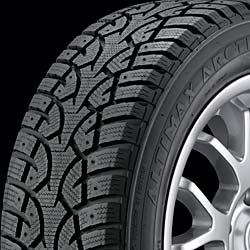
- General Altimax Arctic
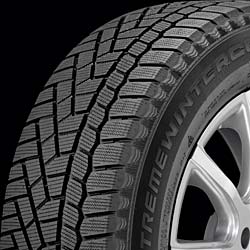
- Continental ExtremeWinterContact
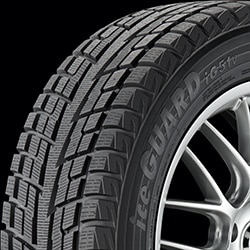
- Yokohama iceGUARD iG51v
- Hercules Avalanche X-treme
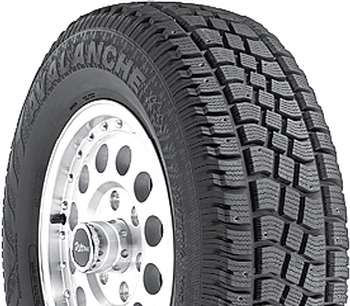

- Cooper Discoverer M+S
- Toyo Observe GSi-5

- Goodyear Ultra Grip Ice WRT

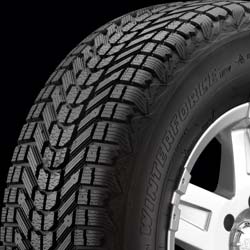
- Firestone Winterforce
So, what if you want to use the same tire all year long and want to come as close to the best of both worlds as possible? This is a very short list as far as I'm concerned. These aren't just tires that do "well" in winter. These are the ones that I can personally recognize as living in the large gray area between winter tires and the AS/T's--they have set themselves apart from the rest in regards to winter for one reason or another.
- Nokian WRG2 or WRG3 (aka WRA2/3, WRD2/3)
- Goodyear Wrangler Duratrac
- Cooper Discoverer ATW (this is an estimation; this tire is new and has not proven itself yet)
Honorable mentions (again, these aren't necessarily exhaustive lists; there are so many tires in the world, and I'm just human):
- Goodyear Silent Armor
- Kumho AT KL78
- General AT2
- Firestone LE2
- Hercules AT2
- Hankook Optimo H727
Last edited by mschi772; Nov 13, 2014 at 05:47 AM.

Senior Member
Joined: Apr 2013
Posts: 781
Likes: 2
From: Dawson Springs, KY
Year: 1985
Model: Cherokee
Engine: 2.5L

CF Veteran
Joined: Nov 2008
Posts: 7,874
Likes: 100
From: Northern Ontario, Canada
Year: 1990, 1999, 2000
Model: Cherokee
Engine: 4.0
ok i couldn't find out much info on that specific tire, it appears to be the entry level wrangler. good suv tire for summer country roads and wet asphalt but not a specific winter/ice tire. you want a tire that performs once it drops below 7 degrees celsius or about 45 fahrenheit. otherwise your tire will get too hard to net any real traction.
also a good amount of siping helps. your tire has some, but the compound won't help below freezing.
best to grab a set of stock size or slightly bigger winter specific tires on winter rims to switch back and forth each year.
you don't have to go hakkapaliitta but any specific winter tire will perform much better than your wranglers.
with that said, i have wrangler mtr on both my tj's and they do suck up here in the winter. the van on the other hand, great traction on frozen roads with i think they're goodyear nordic winter tires.
also a good amount of siping helps. your tire has some, but the compound won't help below freezing.
best to grab a set of stock size or slightly bigger winter specific tires on winter rims to switch back and forth each year.
you don't have to go hakkapaliitta but any specific winter tire will perform much better than your wranglers.
with that said, i have wrangler mtr on both my tj's and they do suck up here in the winter. the van on the other hand, great traction on frozen roads with i think they're goodyear nordic winter tires.
CF Veteran
Joined: Jul 2013
Posts: 7,554
Likes: 17
From: Monett, MO.
Year: 1999
Model: Cherokee
Engine: 4.0
Not a dam one of those would work around here where I drive at off road with the snow and mud cycles come and go. They seem more suited to my Lincoln Town Car or at least one of them on my DD the GC Overland.
These do work winter and summer down to 15 psi..

Its quite oblivious that you have never did any off road driving by your statement of "Never Air Down Your Tires" or you would still be stuck on those trails or even sand.
I guess misinformation abounds everywhere doesn't it?
These do work winter and summer down to 15 psi..

Its quite oblivious that you have never did any off road driving by your statement of "Never Air Down Your Tires" or you would still be stuck on those trails or even sand.
I guess misinformation abounds everywhere doesn't it?
Last edited by Fred/N0AZZ; Nov 13, 2014 at 09:54 AM.

Member
Joined: Jun 2013
Posts: 242
Likes: 1
From: Dayton, Ohio
Year: 2000
Model: Cherokee
Engine: 4.0L
Fred, The running assumption of this thread is that the op is talking about winter driving on the street, not offroad. On the street you get absolutely no benefit from airing down your tires and actually create an even more dangerous situation if driving on deep snow/ice with aired down tires. Winter wheeling on the other hand absolutely no reason not to air down your tires but then you also probably aren't going to change tires for that either.

Member
Joined: Dec 2011
Posts: 113
Likes: 0
From: Upstate SC
Year: 1999
Model: Cherokee
Engine: 4.0
Here in the southeast we get little snow, but when we do, it's nasty and wet. No one buys winter tires, there is no reason to spend that additional money. However in Asheville where I grew up we got snow regularly. The best set of tires I ever saw on it were on my buddies pathfinder, duratracs. My parents live on a mountain at 2700'. Couple years ago we got 15" of snow on Christmas Day. He and his wife came to my parents house to hang out/sled. Very steep roads in the hood. He didn't spin a tire when starting from a standstill on grade. Impressed the hell out of me.
I went with cooper ST MAXX, because I hardly see snow anymore, but they are better on road and wet/snow, than my old trxus MTs.
For someone in my area that does some trail riding but mostly road and the occasional snow, I'd recommend duratracs or some form of coopers
I went with cooper ST MAXX, because I hardly see snow anymore, but they are better on road and wet/snow, than my old trxus MTs.
For someone in my area that does some trail riding but mostly road and the occasional snow, I'd recommend duratracs or some form of coopers

Herp Derp Jerp

Joined: Nov 2011
Posts: 18,251
Likes: 17
From: Parham, ON
Year: 1999
Model: Cherokee
Engine: 4.0L OBD-II
As previously stated by other posters all-seasons are NOT winter tires! GY Wrangler GS-A is NOT a winter tire! And for what it's worth there are 17 different models of Wrangler and ALL of them are radial construction.
I read some of it lol. Good information. And definitely agree with the recommendations. There is a huge difference between wheeling through snow and driving on the street in the winter. Slush on ice is the main problem here.
Please read this. JeepForum is my primary forum, but I'm trying to become more active elsewhere especially when I have expertise to contribute. You're asking for best traction, and you're getting some pretty bad advice from people who are probably getting the best traction they've ever gotten, but only because they've never tried anything better. BFG AT or GY Wrangler Radial as recommendations for BEST winter traction??? Jeez, guys.
In the event you refuse to read my post, I'll at least mention up here--no, airing down or up will not help your winter traction; keep your tire pressure where it's supposed to be.
http://www.jeepforum.com/forum/f15/w...2701698?page=1
In the event you refuse to read my post, I'll at least mention up here--no, airing down or up will not help your winter traction; keep your tire pressure where it's supposed to be.
http://www.jeepforum.com/forum/f15/w...2701698?page=1
CF Veteran
Joined: Feb 2010
Posts: 3,353
Likes: 1
From: Missoula, MT
Year: 1999
Model: Cherokee
Engine: Golen 4.6 Stroker, AFE Headers, 62mm TB, 24 LB Injectors, Brown Dog kit, HF Cat, 3" Exhaust
The dura-tracs really are a good Ice/snow tire. I prefer them to studded tires after running both. They last forever as well. Probably the best all-around there is.
The only tire that I have run that is even close is the Tread-right gaurd dogs with kedge grip. After those tires basically fall apart ( like they are supposed to) and are full of pocs, they work great. Basically they mix walnut husk in the rubber and as they wear, it rips out leaving thousands of little holes.
All MTs are absolutely terrible and most ATs suck the second there happens to be snow onto of the ice and they pack full.
Ive never tried the Nokia ones.... I didn't even know the exsisted.
The only tire that I have run that is even close is the Tread-right gaurd dogs with kedge grip. After those tires basically fall apart ( like they are supposed to) and are full of pocs, they work great. Basically they mix walnut husk in the rubber and as they wear, it rips out leaving thousands of little holes.
All MTs are absolutely terrible and most ATs suck the second there happens to be snow onto of the ice and they pack full.
Ive never tried the Nokia ones.... I didn't even know the exsisted.
Senior Member
Joined: Mar 2012
Posts: 974
Likes: 14
From: Racine, WI
Year: 1997
Model: Cherokee
Engine: 4.0
There is one Wrangler that is called, "Wrangler Radial." That's its name. It's a mediocre tire, but I still approve of it in some situations because it has good bang-for-buck. It's actually what I'm currently using on my work truck, but my company also decommissions a few trucks including mine during the winter season. I'd never feel safe using the Wrangler Radial in winter conditions. I get nervous with it in heavy rain due to hydroplane risk with it as well.

Seasoned Member
Joined: Dec 2012
Posts: 340
Likes: 0
From: Indiana
Year: 1998
Model: Cherokee
Engine: 4.0
There is one Wrangler that is called, "Wrangler Radial." That's its name. It's a mediocre tire, but I still approve of it in some situations because it has good bang-for-buck. It's actually what I'm currently using on my work truck, but my company also decommissions a few trucks including mine during the winter season. I'd never feel safe using the Wrangler Radial in winter conditions. I get nervous with it in heavy rain due to hydroplane risk with it as well.
Senior Member
Joined: Feb 2012
Posts: 864
Likes: 4
From: Arlington, Texas
Year: 1998
Model: Cherokee
Engine: 4.0
I have been very happy with the snow and ice performance of my Firestone Destination AT's. They are a great all-year tire, good on mild to moderate off road. smooth and quiet on the street, and have a good amount of siping and a directional center rib.

Thread Starter
Banned
Joined: Nov 2014
Posts: 239
Likes: 1
Model: Cherokee
had a set, they wear VERY fast