When you click on links to various merchants on this site and make a purchase, this can result in this site earning a commission. Affiliate programs and affiliations include, but are not limited to, the eBay Partner Network.
Stock XJ Cherokee Tech. All XJ Non-modified/stock questions go hereXJ (84-01)
All OEM related XJ specific tech. Examples, no start, general maintenance or anything that's stock.
Hey all, just thought I’d throw an idea out for repairing a pretty common issue on our 4.0 XJs.
The stainless/nylon line between fuel rail and frame connector often develops a pinhole leak where it’s clamped to the intake manifold. I came across a number of posts on replacing it with rubber hose, but the 30R9 stuff that’s rated for high pressure fuel injection is getting pricey and hard to find (at least locally).
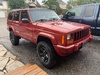
Since the rest of the line is otherwise fine, I just slipped a small length of the 5/16th 30R9 over the pinhole and clamped it with fuel injection clamps. Problem solved. You would need to remove the nylon hose from the bottom end (easier bends to slide it over) of the line then reinstall after slipping on the hose.
I had to replace both nylon sections and quick connects, PO had actually cut the nylon and bypassed with one long rubber hose, but it was all hard and cracked so I decided to ‘refurbish’ the original line. Bit if a pain to get the nylon over the stainless line, but overall the repair cost about $30 and a couple hours. Hopefully this helps someone someday
Repaired line Clamped either end as well as over the pinhole You can replace the nylon sections and use new hose and the special clamps past the barb on the factory stainless line.
I tried that it didn't work , it blow apart because there are no barbs for the hose to hold on to . What I did is took off both fittings and just ran a hose and replaced all the metal and plastic line , then ordered a new fuel line I did run the line foe about 8 months with no problems .
I tried that it didn't work , it blow apart because there are no barbs for the hose to hold on to . What I did is took off both fittings and just ran a hose and replaced all the metal and plastic line , then ordered a new fuel line I did run the line foe about 8 months with no problems .
the factory stainless line has 2 barbs on each end, that’s what held the original nylon. If you zoom in you’ll see the barbs beside the clamps. It’s pressed on hot, then you cool it in water and it shrinks down, couldn’t pull it apart if you tried. I threw the clamps on for extra security. Maybe you used rubber line, the barbs are too small to hold that, but nylon is no problem.
looks dangerous. the hose clamps are too large, at full clamping the clamps do not appear to compress the hose at all. the clamps you have used are made for a bigger hose. you NEED smaller clamps on that sized hose.
the lack of barbs is also a problem. your repair is not safe, it will eventually leak.
looks dangerous. the hose clamps are too large, at full clamping the clamps do not appear to compress the hose at all. the clamps you have used are made for a bigger hose. you NEED smaller clamps on that sized hose.
the lack of barbs is also a problem. your repair is not safe, it will eventually leak.
maybe I didn’t explain well, the steel line isn’t cut under the rubber portion, it’s still one piece. The rubber is just slipped over the steel. This is only to repair a small pinhole that was seeping a bit of fuel. No need for barbs there as there’s zero pressure pulling apart. Those clamps are fuel injection clamps sized for the 5/16 hose. It’s completely safe, no leaks, certainly safer than replacing the factory designed steel/nylon with rubber that will dry out and eventually fail. The PO had done that and the hose was in bad shape after only a couple years, I suspect it was failing as I could smell fuel even though I couldn’t find a leak point. The system wouldn’t hold pressure very long after shutdown, now after the repair I did the pressure stays up, so no leaks at all.
Anyway, just sharing what worked for me, take it or leave it. The original part isn’t available for me locally and I wanted to keep the repair as close to factory as possible.
What tear XJ’s does this apply to? My ‘00 fuel line is SS all the way to the short nylon pigtail at the tank.
mine is a 99, it has nylon pigtails at the fuel rail and at the base of the firewall where it meets the frame rail line. I think preventing the corrosion at the clip by putting some nylon tubing or something between the two metals would be a smart thing to do, other than that one spot all the stainless lines are still like new.
Is the 3rd clamp over the actual pinhole (give or take a bit)?
Another method is to use SS compression fittings. This also allows you to replace a section of line if the corrosion is more spread out.
yep, figured it would give a bit of extra security.
the compression fitting was my back up plan if I couldn’t get the hose around the bends. It would actually be way easier to go that route if the factory nylon and connectors are in good shape. Mine we’re already cut off by po so figured I’d try the hose first.
That's great. My PO had cut the line for some reason and stuck a piece of hose between with some standard clamps. One day I was starting it and it wouldn't fire off. I cranked for a bit and then got out and saw about a gallon of gas running down all over my fresh front diff rebuild.
Glad you didn't have my set up. I bought a new fuel line. PO should have also. Putting a piece of rubber hose and a couple hose clamps to join two steel lines together without barbs should be illegal.
maybe I didn’t explain well, the steel line isn’t cut under the rubber portion, it’s still one piece. The rubber is just slipped over the steel. This is only to repair a small pinhole that was seeping a bit of fuel. No need for barbs there as there’s zero pressure pulling apart. Those clamps are fuel injection clamps sized for the 5/16 hose. It’s completely safe, no leaks, certainly safer than replacing the factory designed steel/nylon with rubber that will dry out and eventually fail. The PO had done that and the hose was in bad shape after only a couple years, I suspect it was failing as I could smell fuel even though I couldn’t find a leak point. The system wouldn’t hold pressure very long after shutdown, now after the repair I did the pressure stays up, so no leaks at all.
Anyway, just sharing what worked for me, take it or leave it. The original part isn’t available for me locally and I wanted to keep the repair as close to factory as possible.
actually the hose will be having to overcome the same pressure as inside the tubing. even if only a pinhole, the pressure will be transmitted to the interior of the hose.
At any rate those clamps are too large diameter for this application. I say this as I see little if any compression of the hose, and the clamps look to be at full closed position. pick the next smaller diameter clamp. Tighten until the rubber is well compressed. Avoid the cheap red chinese clamps. They look pretty but fail under moderate tightening, thus you can't get proper compression with them, the darn screws strip!. If you want to be spendy, West Marine sells some super strong clamps, even stronger than the strong very good, more readily available "Ideal brand", which is still a good option.
Now if you had cut the tube, you can then put a little flare on the ends to act as a barb.
actually the hose will be having to overcome the same pressure as inside the tubing. even if only a pinhole, the pressure will be transmitted to the interior of the hose.
Correct, I was referring to whether or not barbs were needed for this type of repair. The barbs keep the hose from sliding which isn’t needed since the line is still one piece, that’s all I meant.
the clamps just need to seal the hose to the steel line, which they’re doing fine. It’s been tested thoroughly, idle, at highway speeds, wot, etc zero leaks.
There’s been a couple comments that the clamps are undersized because they’re not crushing the hose down, but that’s not necessarily what you want. The clamps are the right size, with them fully open they were a friction fit over the hose. High pressure hose doesn’t compress as far as the softer hoses, so its less visible, but the clamp bands are seated into the surface.
you can actually cause the hose to rupture if you use too small a clamp and tear the rubber at all, it weakens the outer layer. There’s no advantage to overkill. You only need enough clamp force to overcome the pressure, like an o-ring-they aren’t all that tight.
You would want a bead roller for this project but they are quite pricey (Graham Tool $200+). For about $350 you can get a hydraulic tool (Mastercool 72475) that will just make a proper push connect fuel line end.
Hi: You now got me started on this topic. 2000 XJ. When I got it, it had a rubber hose about where ALL of them seem to leak. The hose sprung a leak. I changed the hose. Good for a while. Later leaked again. Went with the tranny cooler hose. Good for a while, maybe a year. Leaked again. Clamps loose, tighten, goid for a short while. Anyway, I went to napa and bought 2 compression fittings and a section of stainless. Put it all together. Something leaking. Tighten compression nuts, leaking WAY worse! Actually, the fuel is spraying out of the side of the old pipe! I take it out again. I see nothing. Looks shiny and new. Wife takes her iPhone and takes a picture, like a microscope, and behold, it’s cracked! WTF?
It’s cracked right at the straight section, where that hanger would be, at the intake. Metallurgy? Doesn’t look like corrosion. Pipe is actually pretty thick here! Why would ALL of them leak here? It’s got me baffled.
BTW, this is a Jasper motor. It said it on the freeze plugs. I had some serious leaks after I bought it, I thought from the freeze plugs. It was leaking ‘through the block’ apparently just above the freeze plugs. I read about ‘porous iron’ in that area. Right through the metal. Another WTF…. I ran a treatment through it that fixed that leaking, above all of the freeze plugs. Anyway, I just cut more of the bad fuel line off, I hope. I’ll continue tomorrow.
HarryHydro
Hi: You now got me started on this topic. 2000 XJ. When I got it, it had a rubber hose about where ALL of them seem to leak. The hose sprung a leak. I changed the hose. Good for a while. Later leaked again. Went with the tranny cooler hose. Good for a while, maybe a year. Leaked again. Clamps loose, tighten, goid for a short while. Anyway, I went to napa and bought 2 compression fittings and a section of stainless. Put it all together. Something leaking. Tighten compression nuts, leaking WAY worse! Actually, the fuel is spraying out of the side of the old pipe! I take it out again. I see nothing. Looks shiny and new. Wife takes her iPhone and takes a picture, like a microscope, and behold, it’s cracked! WTF?
It’s cracked right at the straight section, where that hanger would be, at the intake. Metallurgy? Doesn’t look like corrosion. Pipe is actually pretty thick here! Why would ALL of them leak here? It’s got me baffled.
BTW, this is a Jasper motor. It said it on the freeze plugs. I had some serious leaks after I bought it, I thought from the freeze plugs. It was leaking ‘through the block’ apparently just above the freeze plugs. I read about ‘porous iron’ in that area. Right through the metal. Another WTF…. I ran a treatment through it that fixed that leaking, above all of the freeze plugs. Anyway, I just cut more of the bad fuel line off, I hope. I’ll continue tomorrow.
HarryHydro
I may have mentioned this upthread, but I just bought a OEM Mopar fuel line. It was expensive, something in the $80 range if I recall, but it installed perfectly and has the correct tab to mount to the intake. Good luck with you repair. Keep us posted.



 Fuel line repair