


2001 jeep xj whining noise


Thread Starter
Newbie
Joined: Dec 2020
Posts: 3
Likes: 0
Model: Cherokee (XJ)
 2001 jeep xj whining noise
info
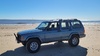
2001 jeep xj classic with a 4.0 that’s completely stock and almost perfect condition with 260000 miles and never had a new motor
problem
ok so it started making a high pitch whining noise like you would hear from a mail truck in reverse, it happens when decelerating and coasting (basically anytime when I’m not on the gas) it’s very loud and does not change with speed and I’ve went through everything and can’t figure it out
2001 jeep xj classic with a 4.0 that’s completely stock and almost perfect condition with 260000 miles and never had a new motor
problem
ok so it started making a high pitch whining noise like you would hear from a mail truck in reverse, it happens when decelerating and coasting (basically anytime when I’m not on the gas) it’s very loud and does not change with speed and I’ve went through everything and can’t figure it out

CF Veteran
Joined: Nov 2017
Posts: 3,700
Likes: 238
From: Groton, MA
Year: 1995
Model: Cherokee(XJ)
Engine: I6 4.0L
info
2001 jeep xj classic with a 4.0 that’s completely stock and almost perfect condition with 260000 miles and never had a new motor
problem
ok so it started making a high pitch whining noise like you would hear from a mail truck in reverse, it happens when decelerating and coasting (basically anytime when I’m not on the gas) it’s very loud and does not change with speed and I’ve went through everything and can’t figure it out
2001 jeep xj classic with a 4.0 that’s completely stock and almost perfect condition with 260000 miles and never had a new motor
problem
ok so it started making a high pitch whining noise like you would hear from a mail truck in reverse, it happens when decelerating and coasting (basically anytime when I’m not on the gas) it’s very loud and does not change with speed and I’ve went through everything and can’t figure it out
"Does not change with speed"... Wheel speed, engine speed (rpms to be specific) or both??
The main difference between being "on" or "off" the gas, if you're excluding the engine RPMs, is "load" on your drive-train... which in fairness is a bit of both wheel and engine speed in truth.
Does it "go away" when you're on the gas or is it possibly just much more noticeable without the engine noise? If you take your foot off the gas, hear the noise and then give it some gas very, very lightly, does that make any difference or not?
Any codes?
EDIT -- What does "went through everything" mean?
"High speed whining" is a symptom associated with several possible problems... the biggest 2 among these are bearing failure and gear wear. Bearings are best described as "whine" while the gear stuff is sometimes described as a "howl".
I'm not trying to intimidate you or be a jerk or anything with the 20 questions.... You're asking for help and you're the one "on scene".... folks on this forum are awesome and love helping others, but we're only working with what you give us... the more details you provide, the more helpful folks can be.
Last edited by PatHenry; Dec 11, 2020 at 11:10 AM.
Thread Starter
Newbie
Joined: Dec 2020
Posts: 3
Likes: 0
Model: Cherokee (XJ)
By "mail truck in reverse" do you mean the sort of "manual transmission reverse gear"? The "mail truck" thing may be throwing me off here... I associate that with the common "larger vehicle beeping" alert.
"Does not change with speed"... Wheel speed, engine speed (rpms to be specific) or both??
The main difference between being "on" or "off" the gas, if you're excluding the engine RPMs, is "load" on your drive-train... which in fairness is a bit of both wheel and engine speed in truth.
Does it "go away" when you're on the gas or is it possibly just much more noticeable without the engine noise? If you take your foot off the gas, hear the noise and then give it some gas very, very lightly, does that make any difference or not?
Any codes?
"Does not change with speed"... Wheel speed, engine speed (rpms to be specific) or both??
The main difference between being "on" or "off" the gas, if you're excluding the engine RPMs, is "load" on your drive-train... which in fairness is a bit of both wheel and engine speed in truth.
Does it "go away" when you're on the gas or is it possibly just much more noticeable without the engine noise? If you take your foot off the gas, hear the noise and then give it some gas very, very lightly, does that make any difference or not?
Any codes?
CF Veteran
Joined: Nov 2017
Posts: 3,700
Likes: 238
From: Groton, MA
Year: 1995
Model: Cherokee(XJ)
Engine: I6 4.0L
there are no codes and the sound is a constant whine or high pitched beep and it completely goes away when the rpms are up (load) or accelerating and wheel speed does not matter and after the motor is at normal temp it also does it at idle and the sound is coming from the motor
In this case, it is almost certainly an accessory pulley with a bad bearing, or if not that, a slipping belt.
The way to check this to remove the belt (which is a bit of a pain since it's the bolt style tensioner, but you have to do it to fix this problem anyway). Then spin each pully by hand and see if you can "feel" any roughness or "loose-ness"... if nothing jumps out at you, you might try a mechanics stethoscope as you turn each pully and listen for something "off"... a roughness, unevenness.
A VERY common cause of this is a bad idler pulley.... This is the one on top that the belt runs under between the A/C compressor and Power steering pump... it's cheap and widely available, so I'd recommend just buying a new one and replacing it anyway. In the same way I'd recommend replacing the belt if it's been on for more than a couple years. A belt deflection measuring tool (Kricket I think is the brand a lot of folks like) is helpful since the belt is installed tighter than might seem "normal"...
Brace yourself for the tedious cranking of the adjustment screw.... I hit it from the bottom with a small rachet, some folks like to pull off the air filter housing.... it's a lot of cranking no matter what angle you hit it from...
Check your power steering fluid levels just to be safe... I might start (post fluid check) by ensuring the belt is as tight as it's supposed to be... in other words, check the belt tension (using a proper tool is best for novices) if loose... try tightening the belt, see if it corrects the issue. If not, loosen the belt and remove and do the pulley checking. This is because I'm lazy and easy stuff is best done first so I don't waste time and energy..
Last edited by PatHenry; Dec 11, 2020 at 11:25 AM.
CF Veteran
Joined: Nov 2017
Posts: 3,700
Likes: 238
From: Groton, MA
Year: 1995
Model: Cherokee(XJ)
Engine: I6 4.0L
Definitely let us know. We like to hear the answers around here and it helps folks searching for those answers in the future. 
Don't be afraid to ask for any guidance on anything that's not clear... others often don't know how much knowledge and experience folks have and it's totally ok to be a noob... basic questions are great because they're easy and as noted, I'm very lazy.
Don't be afraid to ask for any guidance on anything that's not clear... others often don't know how much knowledge and experience folks have and it's totally ok to be a noob... basic questions are great because they're easy and as noted, I'm very lazy.

Thread
Thread Starter
Forum
Replies
Last Post
RickyBobby1
Stock XJ Cherokee Tech. All XJ Non-modified/stock questions go here
2
Jul 8, 2021 07:07 AM
Dkprincess6
Stock XJ Cherokee Tech. All XJ Non-modified/stock questions go here
7
Feb 5, 2020 07:03 PM
Awesomeslomo
Stock XJ Cherokee Tech. All XJ Non-modified/stock questions go here
2
May 31, 2017 07:00 PM
wimbojones
Stock XJ Cherokee Tech. All XJ Non-modified/stock questions go here
0
Oct 25, 2014 05:53 PM
syturria
Stock XJ Cherokee Tech. All XJ Non-modified/stock questions go here
9
Jul 6, 2009 10:28 PM
Currently Active Users Viewing This Thread: 1 (0 members and 1 guests)