


Custom monitoring system. Looking for a starting point.

Thread Starter
Member

Joined: Aug 2016
Posts: 233
Likes: 4
From: Maryland
Year: 1996
Model: Grand Cherokee
Engine: 4.0 I6
 Custom monitoring system. Looking for a starting point.
Hey everyone, I have and idea I'd like to start working on and was hoping I could get some advice on where to start. This is mostly for entertainment/education/whynot value rather than it's utility.
I know very little about this field, but have been wanting to learn for a while.
First part of the idea is to use something like an Arduino or Raspberry Pi to monitor various sensor throughout the car - existing ones and ones I'll add.
After I have enough good data input, I'd like to start controlling certain functions with the device. I'd love if it could eventually replace the various controllers in the car - but that's a long way off.
Getting more advanced, I want to do some smart home + IFTTT like features, add in voice control, fingerprint scanners for door locks, coffee machine... Only halfway joking on that last one.
All that said, it's a huge project that probably will never be 'finished,' but I'd very much like to avoid redoing most of it down the line because I laid the wrong foundation.
Anyone have some thoughts on where to start?
I know very little about this field, but have been wanting to learn for a while.
First part of the idea is to use something like an Arduino or Raspberry Pi to monitor various sensor throughout the car - existing ones and ones I'll add.
After I have enough good data input, I'd like to start controlling certain functions with the device. I'd love if it could eventually replace the various controllers in the car - but that's a long way off.
Getting more advanced, I want to do some smart home + IFTTT like features, add in voice control, fingerprint scanners for door locks, coffee machine... Only halfway joking on that last one.
All that said, it's a huge project that probably will never be 'finished,' but I'd very much like to avoid redoing most of it down the line because I laid the wrong foundation.
Anyone have some thoughts on where to start?
Last edited by Hatsuwr; Feb 12, 2017 at 03:14 PM.
Thread Starter
Member
Joined: Aug 2016
Posts: 233
Likes: 4
From: Maryland
Year: 1996
Model: Grand Cherokee
Engine: 4.0 I6
I think my first step will be finding a platform that can monitor dozens of voltage/resistance/current values and convert them to digital signals.

Junior Member
Joined: Oct 2015
Posts: 98
Likes: 0
Year: 1995
Model: Cherokee
Engine: 4.0 Liter
I personally haven't undertaken anything like this, but are you familiar with coding? If not rasberry pi is a great starting point and can be used for a lot of ideas, and its cheap. You should start by figuring out which system can handle the inputs and outputs you are going for
Thread Starter
Member
Joined: Aug 2016
Posts: 233
Likes: 4
From: Maryland
Year: 1996
Model: Grand Cherokee
Engine: 4.0 I6
Not very familiar with coding, that's actually something I was hoping to gain familiarity with through this project. After a little reading, it looks like the newest Pi has 40 GPIO pins. I can use 16 of those for 8x i2c 16-port expanders. 4x 8-channel ADCs can be put on each expander for a total of 256 channels of analog input.
If that is actually possible, that would be a great starting point that still leaves room for more.
If that is actually possible, that would be a great starting point that still leaves room for more.
Junior Member
Joined: Oct 2015
Posts: 98
Likes: 0
Year: 1995
Model: Cherokee
Engine: 4.0 Liter
Not very familiar with coding, that's actually something I was hoping to gain familiarity with through this project. After a little reading, it looks like the newest Pi has 40 GPIO pins. I can use 16 of those for 8x i2c 16-port expanders. 4x 8-channel ADCs can be put on each expander for a total of 256 channels of analog input.
If that is actually possible, that would be a great starting point that still leaves room for more.
If that is actually possible, that would be a great starting point that still leaves room for more.
I would recommend jumping into it honestly, if this is something your serious about take a coding class at a community college, or if you want to just take it slow n steady give it a go yourself. Just learn the basics from all the free resources and practice

Junior Member
Joined: Feb 2017
Posts: 31
Likes: 0
Year: 1988
Model: Cherokee
Engine: Renix 4.0L
Raspberry Pi's are awesome. If you ever needed help with them you can always check out the subreddit for it (/r/raspberry_pi). They have an IRC full of a bunch of people smarter than me.
Senior Member
Joined: May 2014
Posts: 777
Likes: 5
From: Nolensville, TN
Year: 1998
Model: Cherokee
Engine: 4.0
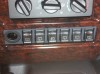
That is me. That was done, in small part, with a raspberry pi 2. You would get a pi 3 but the idea is the same.
Full writeup is here.
I also have a couple of temperature sensors now and a status page I can bring up, but a lot of it is broken because I moved to a new router and I'm having openvpn troubles since then. So I've done a lot of what you're looking to do.
The bad news is that you're going to be able to do pretty much nothing without connecting extra hardware between the vehicle and the pi. The good news is you're not the first person to want to do it so there's a lot of documentation out there. Unless we're talking pre-OBD2 then you're in some trouble.
For reading existing sensors, you are going to want to get a GOOD OBD2 bluetooth adapter. You can start off with a $9 one, but after months of troubleshooting why your connections keep dropping you're going to end up buying a good one anyway, so why not just start there?
For you own sensors, well you're looking at learning some i2c and spi, and the aforementioned ADCs. The temperature sensor is a good place to start.
It'll be a fun little learning project, but take one step at a time or you'll get overwhelmed. WATCH YOUR VOLTAGES unless you want to buy a lot of pi's
